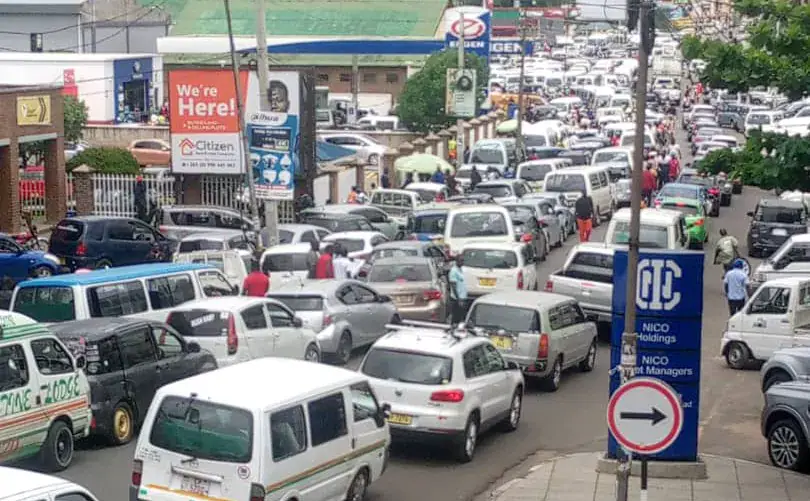
A crippling fuel crisis in Malawi is affecting the way families say goodbye to their loved ones. Due to a shortage of fuel, many are being forced to bury their dead in urban cemeteries, rather than in their ancestral homes as is traditional in Malawian culture. This is the case for a Lilongwe woman who had requested to be buried in her home village of Mtchaya in Nkhata Bay. However, her relatives were unable to secure enough fuel for the long journey north and were forced to bury her in Lilongwe.
The fuel crisis in Malawi has been ongoing for nearly three months, with empty service stations becoming a common sight. The crisis has not only affected transportation but has also had a significant impact on daily life, dictating where people are buried, whether children go to school, and how parents earn a living. With regulated pump prices pegged at K5 619 for petrol and K5 863 for diesel, black market vendors are demanding exorbitant prices, making it difficult for families to afford the fuel they need.
The shortage of fuel has also affected parents who are struggling to take their children to school. Mphatso Fiado, a single father of two from Chinyonga in Blantyre, has had to ground his vehicle due to the fuel crisis. He used to sleep in fuel queues, but it became too much for him and his children, who were left with a house helper and his younger sister. Fiado has had to find alternative and costly ways to transport his children to school, including buying fuel on the black market or using a taxi.
The fuel crisis has also had a significant impact on commuters, who are being squeezed further by hiked minibus fares triggered by the shortage. James Mbekeani from Chatha, Chileka, on the outskirts of Blantyre, has been forced to keep his children out of school while he endures a gruelling commute into the commercial city. He takes a kabaza up to Kameza Roundabout but has to leave very early due to the struggle to find space in a minibus.
Authorities have attributed the crisis to acute forex shortages, due to low export revenue that pales against the import bill at a ratio of three to one. Malawi imports goods worth $3 billion against $1 billion in exports. The Malawi Energy Regulatory Authority (Mera) has invited companies in strategic development projects to apply to import their own fuel in an effort to broaden participation in fuel importation.
President Peter Mutharika has attributed the dry pumps to logistical bottlenecks rather than an absence of stock. He stated that the fuel is available in all the ports in Tanzania, Nacala, and Beira, but the problem lies in transporting it. The President made these comments upon returning from his fifth private trip to South Africa.
The fuel crisis in Malawi continues to have a devastating impact on the daily lives of citizens. With no end in sight, families are being forced to make difficult choices, including where to bury their loved ones. The government has been criticized for its silence on the issue, with citizens calling for a resolution to the crisis.
Key points
- The fuel crisis in Malawi is affecting traditional burial practices, with families being forced to bury their dead in urban cemeteries instead of ancestral homes.
- The crisis has also had a significant impact on daily life, dictating whether children go to school and how parents earn a living.
- Authorities have attributed the crisis to acute forex shortages, due to low export revenue.
Reporting sources
- Families bury dead in cities as fuel runs out · The Nation