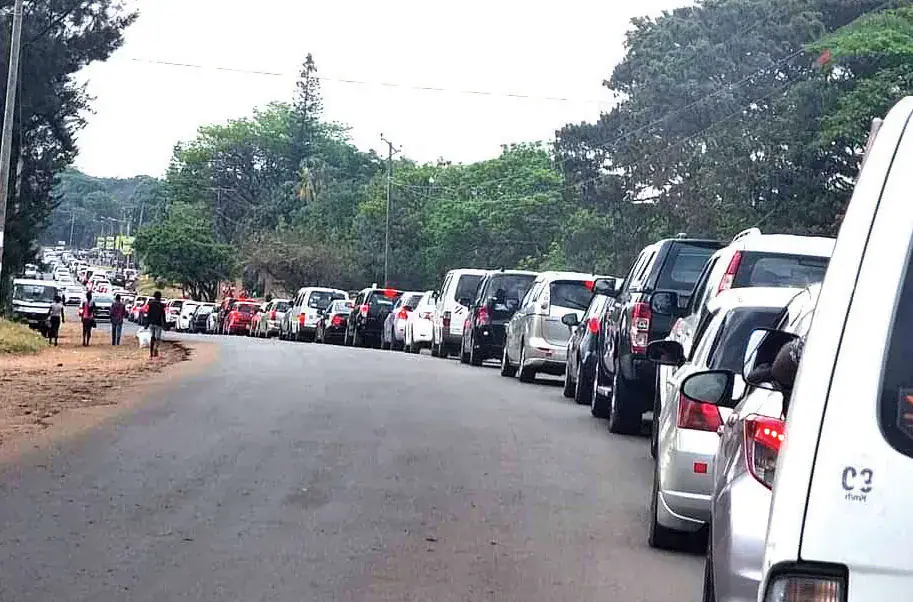
The fuel crisis in Malawi has led to a sanitation crisis, with thousands of people spending hours in queues for fuel and struggling to find toilets. Joan Ngwale, a resident of Area 47 in Lilongwe, says she has to find ways to relieve herself without losing her place in the queue, which stretches about a kilometer along the M1 near Area 6. She has used the toilets at filling stations, but says this is not a dignified solution.
The situation is particularly challenging for women, who have additional privacy and hygiene needs, especially during menstruation and pregnancy. Children and older people also struggle to endure hours without toilets. Ngwale says that some people relieve themselves in plastic bags and throw them away, which is a health and environmental risk. The situation compromises people's dignity, health, and basic human rights.
Truck driver Fred Sithole, who spent much of last week waiting for fuel at Ntcheu Boma, says finding a clean and convenient place to relieve himself has become an additional burden. He has to look for toilets in nearby buildings or bushes, which is not a dignified situation. The sanitation challenges are not limited to individual inconvenience, but also raise serious questions about environmental health and the preparedness of local authorities to manage sanitation during a prolonged public emergency.
Blantyre City Council spokesperson Deborah Luka says the council recognizes the challenge and is exploring ways to address it. She says all filling stations are mandated to provide sanitary facilities, but acknowledges that these facilities are inadequate for the huge numbers that converge at pump stations. Luka also says motorists should take responsibility for keeping their surroundings clean and dispose of litter in vehicles.
The Ministry of Health has acknowledged the risks associated with the sanitation challenges and has recommended action. Ministry of Health spokesperson Benedicto Mbewe says filling station operators should consider supplementary toilets, water, handwashing facilities, and proper waste collection. He also calls for coordination among public health authorities, local councils, and fuel retailers to assess the extent of the risk.
Parliamentary Committee on Health chairperson Anthony Masamba describes the sanitation challenges as a grave public health and human dignity concern. He calls for practical interventions and says Malawi should examine whether existing public health and sanitation laws adequately address emergencies that force large numbers of people to congregate for extended periods without toilets. Masamba urges fuel retailers, local councils, and relevant government agencies to share responsibility for temporary facilities.
Meanwhile, Malawi Energy Regulatory Authority (Mera) spokesperson Fitina Khonje draws a distinction between their mandate and the sanitation crisis, saying Mera's mandate is at the filling station. The responses from authorities expose a wider institutional question: has sanitation featured at all in the national response to the fuel crisis? The situation highlights the need for a coordinated response to address the sanitation challenges and ensure that people's dignity, health, and basic human rights are protected.
Key points
- The fuel crisis in Malawi has led to a sanitation crisis, with thousands of people struggling to find toilets while waiting in queues for fuel.
- The situation is particularly challenging for women, children, and older people, who have additional hygiene and privacy needs.
- Authorities are exploring ways to address the sanitation challenges, including providing mobile toilets and encouraging motorists to take responsibility for keeping their surroundings clean.
Reporting sources
- Fuel crisis exposes sanitation gap · The Nation