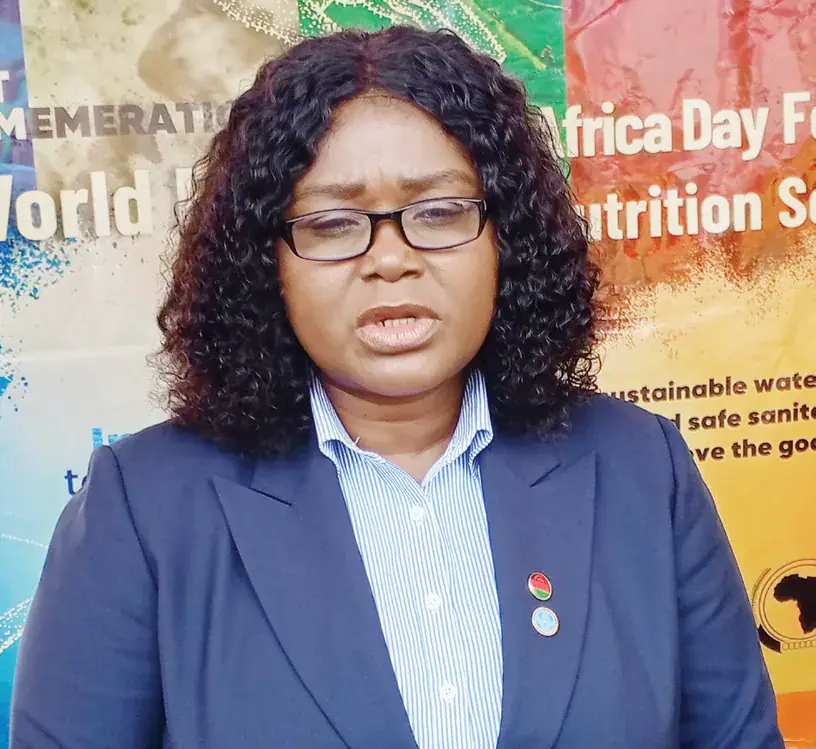
Malawi's Agriculture Minister Roza Mbilizi has announced that the government will soon scale up the distribution of inputs under the Farm Inputs Subsidy Programme (Fisp). The announcement was made on the sidelines of a joint commemoration of World Food Day (WFD) and Africa Food and Nutrition Security Day (AFNSD) in Lilongwe City. Mbilizi expressed satisfaction with the programme's progress, citing the prioritization of input distribution to areas that are difficult to reach and experience early rainfall.
The Fisp programme was launched in September and has made significant progress, with districts such as Chitipa, Mangochi-Makanjira, Chikwawa, Nsanje, Mwanza, and Neno receiving inputs. According to Mbilizi, Chitipa has achieved an implementation rate of almost 70 percent. The programme aims to target these areas first before rolling out to all other districts. Mbilizi emphasized that Fisp is a crucial programme for ensuring food security in Malawi.
The government is also promoting irrigation and agriculture commercialization as part of its efforts to achieve food security. Mbilizi encouraged stakeholders to join hands with the government to ensure that Malawians have enough food and that the country is food secure. The minister also highlighted the importance of safe water availability for all citizens. The commemoration of WFD and AFNSD provided an opportunity to reflect on progress made in ensuring food and nutrition security.
Food and Agriculture Organisation (FAO) Representative in Malawi, Ali Said Yesuf, attributed Malawi's yearly hunger situations to the effects of climate change. Yesuf emphasized the need for Malawi to allocate enough funding towards innovations that can contribute to food security. He suggested that the country should focus on using water efficiently, making irrigation systems more extensive and smart, and advising communities to produce crops or livestock that are resistant to environmental issues.
Yesuf noted that although there are efforts to transform the agriculture sector, several challenges, including resource mobilization, are hindering progress. He stressed the need for the private sector to invest in the sector and create an enabling environment for them to do so. The FAO Representative assured that the organization is committed to supporting Malawi through the provision of technical assistance to the Ministry of Agriculture.
This year's Fisp is worth about K140 billion and aims to benefit at least 1.2 million farming households across the country. WFD is commemorated on October 16, while AFNSD is observed on October 30. The joint commemoration provided a platform for stakeholders to reflect on the country's progress in ensuring food and nutrition security.
The Ministry of Agriculture, in collaboration with stakeholders, is working to ensure that Malawi achieves food security and becomes a self-sufficient food producer. With the Fisp programme on track, the government is optimistic about achieving its goals. Key stakeholders, including the FAO, are committed to supporting the ministry in its efforts to promote food security and sustainable agriculture practices.
Key points
- The Farm Inputs Subsidy Programme (Fisp) is progressing well, with distribution of inputs prioritized in hard-to-reach areas.
- The programme aims to benefit at least 1.2 million farming households across the country.
- Malawi's Agriculture Minister, Roza Mbilizi, emphasized the need for stakeholders to join hands to ensure food security in the country.