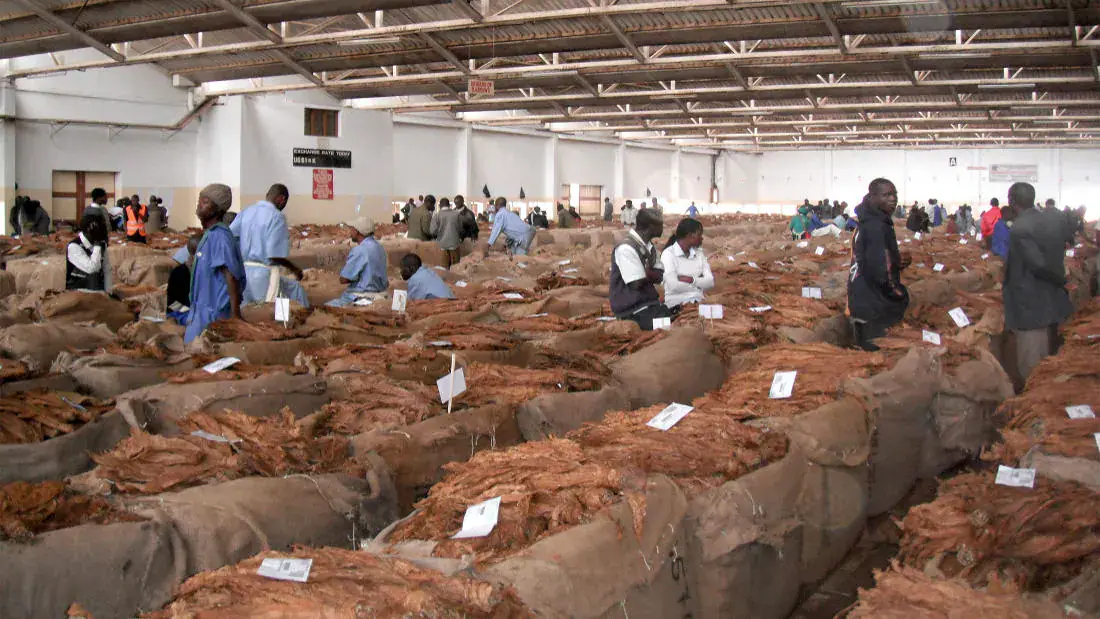
Malawi's external debt has climbed to $4.048 billion, equivalent to 251 percent of annual export earnings. This exposes the country's growing difficulty in generating enough foreign exchange to meet its external financial obligations. The debt stock increased by 8.1 percent from $3.744 billion in 2024. This rise adds to pressure on public finances as the government allocates more resources towards debt servicing at the expense of essential services such as healthcare, education, and infrastructure.
The debt-to-exports ratio means Malawi's external debt is equivalent to 2.51 times the value of goods and services it exports annually. Debt servicing consumes 11 percent of export earnings, leaving fewer foreign exchange resources available to finance imports and meet other external obligations. These figures are contained in the World Bank Group's 2026 International Debt Report. The report tracks external borrowing and repayment obligations among low- and middle-income countries.
The World Bank report shows that external debt among countries eligible for financing from the International Development Association (IDA) increased by 8.1 percent to $1.3 trillion in 2025. Low-income countries recorded an 8.9 percent rise to $262.4 billion, the largest increase since 2020. Malawi's external debt has more than doubled from $1.723 billion in 2015. Its debt-to-exports ratio has increased by 2.3 percentage points over the same period.
Economist Vellie Nyirongo commented on the figures, stating that the rising debt was worrying because Malawi's capacity to generate foreign exchange and sustain economic growth remained weak. He said borrowing was not inherently harmful but became unsustainable when it was not accompanied by corresponding growth in exports, productivity, and government revenue. Nyirongo emphasized that the debt-to-exports ratio of 251 percent was particularly worrying.
Nyirongo warned that the growing repayment burden could further constrain the government's ability to finance healthcare, education, infrastructure, and other public services. He urged the government to strengthen fiscal discipline, improve revenue collection, curb unnecessary expenditure, and address corruption while ensuring that borrowed resources financed productive investments. Nyirongo also called for export diversification, stronger support for local industries, and improved agricultural productivity to expand the country's foreign exchange earnings.
Economist Marvin Banda stated that Malawi's fundamental problem was accumulating debt without developing the productive capacity needed to repay it. He observed that the country's narrow export base, limited industrialization, and persistent foreign exchange shortages had weakened its ability to meet external obligations despite increased borrowing. Banda called for accelerated debt restructuring but cautioned that the exercise alone would not resolve the country's fiscal problems without corresponding reforms.
Economist Milward Tobias said Malawi's debt challenge was also rooted in the structure of its economy, which remained heavily dependent on activities that neither generated sufficient exports nor substituted imports. He called for effective implementation of the Agriculture, Tourism, Mining, and Manufacturing (ATMM) strategy to expand domestic production, create jobs, reduce import dependence, and increase export earnings. Minister of Finance, Economic Planning, and Decentralisation Joseph Mwanamvekha acknowledged the high debt burden as one of the major fiscal challenges facing the economy.
Key points
- Malawi's external debt has reached $4.048 billion, equivalent to 251% of annual export earnings.
- The country's debt servicing consumes 11 percent of export earnings, leaving fewer foreign exchange resources available to finance imports and meet other external obligations.
- Economists urge the government to strengthen fiscal discipline, improve revenue collection, and address corruption to mitigate the debt challenges.
Reporting sources
- Debt outpaces exports · The Nation