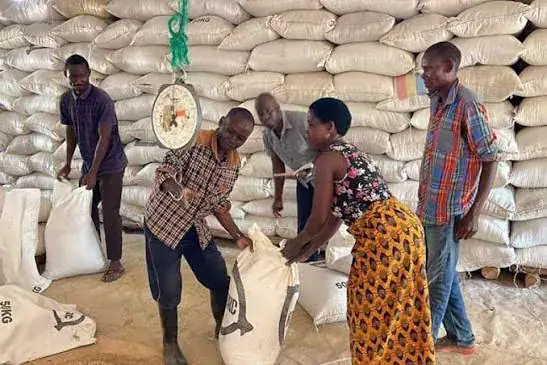
President Peter Mutharika's first year in office has seen improved harvests and easing inflation, but persistent foreign exchange shortages remain a major challenge. Malawi harvested about 3.3 million tonnes of maize in 2026, up from roughly 2.8 million, according to the Ministry of Agriculture's final estimates. The number of people in crisis-level food insecurity fell from about 4 million in the 2025/26 lean season to 1.9 million between April and September.
The country's medicine availability across public facilities fell from 51 per cent in April to 40 per cent in September, and in central hospitals from 34 to 18 per cent. The Central Medical Stores Trust reported that it owes foreign suppliers about $18 million. The Trust's struggles to obtain dollars have hindered its ability to import essential medicines, despite the government's increased budget allocation for medicines.
Annual inflation has fallen every month since April, to 19.4 per cent in September, the first reading below 20 per cent since May 2022. The World Bank estimates that the fiscal deficit narrowed to 8.8 per cent of GDP in 2025/26, a year that began six months before this government took office. Revenue beat its first-quarter target, and the IMF has praised the fuel and sugar pricing reforms.
However, the government's efforts to address the foreign exchange shortages have been hindered by its decision not to devalue the kwacha. The Reserve Bank has held the official rate near K1,734 to the dollar throughout the year. The government has ruled out devaluation, arguing that it would import inflation into a strained economy. The World Bank put the parallel-market premium at more than 140 per cent in February.
The fuel sector has also been affected by the foreign exchange shortages. The administration let the automatic pricing mechanism work, resulting in petrol prices rising from K3,499 a litre at the inauguration to K4,965 in January and K6,672 at the end of March. Although supply improved for spells, queues returned across the country in late September. The head of the national oil company has told MPs that the binding problem is foreign exchange.
The exchange rate regime has been identified as a major constraint on the economy. Research by the International Food Policy Research Institute finds that because so much is already imported at informal rates, the average Malawian gains little from the official one. The Institute's simulations suggest that unifying the rate would not cause runaway inflation, partly because fuel prices have already moved close to market levels.
The issue has also become a governance question, with public calls to publish fuel stocks, letters of credit, and forex requirements. The Catholic Commission for Justice and Peace wants clear milestones and regular public reporting. The Commission scored the government 3.75 out of six and gave forex and fuel two out of six each.
Key points
- Foreign exchange shortages continue to affect Malawi's economy, despite improved harvests and easing inflation.
- The government's decision not to devalue the kwacha has hindered efforts to address the shortages.
- The issue has become a governance question, with calls for greater transparency and accountability.
Reporting sources
- Mutharika’s First Year: Malawi Has The Kwacha, But Not The Dollars · Pan African Visions