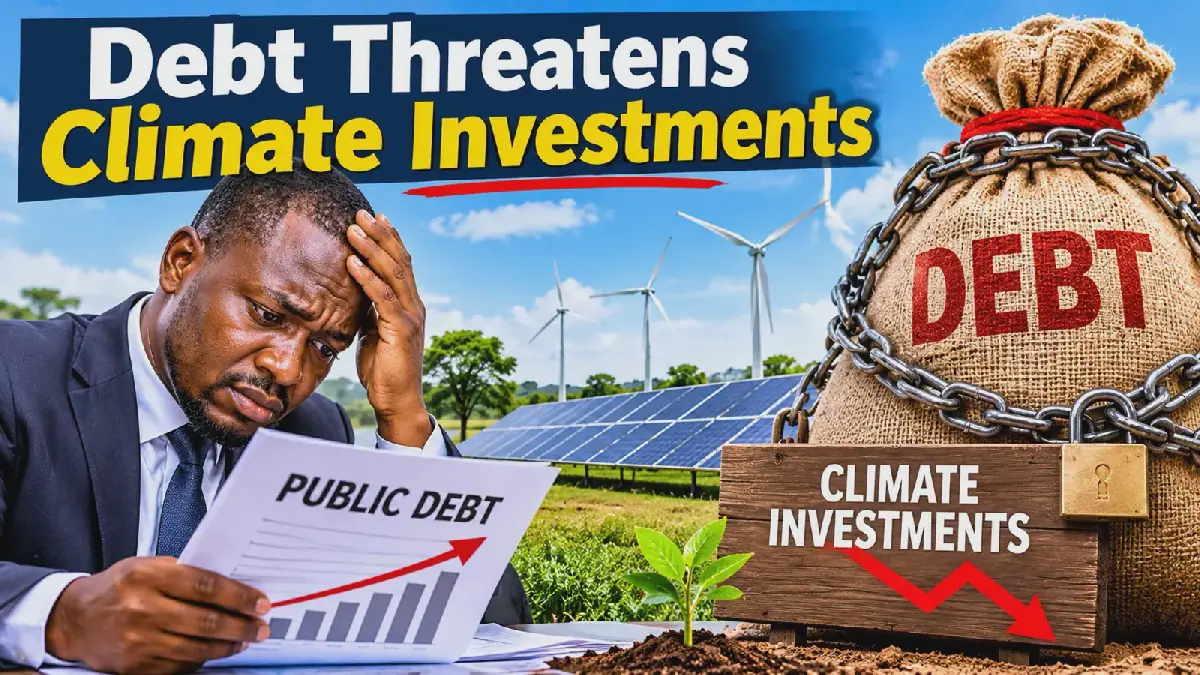
Malawi's debt burden is projected to significantly constrain investment in climate resilience and disaster recovery efforts. According to an analysis by ActionAid, the country's debt repayments are expected to exceed government revenue in 2026. The analysis, titled 'Debt fuels climate crisis: How the finance flows', cites data from Development Finance International's Debt Watch database. This database projects that 70 percent of Malawi's national annual budget will go towards debt repayments in 2026.
The country's debt crisis is further complicated by the impact of recent natural disasters. In 2019, Cyclone Idai displaced over 650,000 Malawians and affected more than two million people, with 280,000 being children. The cyclone damaged or swept away homes, schools, health facilities, roads, bridges, power infrastructure, and 117,000 hectares of cropland. The World Bank provided a $70 million loan following the cyclone, and a further $120 million loan was given after Cyclone Freddy in 2023.
The recovery and reconstruction costs for Cyclone Freddy were estimated at $680 million. Malawi received significant financial support from the international community to aid in recovery efforts. However, ActionAid's analysis finds that climate-vulnerable countries spend nearly 25 times more on debt repayments than on climate action. This highlights the significant challenge faced by Malawi in addressing climate change while dealing with a substantial debt burden.
The country's vulnerability to climate change is further emphasized by the Malawi Country Climate and Development Report. The report estimates that climate shocks cost the country 1.7 percent of its gross domestic product (GDP) annually. If Malawi remains on its current low-growth development path, it could lose between three and nine percentage points of GDP by 2030 and between eight and 16 percentage points by 2050.
The Malawi Economic Justice Network has recommended increasing climate financing allocation to five percent of the national budget. Currently, climate financing accounts for less than one percent of the national budget. The network's recommendation aligns with the Public Finance Management Strategy 2023/28. Inadequate funding for environmental sustainability can undermine Malawi's 2063 goals in agriculture commercialization and industrialization.
The 2026/27 National Budget projects tax revenue at K6.2 trillion and public debt interest payments at K2.7 trillion. This represents a 22.9 percent increase from the revised K2.2 trillion in the 2025/26 financial year. Malawi's public debt stock stood at K23.9 trillion, equivalent to 90.9 percent of GDP as of December 2025.
Minister of Foreign Affairs and International Cooperation George Chaponda has called for predictable climate financing and comprehensive debt relief. He stated that Malawi cannot achieve sustainable development while "drowning in debt". The country's debt burden and limited climate financing pose significant challenges to achieving its development goals.
Key points
- Malawi's debt repayments are projected to exceed government revenue in 2026, constraining investment in climate resilience and disaster recovery efforts.
- Climate-vulnerable countries spend nearly 25 times more on debt repayments than on climate action.
- Malawi's public debt stock stood at K23.9 trillion, equivalent to 90.9 percent of GDP as of December 2025.
Reporting sources
- Debt threatens climate investments—ActionAid · The Nation