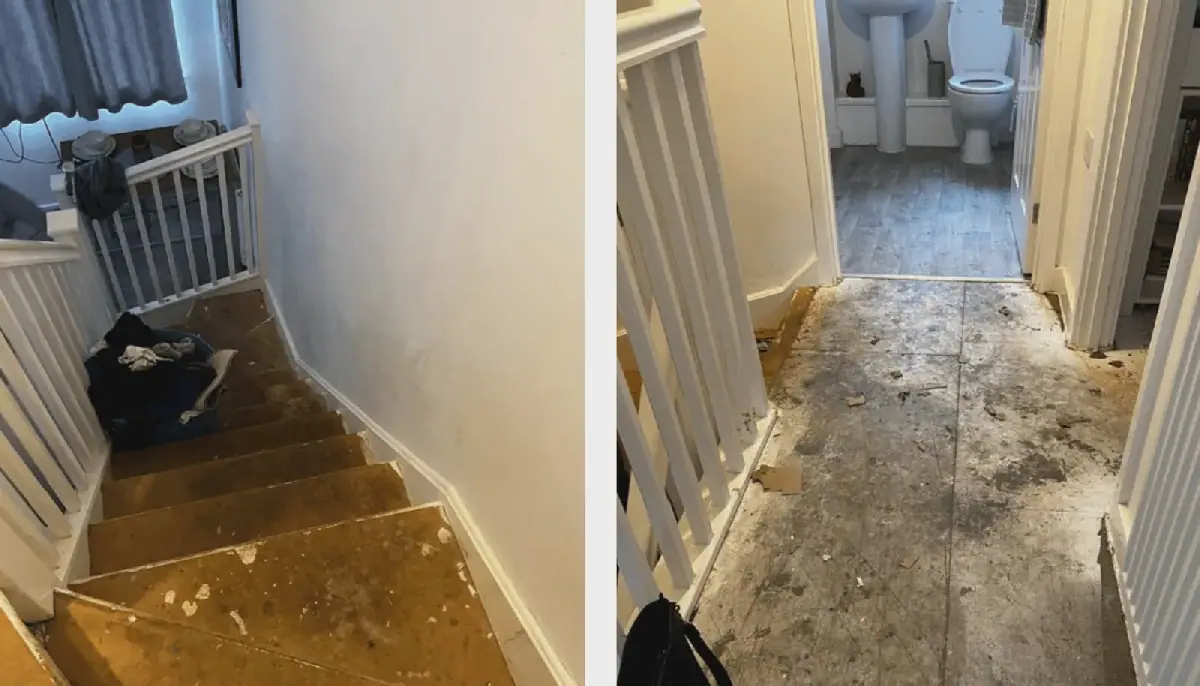
In the United Kingdom, individuals escaping domestic violence or homelessness often find themselves in social housing that is not equipped with basic necessities like furniture and flooring. Sophie, a survivor of domestic violence, recently shared her experience of being allocated a home with no furniture and no floors. Her story highlights the challenges faced by those in similar situations, where the lack of support can hinder their ability to rebuild their lives.
Sophie had spent a year in a domestic violence refuge with her autistic daughter, applying for property after property. When she finally secured housing, she was anxious about the state of the property. The home had no furniture and no floors, leaving her feeling overwhelmed. A £300 grant from the council was insufficient to cover the basics, and she was quoted thousands for flooring alone. This experience is not unique, with many social housing tenants facing similar challenges.
Statistics show that 98% of social housing tenancies in the UK are unfurnished, meaning that just one in 50 families move into a new home with essential furniture, flooring, or window coverings. This has led to an estimated four million adults and one million children living in furniture poverty, according to End Furniture Poverty. Social tenants are more likely than private renters or homeowners to be in furniture poverty.
The issue of furniture poverty is gaining attention, with campaigners arguing that it is a public health crisis. Former UK Prime Minister Gordon Brown has lent his support to the cause, stating that the compounded effect of austerity years means that even when there is food, there may be no table or chair to eat from. The campaign to tackle furniture poverty is growing, with some calling for the government to address this issue.
Sophie's situation was alleviated with the help of Furnishing Futures, a London-based charity that provided her with essential furniture and appliances. However, many others in similar situations may not be as fortunate. Refuge figures from 2020 show that survivors of domestic abuse are burdened with an average of £3,272 in debt, making it difficult for them to furnish a property.
The lack of furniture in social housing can be a barrier to victims escaping domestic abuse. Campaigners argue that the systemic failures in the housing system contribute to this crisis. The Childhood Trust's chief executive, Josephine McCartney, notes that individuals fleeing domestic violence often face financial difficulties and may not have control over their finances.
Addressing furniture poverty requires a comprehensive approach, including changes to the housing system and increased support for those in need. Campaigners argue that this issue has a broader impact on society, with McCartney stating, "Surely that's got to be good for the country." As momentum grows for the government to address this crisis, it remains to be seen how this issue will be tackled in the future.
Key points
- 98% of social housing tenancies in the UK are unfurnished.