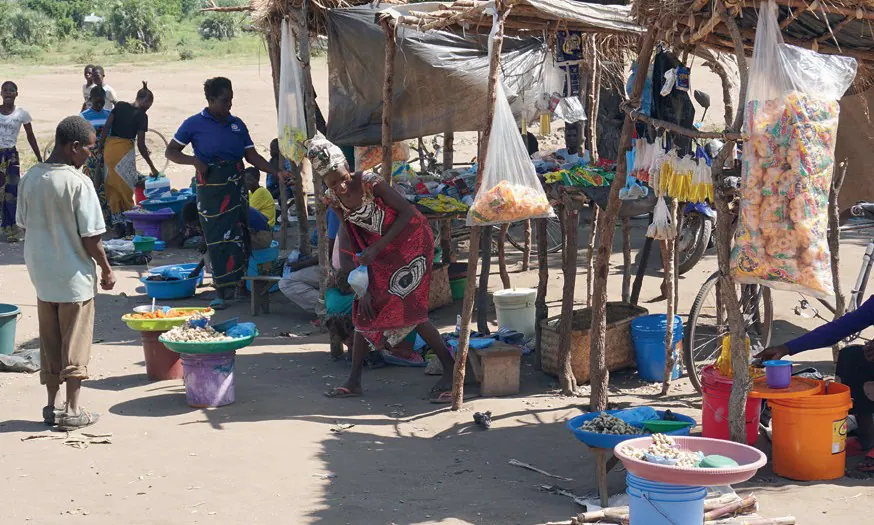
The Ministry of Industrialisation, Business, Trade and Tourism in Malawi has recognised that the country's small and medium enterprises (SMEs) continue to face significant challenges. These challenges include limited access to affordable financing, foreign exchange shortages, and persistent power outages. Deputy Minister Edgar Tembo stated that these issues remain major obstacles to SMEs' growth, despite ongoing government efforts to support the sector.
SMEs account for approximately 40 percent of Malawi's gross domestic product and 24 percent of employment. However, they struggle with access to concessional financing, which is a key concern for most small businesses. According to Deputy Minister Tembo, the government is exploring ways to make loans more manageable and acceptable for SMEs to thrive. He also highlighted that recurring blackouts, foreign exchange shortages, and limited access to emerging technologies constrain business operations.
To address these challenges, Deputy Minister Tembo urged SMEs to increase production for export markets to boost foreign exchange earnings. He also called for greater value addition to reduce reliance on imported goods that can be manufactured locally. As part of efforts to ease trade barriers for small businesses, Tembo cited the Simplified Trade Regime signed between Malawi and Tanzania in February. This regime allows small-scale cross-border traders to move goods valued at less than $1,000 duty-free or with minimal documentation.
The Malawi Confederation of Chambers of Commerce and Industry (MCCCI) has welcomed the government's efforts to support SMEs. MCCCI chief executive officer Daisy Kambalame stated that the 2026 Mzuzu SMEs Expo and Farmers Market is a platform for SMEs to learn ways of resolving trade challenges they face. She highlighted that one of the key issues is exporting to generate more foreign exchange, which requires sending high-quality products through value addition.
Kambalame also suggested that SMEs can schedule and plan their operations to use alternative power sources, such as solar and methane, during blackouts. MCCCI is exploring other ways to help SMEs overcome the challenges they face. According to Kambalame, Malawi's economy can only thrive if SMEs import more of their products and generate foreign exchange, which can support all sectors.
Business owners have shared their experiences of the challenges faced by SMEs. Enerst Banda, marketing manager of Roroea Essentials, stated that his business usually faces foreign exchange challenges when importing skin care products from the United States. He highlighted that it takes a long time for foreign exchange to be approved, which affects their profitability. James Chiutsi, president of the Malawi Union of Small and Medium Enterprises, noted that the current inflation rate and policy rate are too high for SMEs.
Economists have also weighed in on the challenges faced by SMEs. University of Malawi economics lecturer Edward Leman stated that based on several risks that have remained, it is difficult to remain optimistic about the business outlook. He highlighted that the inflation rate, currently at 20 percent, is not enough to create much room for monetary easing, which, coupled with structural issues such as foreign exchange scarcity and energy challenges, has made it difficult to sustain some of the gains during the quarter.
Key points
- The Ministry of Industrialisation, Business, Trade and Tourism in Malawi has acknowledged that SMEs face significant challenges, including limited access to affordable financing, foreign exchange shortages, and persistent power outages.
- The government is exploring ways to support SMEs, including increasing production for export markets and easing trade barriers.
- Economists and business owners have highlighted the need for urgent action to address the challenges faced by SMEs, which account for a significant proportion of Malawi's economy.