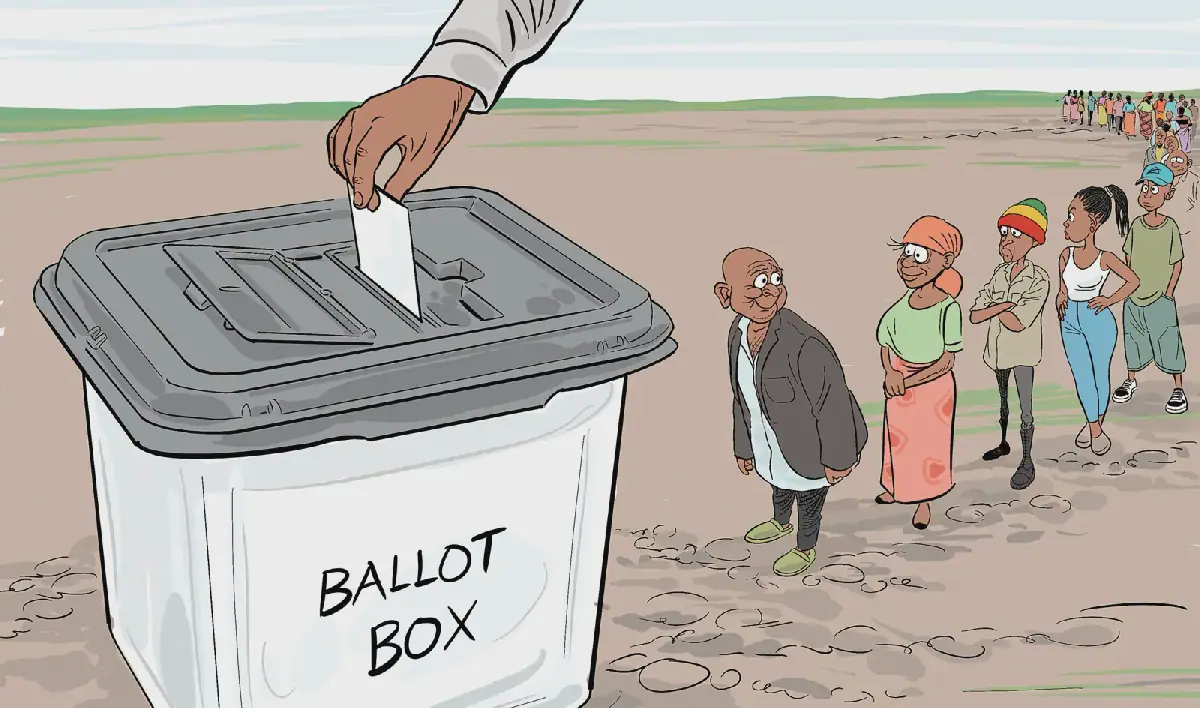
The Ministry of Local Government and Rural Development in Malawi has turned down a proposal to introduce direct elections for mayors, citing concerns about the implications for the country's local government system. Currently, mayors are elected by councillors, who are predominantly affiliated with different political parties. This process has sparked debate, with some arguing that it limits the power of residents to hold mayors accountable. The proposal to allow direct elections was rejected after consultations raised concerns about the compatibility of such a system with Malawi's existing local government arrangements.
The Local Government Act in Malawi stipulates that mayors are elected by councillors, with Members of Parliament serving as non-voting members of the local government's decision-making body. This has led to mayors being elected largely along political lines, rather than being directly accountable to residents. The rejection of the proposal means that residents will continue to have no direct say in the election of mayors. The Ministry's spokesperson, Chimwemwe Njoloma, stated that introducing direct mayoral elections would require significant changes to the Local Government Act and other related legislation.
According to Njoloma, the introduction of direct mayoral elections would necessitate a comprehensive assessment of its implications for the structure, functions, and accountability arrangements of local authorities. This would also require consultations with stakeholders, including the Malawi Electoral Commission, to ensure that any proposed reforms are legally sound and institutionally appropriate. The Ministry's decision means that Malawi will not be adopting direct mayoral elections in the near future, unlike some other African countries such as Zambia, Senegal, Madagascar, and Kenya.
The country currently has four city councils and three municipal councils led by mayors, with their roles and tenure established under the Local Government Act. The Act stipulates that mayors and deputy mayors serve for a period of two and a half years, unless replaced, and are eligible to be re-elected for one additional term. The Ministry's decision has been met with mixed reactions, with some arguing that direct elections would enhance the legitimacy of the mayoral office and increase accountability to residents.
Political scientist Ernest Thindwa has weighed in on the debate, arguing that direct mayoral elections would significantly enhance the legitimacy of the mayoral office and increase accountability to city and municipality residents. He also believes that it would incentivize capable citizens to compete for the office, increasing the pool of talent from which residents can choose. However, Thindwa cautions that Malawi should not simply adopt a system used in other countries, but rather fashion a system that responds to the country's unique needs and interests.
Thindwa's comments highlight the complexities of electoral reform in Malawi, where the promotion of governance values is a central consideration. He notes that a trade-off on governance values is inevitable in pursuit of effective governance, and that the country must carefully consider the implications of any proposed reforms. The debate over direct mayoral elections is likely to continue, with stakeholders arguing for and against the proposal.
The reintroduction of mayors in 2014, following the Tripartite Elections, was intended to promote local development, public participation, and inclusivity. The Ministry's decision means that the current system of mayoral election will continue, with councillors retaining the power to elect mayors.
Key points
- The Ministry of Local Government and Rural Development has rejected a proposal to introduce direct elections for mayors in Malawi.
- The current system of mayoral election, where councillors elect mayors, is likely to continue.
- Direct mayoral elections are used in some African countries, including Zambia, Senegal, Madagascar, and Kenya.