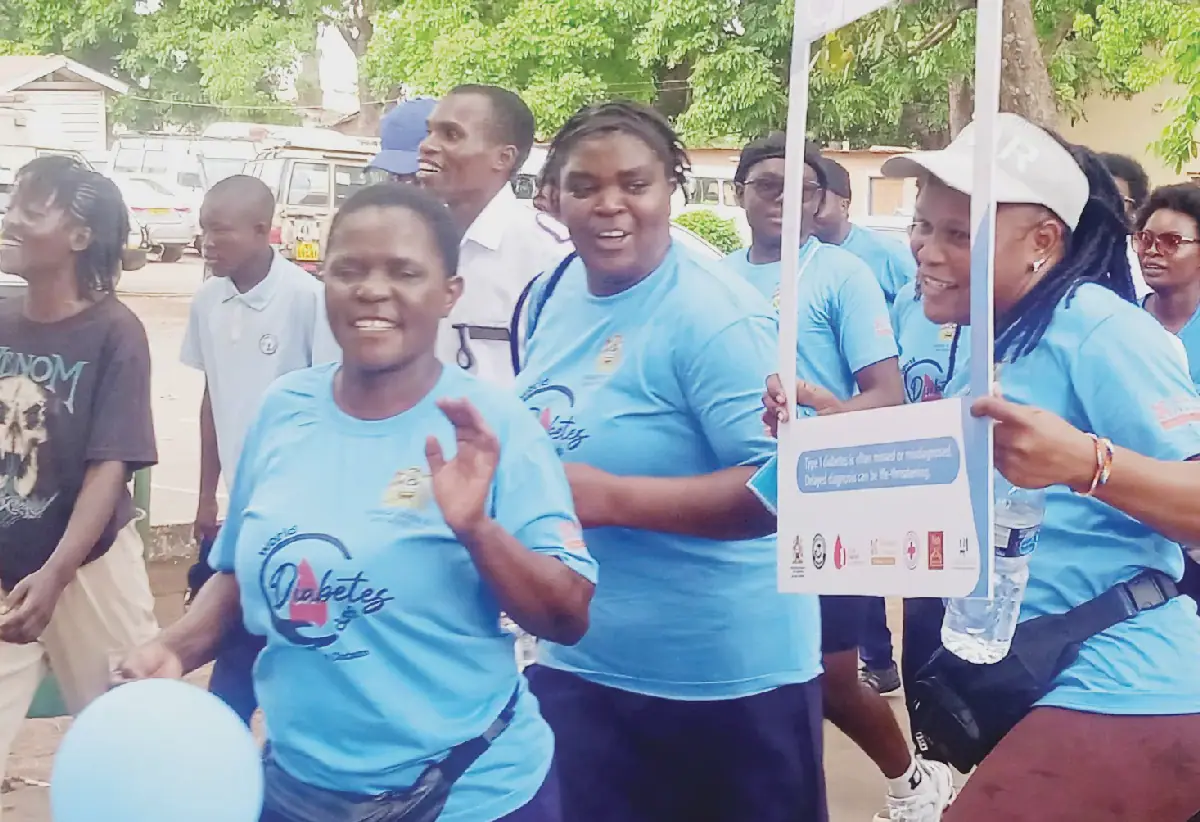
The Malawi government is taking steps to address the growing burden of diabetes by training healthcare workers in early detection and management of the disease. Deputy Minister of Health and Sanitation Charles Chilambula announced this during World Diabetes Day celebrations at Kamuzu Central Hospital in Lilongwe City. The training aims to strengthen the capacity of healthcare workers to identify patients at an early stage and provide them with appropriate treatment before serious complications develop.
Partners In Health, a non-governmental organization, is supporting 16 health facilities to provide diabetes screening services. With funding from the International Diabetes Federation, the organization has set up clinics in communities closer to the people to make it easier for them to access treatment. Evelyn Chibwe, Partners In Health Non-Communicable Diseases Technical Adviser, said that this initiative is crucial in addressing the diabetes burden in Malawi.
Malawi has been working to address diabetes since 2011, when the Ministry of Health incorporated non-communicable diseases, including diabetes, into the Essential Health Package under the Health Sector Strategic Plan. The conditions were also included in the country's National Health Research Agenda. In 2013, the government launched its first National Action Plan for the Prevention and Management of Non-Communicable Diseases, which sought to strengthen prevention, early detection, and treatment.
Despite these efforts, implementation has faced challenges, including limited resources, shortages of essential medicines, and inadequate capacity at some healthcare facilities. A 2024 study on primary healthcare preparedness to integrate diabetes care in Blantyre highlighted gaps in policy guidance and the availability of diabetes services at primary healthcare level. These challenges have resulted in people living with diabetes facing difficulties in accessing essential medicines, particularly insulin.
Lawrence Mtima, a patient living with diabetes, raised concerns over insulin shortages, saying that the availability of the medicine remains a challenge for people who depend on it to manage their condition. Insulin is essential for people with Type 1 diabetes and some patients with Type 2 diabetes who cannot adequately control their blood sugar levels through other treatment options. The International Diabetes Federation estimates that approximately 540,100 adults aged between 20 and 79 are living with diabetes in Malawi.
To raise awareness about prevention, early screening, and proper management of diabetes, health officials, civil society organizations, people living with diabetes, and members of the public participated in a solidarity walk from Game Stores in Lilongwe to Kamuzu Central Hospital. World Diabetes Day is commemorated on November 14, and this year's celebrations aimed to bring attention to the growing burden of diabetes in Malawi and the need for early detection and treatment.
The government and partners are working to address the diabetes burden in Malawi. Key stakeholders are focusing on improving healthcare worker capacity, increasing access to essential medicines, and raising awareness about prevention and management of the disease. By working together, they aim to reduce the impact of diabetes on individuals and communities in Malawi.
Key points
- The Malawi government is training healthcare workers to improve early detection and treatment of diabetes.
- Partners In Health is supporting 16 health facilities to provide diabetes screening services.
- Approximately 540,100 adults aged between 20 and 79 are living with diabetes in Malawi.
Reporting sources
- Government touts early diabetes detection · The Daily Times