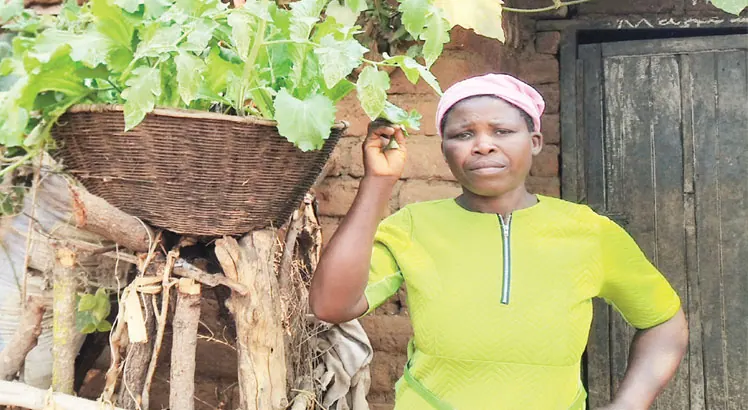
In response to the anticipated El Nino weather phenomenon, farmers in Nsanje District, Malawi, are turning to modern farming technologies to boost yields and enhance household nutrition. The initiatives, led by the Farmers Union of Malawi in collaboration with KfW of Germany and Unicef, promote the use of innovative methods such as hanging bags, baskets, and backyard gardens. These approaches enable farmers to optimize water usage, utilizing recycled water or borehole water to irrigate crops.
Annie Million Baella, a farmer from Muyang'anira Village, Traditional Authority (T/A) Ndamera, attests to the effectiveness of these modern technologies in mitigating the impacts of harsh weather conditions. Her farm, like many others in the region, benefits from the use of recycled water and organic manure. Additionally, Baella has diversified her farm to include poultry and rabbit farming, which provide meat and manure, further enhancing soil fertility and nutrition.
Langtone Washa, another farmer from Vuwovuwo Village, T/A Ndamera, shares Baella's sentiments, emphasizing that modern technologies offer a viable solution to the area's recurring harsh weather challenges. Cluster leaders have educated farmers on the importance of planting diversified crops with varying maturity periods, a strategy aimed at ensuring a stable harvest despite the anticipated El Nino conditions.
Nsanje district's principal nutrition and HIV and Aids officer, Noza Chingola Mpesi, acknowledges the district's struggles with food security due to persistent harsh weather conditions. Mpesi notes that the region faces either floods or dry spells annually, significantly impacting farmers' yields. With a 100 percent El Nino phenomenon predicted, Mpesi warns that farmers are likely to harvest less, underscoring the need for adaptive strategies.
To address these challenges, Mpesi encourages farmers to focus on drought-tolerant crops, utilize organic manure, construct box ridges, and harvest rainwater. These measures aim to enhance resilience and promote sustainable agricultural practices in the face of climate variability. By adopting such strategies, farmers can potentially mitigate the adverse effects of El Nino and improve their overall food security.
The Ministry of Health and Sanitation's nutrition programmes officer, Keith Kabinda, emphasizes the importance of coordination among stakeholders in the fight against malnutrition. While Kabinda's role is primarily focused on providing oversight and support, he advises farmers to heed guidance from cluster leaders on best practices for farming and maximizing yields. By working together, stakeholders can help farmers build resilience and enhance their capacity to cope with climate-related shocks.
As the El Nino phenomenon looms, farmers in Nsanje District are proactively embracing modern technologies to safeguard their livelihoods. With continued support from partners and stakeholders, these innovative approaches have the potential to improve food security, enhance nutrition, and promote sustainable agriculture in the region. By adopting these strategies, farmers can better navigate the challenges posed by climate variability and build a more resilient future.
Key points
- Farmers in Nsanje District adopt modern farming technologies to mitigate El Nino effects.
- The initiatives promote the use of innovative methods such as hanging bags, baskets, and backyard gardens.
- Stakeholders emphasize the importance of coordination and adopting adaptive strategies to address climate-related challenges.