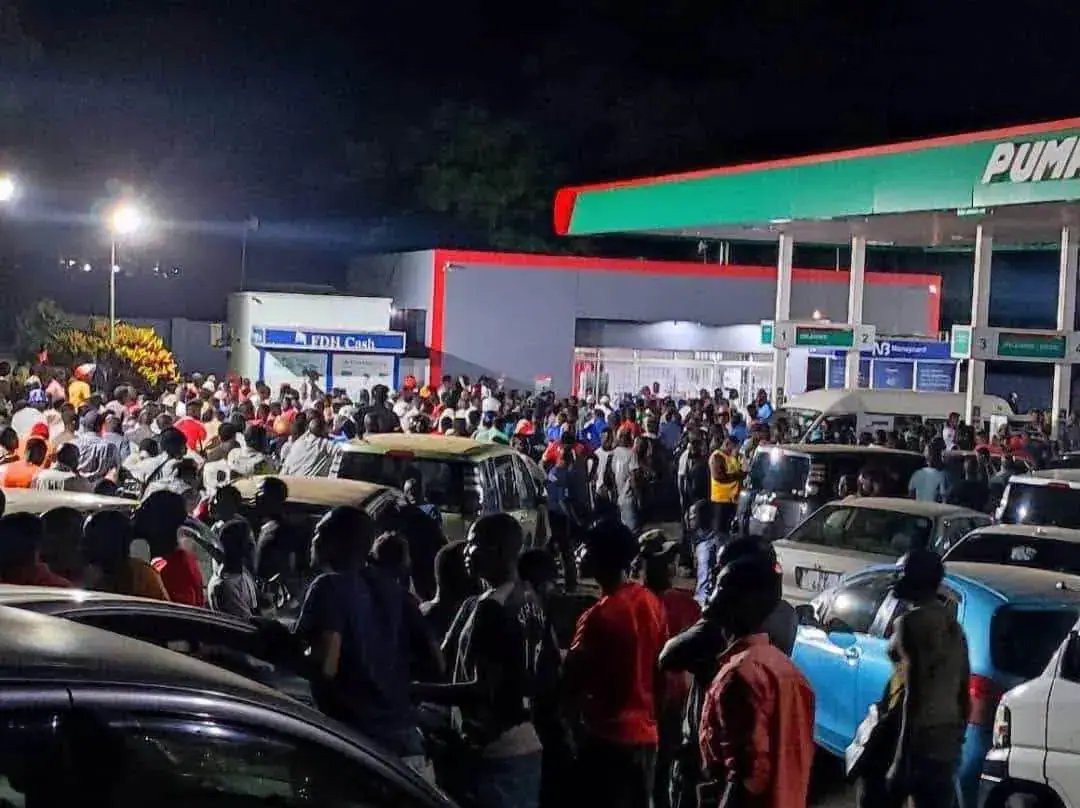
Malawi is experiencing a severe fuel shortage, with long queues at filling stations becoming a norm. Motorists are sleeping at filling stations, waiting for fuel tankers that may never arrive. The shortage has disrupted businesses, transport, and everyday life, with transport fares soaring and businesses losing income. The crisis has become a test of livelihoods and the government's ability to restore economic stability.
The fuel shortage has affected thousands of Malawians, including minibus driver Sido Sombeja, who had spent eight consecutive days and nights waiting at a filling station in Zomba. He described his predicament as desperate, with his days settling into a miserable routine of snacks, brief naps, and anxious glances towards the road, hoping to spot an approaching tanker. Sombeja's experience is far from exceptional, with many motorists enduring seemingly endless queues in search of fuel.
The fuel crisis has had a ripple effect on the economy, disrupting transport, undermining small businesses, and placing additional pressure on households already struggling with the rising cost of living. Minibuses provide essential transport for workers, traders, students, and patients, while motorcycle taxis connect communities where conventional transport is limited. When fuel becomes scarce, these services slow down or disappear altogether, leading to lost income, higher fares, and delayed deliveries.
At the heart of Malawi's fuel emergency lies a persistent shortage of foreign exchange. The country depends on imported petroleum products, which must be purchased using dollars or other internationally accepted currencies. With foreign exchange reserves under pressure, securing sufficient fuel has become increasingly difficult. The National Oil Company of Malawi chief executive Emmanuel Mataka acknowledged the seriousness of the problem, describing a "perpetual gap" between the foreign exchange Malawi earns and the amount required to finance its imports.
Malawi consumes approximately two million litres of fuel daily and needs an estimated US$49 million in foreign exchange every month to pay for petroleum imports. The country must also pay for medicines, fertilisers, machinery, and other goods critical to economic activity. The Ministry of Energy has acknowledged that difficulties honouring letters of credit have disrupted petroleum supplies, with fuel imports being determined by the availability of foreign exchange.
Government officials have pointed to incoming petroleum shipments as evidence of efforts to ease the crisis. The National Oil Company of Malawi received approximately six million litres of fuel through ports in Tanzania, while more than three million litres of petrol and diesel were in transit from Beira in Mozambique. However, for motorists stranded at filling stations, such assurances offer little comfort when tankers fail to arrive.
The fuel shortage has had a significant impact on the economy, with the Truck Drivers Union vice-president Francis Mkandawire expressing frustration at the situation. He questioned how motorists could be productive when they had to spend days waiting in queues for fuel. The crisis has highlighted the need for Malawi to address its foreign exchange shortages and ensure a stable supply of fuel to the country.
Key points
- The fuel shortage in Malawi has disrupted businesses, transport, and everyday life, with long queues at filling stations becoming a norm.
- The crisis has had a ripple effect on the economy, disrupting transport, undermining small businesses, and placing additional pressure on households already struggling with the rising cost of living.
- The fuel shortage is attributed to a persistent shortage of foreign exchange, which has made it difficult for the country to secure sufficient fuel.
Reporting sources
- Malawi: The Agony of Empty Pumps · Pan African Visions