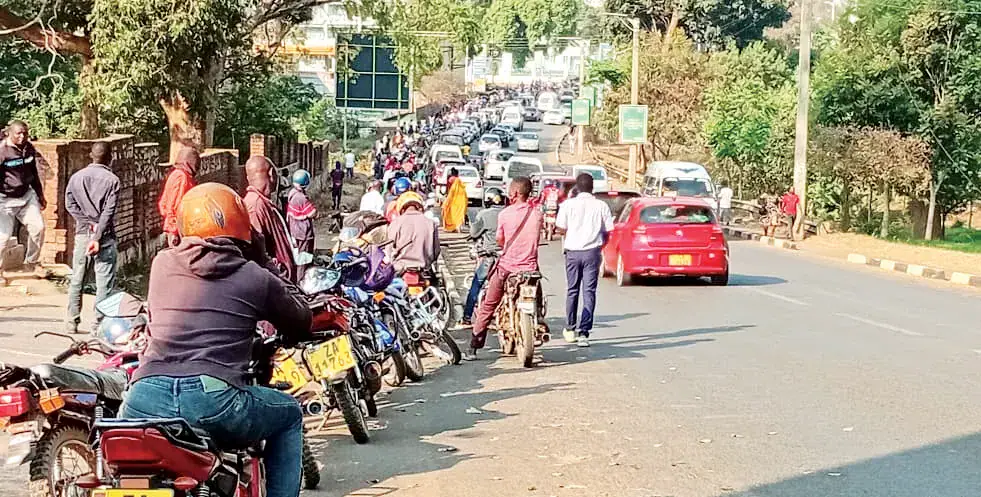
Malawi is grappling with a multitude of economic challenges, including persistent fuel shortages, parliamentary uncertainty, and rising living costs. These issues have disrupted livelihoods and increased the cost of doing business. The fuel crisis is a prime example, with motorists, minibus operators, farmers, and businesses experiencing recurring shortages. People often spend hours or entire nights searching for fuel, while transport operators lose income and commuters face unpredictable fares.
The government recently announced the procurement of 23.6 million litres of petrol and diesel, with 11.6 million litres reportedly in transit. However, shortages persisted, and by November 12, the Transporters Association of Malawi indicated that local fuel tankers were grounded. The government is relying heavily on transporters from Tanzania, raising questions about procurement coordination, payment arrangements, and the utilisation of domestic transport capacity.
The public is demanding a transparent account of fuel purchases, arrivals, distributions, and outstanding supplies. Beyond logistics, a more uncomfortable question arises: after selling gold to finance fuel imports, what does Malawi intend to sell next? In April 2026, the Reserve Bank of Malawi confirmed the disposal of approximately 590 kilogrammes of gold acquired through local artisanal miners, expected to raise about $78 million.
The government indicated that $30 million from the gold sale proceeds would support fuel imports, alongside efforts to secure a $120 million Afreximbank facility. However, this transaction exposes a deeper economic vulnerability. Malawi requires approximately $49 million monthly to finance fuel imports, raising concerns about the sustainability of an economic model that repeatedly depends on emergency financing and asset disposal.
To address these challenges, Malawi must expand its export base, strengthen mining, add value to agricultural products, improve manufacturing, and create a predictable environment for investment. Foreign exchange must increasingly come from productive economic activity rather than repeated emergency interventions. This requires a fundamental rethink of how the State operates and a shift towards a more sustainable economic model.
The postponement of Parliament's November Mid-Year Budget Review meeting has raised concerns about legislative oversight of the K10.98 trillion 2026-27 national budget. The government's decision to cite unspecified reasons for the postponement has sparked debate about the accountability and transparency of the budget-making process.
As Malawi navigates these economic challenges, the need for a comprehensive and sustainable solution has become increasingly clear. The country's economic survival depends on addressing the underlying causes of these crises and implementing a more effective and accountable economic strategy. The public deserves a transparent and accountable government that prioritises economic stability and growth.
Key points
- Malawi's economic model is unsustainable, relying on emergency financing and asset disposal to secure essential commodities.
Reporting sources
- After gold, what next? Malawi’s deeper crisis of economic survival · The Daily Times