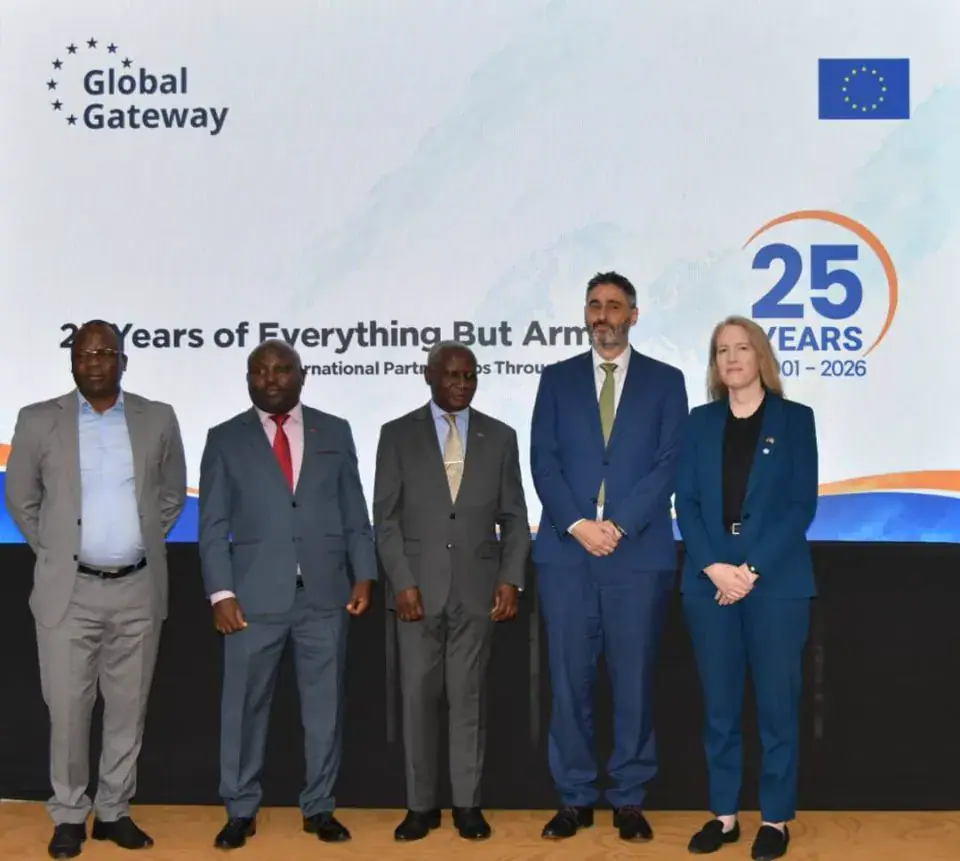
Malawi's Minister of Industrialisation, Business, Trade and Tourism, Simon Itaye, has commended the European Union (EU) for providing Malawi and other Least Developed Countries (LDCs) with 25 years of duty-and quota-free access to its market. This arrangement, under the Everything But Arms (EBA) initiative, has enabled Malawian products such as tea, sugar, beans, and coffee to access the European market without import duties. Itaye made these remarks in Lilongwe during celebrations marking 25 years of Malawi's access to the EU market under the EBA initiative.
The EBA initiative is a EU policy that gives LDCs complete duty-free and quota-free access to the EU market for all exports, with the sole exception of arms. Itaye described the policy as a testament to the EU's commitment to ensuring that no country is held back from global trade by its level of development. He also emphasized the importance of local exporters improving their competitiveness and complying with EU market standards to maximize the benefits of this arrangement.
According to Minister Itaye, the arrangement has created opportunities for jobs and economic growth in Malawi. The country has exported goods worth $1.4 billion to the EU through this arrangement, while importing $900 million worth of goods from the EU. This significant trade exchange has contributed to Malawi's economic development, and Itaye expressed gratitude to the EU for this support.
EU Ambassador to Malawi, Daniel Aristi, promised to continue supporting Malawi and other LDCs, especially now that Asian countries that previously benefited are graduating. However, Ambassador Aristi emphasized that he wants to see greater value addition on Malawian products, with full compliance with EU market standards. This, he believes, will enhance Malawi's competitiveness in the EU market.
Ambassador Aristi also expressed the EU's readiness to collaborate with Malawi to find competitive markets for its mineral resources, particularly in the emerging mining sector. He urged the private sector to focus on innovation, quality control, and strict adherence to EU market standards. This, he believes, will enable Malawian products to compete effectively in the EU market.
The 25-year duty-free market access has been instrumental in promoting Malawi's economic growth and development. The country has benefited significantly from this arrangement, and stakeholders are optimistic about its continued impact. As Malawi continues to explore new opportunities in the EU market, the government and private sector are working together to ensure that the country maximizes the benefits of this arrangement.
Looking ahead, Malawi and the EU are expected to strengthen their partnership, with a focus on enhancing competitiveness, value addition, and compliance with EU market standards. This will be crucial in sustaining the growth momentum and exploring new opportunities in the EU market. With the EU's continued support, Malawi is poised to further consolidate its position in the global market.
Key points
- The EU's EBA initiative has enabled Malawi to export goods worth $1.4 billion to the EU market duty-free.
- The arrangement has created opportunities for jobs and economic growth in Malawi.
- The EU is ready to collaborate with Malawi to find competitive markets for its mineral resources.