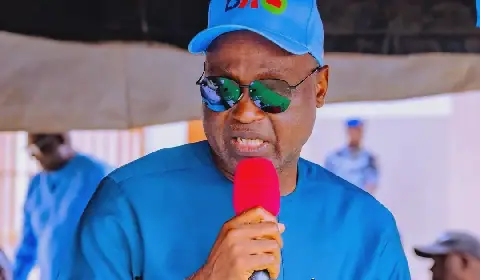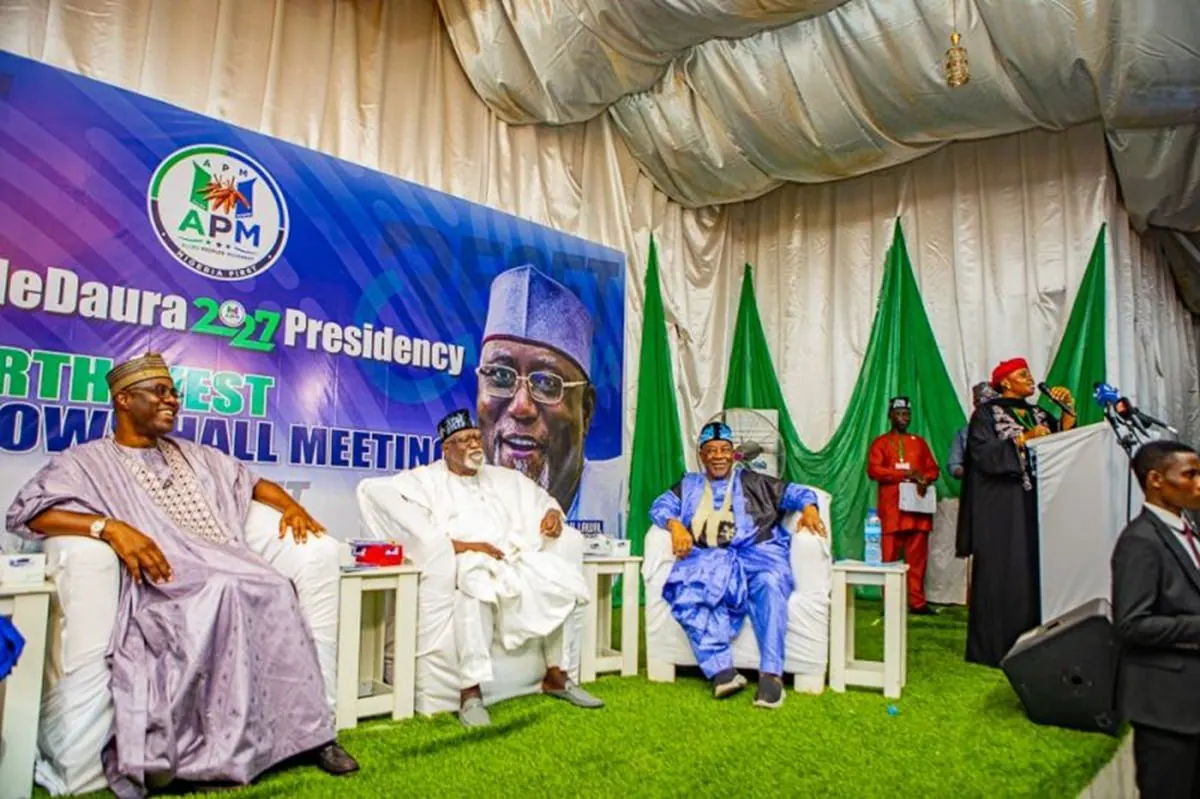
Governor Seyi Makinde and his running mate, Lawal Musa Daura, have begun a nationwide campaign, taking their 'Reset Nigeria' agenda to various town hall meetings. The Allied Peoples Movement (APM) candidates kicked off the engagements in Katsina, in the North-West region, where they interacted with citizens and gathered their concerns. The meetings aim to introduce the 'Reset Nigeria' agenda, collect citizens' views, and incorporate the concerns of the six geopolitical zones into their manifesto.
The town hall meetings, unlike conventional campaign rallies, are designed to be issue-based and citizen-driven. The emphasis is on direct engagement with groups whose daily experiences reflect the country's economic and security crises. Makinde's Special Adviser on Media and Digital Communication, Anthony Ehilebo, had announced that the meetings would focus on national stability, citizens' welfare, accountable leadership, and the transparent use of public resources.
In Katsina, Makinde and Daura confronted two major issues: insecurity and poverty. Daura described the two problems as intertwined, noting that in communities where insecurity has driven farmers from their land, disrupted markets, and destroyed livelihoods, poverty is not merely an economic statistic, but a consequence of fear. Makinde told the gathering that the campaign had listened to the concerns of the people and understood the urgency of their situation.
The 'Reset Nigeria' campaign proceeded to Lafia, the Nasarawa State capital, for its North-Central engagement. Before the public meeting, Makinde and Daura had a closed-door meeting with APM candidates from across the zone, including national leadership, zonal officials, state chairmen, and candidates for the Senate, House of Representatives, and state Houses of Assembly. This meeting aimed to strengthen the party structure while hearing directly from candidates expected to carry the APM message into their constituencies.
During the Lafia town hall meeting, participants included women in agriculture, traders, widows, and women living with disabilities. Makinde promised that an administration led by him would design special programmes for vulnerable groups while pursuing broader reforms intended to improve the economy for all Nigerians. He identified four pillars of his proposed national reset: security, education, the economy, and the socio-political environment.
Makinde stated that the reset agenda can be concluded in four years, adding that he would establish a transitional government of national unity if inaugurated on May 29, 2027. He also questioned the Federal Government's response to insecurity, arguing that it remained severe midway into 2026. Furthermore, Makinde criticised the financing of newly announced army divisions, saying he could not find provisions for them in the 2026 federal budget.
The ability to lead Nigeria, according to Makinde, would also require stamina and accessibility. He recounted travelling from Ibadan to Abuja, holding meetings in the capital, and undertaking engagements to demonstrate his commitment to connecting with Nigerians.
Key points
- The 'Reset Nigeria' campaign by Makinde and Daura focuses on national stability, citizens' welfare, and accountable leadership.
- Makinde identified four pillars of his proposed national reset: security, education, the economy, and the socio-political environment.
- The campaign aims to incorporate the concerns of the six geopolitical zones into their manifesto ahead of the 2027 presidential election.