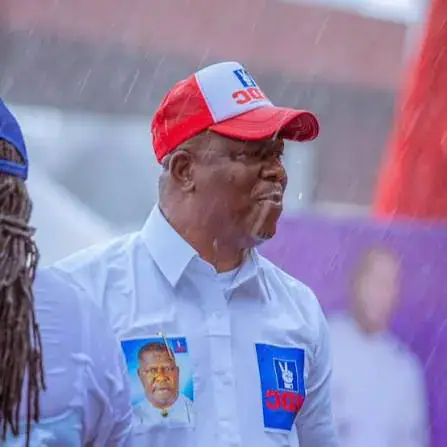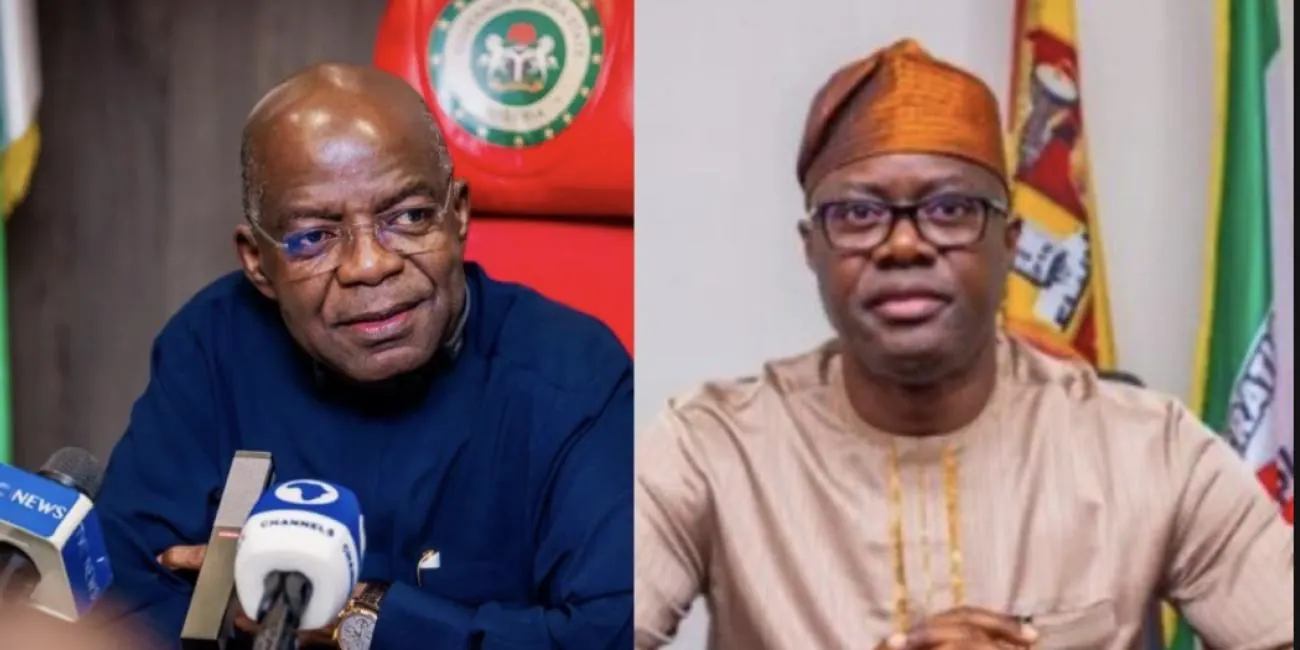
Governor Seyi Makinde of Oyo State and the presidential candidate of the Allied Peoples Movement (APM) have filed a suit against the Abia State Government over a N200 million fee imposed on presidential candidates seeking to display campaign materials in the state. The suit, filed before the Abia State High Court, challenges Governor Alex Otti, the state Attorney-General, the Abia State Signage and Advertisement Agency (ASAA), and the Abia State House of Assembly. The plaintiffs argue that the fee is excessive and amounts to a backdoor attempt to shut non-incumbent candidates out of public view.
The plaintiffs, represented by Chief Musibau Adetunbi, SAN, contend that Section 92 of the Electoral Act 2026 places a N10 billion ceiling on total spending for a presidential campaign nationwide. They argue that if every state and the Federal Capital Territory (FCT) imposed a similar N200 million billboard fee, the charges alone would consume more than 80 per cent of the statutory campaign spending limit. The plaintiffs claim they became aware of the fee while preparing to commence their nationwide campaign.
The plaintiffs raised six questions for determination and sought eight reliefs from the court. They are asking the court to set aside ASAA’s regulations governing political campaigns, including the N200 million fee or any other amount imposed under the regulations. They also seek an injunction restraining the defendants from enforcing the fee or removing, defacing, destroying or obstructing their campaign billboards and outdoor advertisements in Abia State.
The plaintiffs further want the court to declare the N200 million fee schedule inconsistent with federal law and unconstitutional, null and void ab initio. They cited Item F, Section 15(a) and (f) of the Third Schedule, Sections 1(3) and 4(5) of the Constitution, as well as Sections 92 and 99 of the Electoral Act 2026. They argue that the provision was intended to guarantee a level playing field for all contestants.
On the powers of the Independent National Electoral Commission (INEC), the plaintiffs contended that Section 9(1) of the Electoral Act, read with the relevant constitutional provisions, gives INEC exclusive authority to make rules and regulations governing campaigns for elections. They acknowledged that outdoor signage is within the residual legislative powers of the states but argued that such powers cannot be exercised in a manner that is prohibitive or discriminatory.
The plaintiffs also relied on the supremacy of federal law, arguing that under Sections 1(3) and 4(5) of the Constitution, any state law, directive or regulation inconsistent with the Electoral Act is void to the extent of the inconsistency. They further contended that the fee amounts to the use of ASAA to “constructively exclude” non-incumbent candidates from public visibility, contrary to Section 99(2) of the Electoral Act.
The plaintiffs warned that unless the court intervenes urgently, Makinde could suffer irreparable harm to his constitutional right to seek public office, while the principle of a level playing field in the electoral process could also be undermined. The court is yet to fix a date for the hearing of the suit.
Key points
- The N200 million fee imposed by Abia State Government is 20 times higher than what the Electoral Act 2026 permits a candidate to spend on billboards in any single state.
- The plaintiffs are seeking an injunction restraining the defendants from enforcing the fee or removing, defacing, destroying or obstructing their campaign billboards and outdoor advertisements in Abia State.
- The suit challenges the Abia State Government's authority to impose a fee that may undermine the principle of a level playing field in the electoral process.