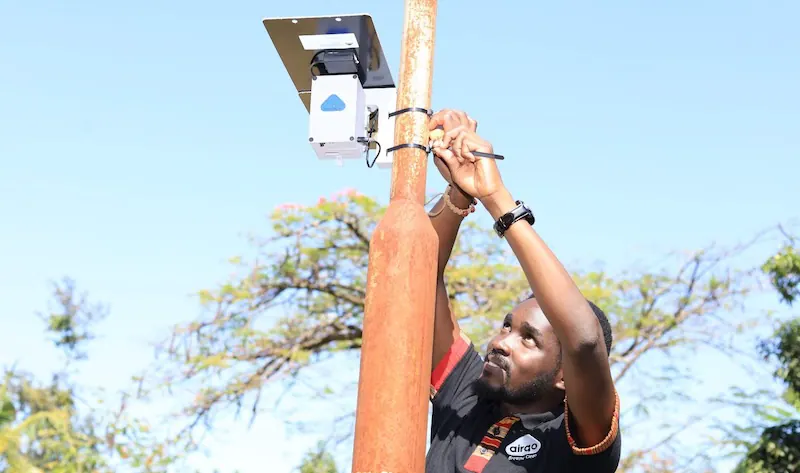
AirQo, founded at Makerere University in 2015, uses low-cost air quality monitors, open data, and artificial intelligence to track pollution and provide evidence to communities, researchers, and policymakers. The initiative was selected under the Clean Our Air Earthshot, one of five categories of the global environmental prize founded by Prince William in 2020. AirQo is addressing what it describes as a largely invisible public health threat across Africa, where many cities lack reliable, locally relevant data showing where pollution is concentrated.
According to AirQo, air pollution was the second-leading risk factor for death across Africa in 2019 and was associated with an estimated 1.1 million deaths that year. Rapid urbanization has increased emissions from transport, industry, and waste, while limited monitoring infrastructure has made it difficult for many African cities to understand the scale and distribution of the problem. AirQo's monitors complement reference-grade monitoring stations used by governments, while the data helps authorities identify areas with high pollution levels and plan interventions.
As a finalist, AirQo will receive support from The Earthshot Prize to expand its work across African cities, strengthen the investment case for clean-air infrastructure, and build partnerships with governments, funders, technology companies, and urban leaders. The support is also expected to help AirQo expand its open-source data platform, build local technical capacity, and raise the profile of air quality as a public and policy priority. Prince William, president and founder of The Earthshot Prize, said the finalists demonstrated that environmental progress was possible despite the scale of the challenges facing the world.
AirQo was established after its founder, Prof Eng Bainomugisha, observed worsening air quality after moving from rural Uganda to Kampala. Bainomugisha, a professor of computer science at Makerere University, said the data needed to understand Kampala's pollution problem was largely unavailable, while conventional monitoring stations were expensive and difficult to maintain at the scale required by African cities. The AirQo team subsequently developed lower-cost monitors designed for African operating conditions.
AirQo currently operates more than 500 air quality monitors in more than 16 cities across nine African countries, including Uganda, Kenya, Nigeria, Ghana, Senegal, Cameroon, Zambia, Mozambique, and South Africa. The initiative says its network provides real-time air quality information to communities with a combined population of more than 30 million people. In Uganda, AirQo's evidence and technical expertise contributed to the development of the country's first national air quality regulations.
AirQo plans to expand its monitoring networks to 10 additional African cities, with a long-term target of reaching more than 50 cities by 2030. It also plans to launch an open-source air quality platform featuring a conversational artificial intelligence interface that would allow city leaders to ask practical questions about pollution exposure and possible responses. The initiative has secured $6 million in support from partners, including Google.org, the World Bank, and the Clean Air Fund.
The Earthshot Prize was established in 2020 to identify and support solutions to major environmental challenges around the world. This year's 15 finalists were selected from nearly 7,000 nominations from 169 countries. Five winners will be announced at the 2026 Earthshot Prize Awards in Mumbai, India, in November. Key points include:
Key points
- AirQo uses low-cost air quality monitors and AI to track pollution across African cities.
- The initiative has secured $6 million in support from partners to expand its work.
- AirQo plans to expand its monitoring networks to 50 cities by 2030.