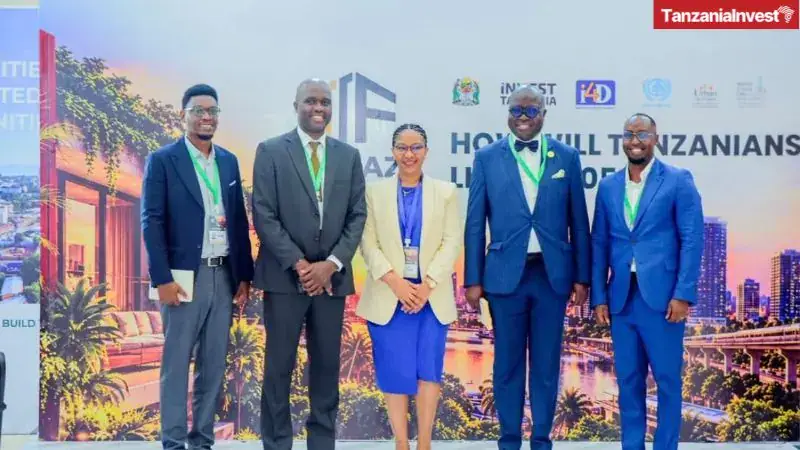
The Makazi 2050 Forum, hosted by Innovation for Development (I4D) on 27 October 2026 in Dar es Salaam, brought together government officials, development agencies, and private sector representatives to discuss Tanzania's housing needs and urban development through 2050. The forum highlighted the country's estimated housing shortage of 3.8 million units. With a growing population, Tanzania faces increasing demand for housing, and the forum aimed to explore opportunities for investment in housing and locally manufactured building materials.
Discussions at the forum covered a range of topics, including affordable housing, infrastructure, construction materials, investment conditions, and the use of digital technology in future settlements. Participants emphasized the need for roads, electricity, water networks, and transport corridors to be planned and developed before residential settlement. They also called for changes to municipal zoning rules to accommodate higher-density development. Secure land tenure and predictable taxation and administration were identified as requirements for attracting long-term real estate investment.
The forum also explored opportunities for local manufacturing of building materials. Speakers identified potential for replacing imported furniture, doors, and windows with locally produced goods, utilizing domestic supplies of cement, steel, roofing sheets, and glass. Participants discussed a shift towards high-rise housing as urban land becomes scarcer. Lulu Mkude, Director of Business Management at the Tanzania Trade Development Authority (TanTrade), noted that despite domestic capacity, Tanzania imported USD 34.5 million worth of furniture and USD 7.1 million worth of doors and windows.
The forum highlighted the need for stricter municipal enforcement of building codes, the use of tools such as the Building Resilience Index, and closer collaboration with academic institutions to address risks associated with uncertified labor and inadequate inspections. Proposals included reserving at least 20% of developed land for open green spaces and parks. Digital discussions covered skills, cybersecurity, personal data protection, regulatory compliance, and reliable connectivity. Participants proposed digital identity verification and integrated property management systems for online leasing, utility payments, and tenant administration.
Dr. Grace Lubaale, head of the United Nations Human Settlements Programme (UN-Habitat) in Tanzania, cited TZS 466 billion for the national housing scheme and a further TZS 607 billion in pipeline joint-venture commercial and residential housing projects. She emphasized that housing cannot be seen merely as a social welfare issue, but as a productive economic asset. Strategic public investment must unlock private capital, Lubaale said.
Murtaza Brazille, Managing Partner at Grant Thornton Tanzania, addressed the conditions needed to attract capital into housing and real estate. He noted that investors require a predictable tax environment and administrative stability to earn a fair return on long-term capital. Dr. Nkundwe Mwasaga, Director General of the Information and Communication Technologies (ICT) Commission, called for research and innovation to develop affordable accommodation and business opportunities in housing technology.
Tanzania faces a current housing deficit of 3,000,000 units, with annual demand rising by 200,000 units and an annual shortfall of 390,981 houses. The population reached 62.7 million at the 2022 Population and Housing Census and is currently estimated at around 70 million, growing at 3.2% per year and projected to double to approximately 123.4 million by 2044. By 2050, Tanzania will require 26,840,909 housing units to meet the needs of its projected population.
Key points
- Tanzania's housing shortage is estimated at 3.8 million units.
- The Makazi 2050 Forum explored opportunities for local manufacturing of building materials.
- The forum emphasized the need for investment in housing and infrastructure to address Tanzania's housing needs through 2050.