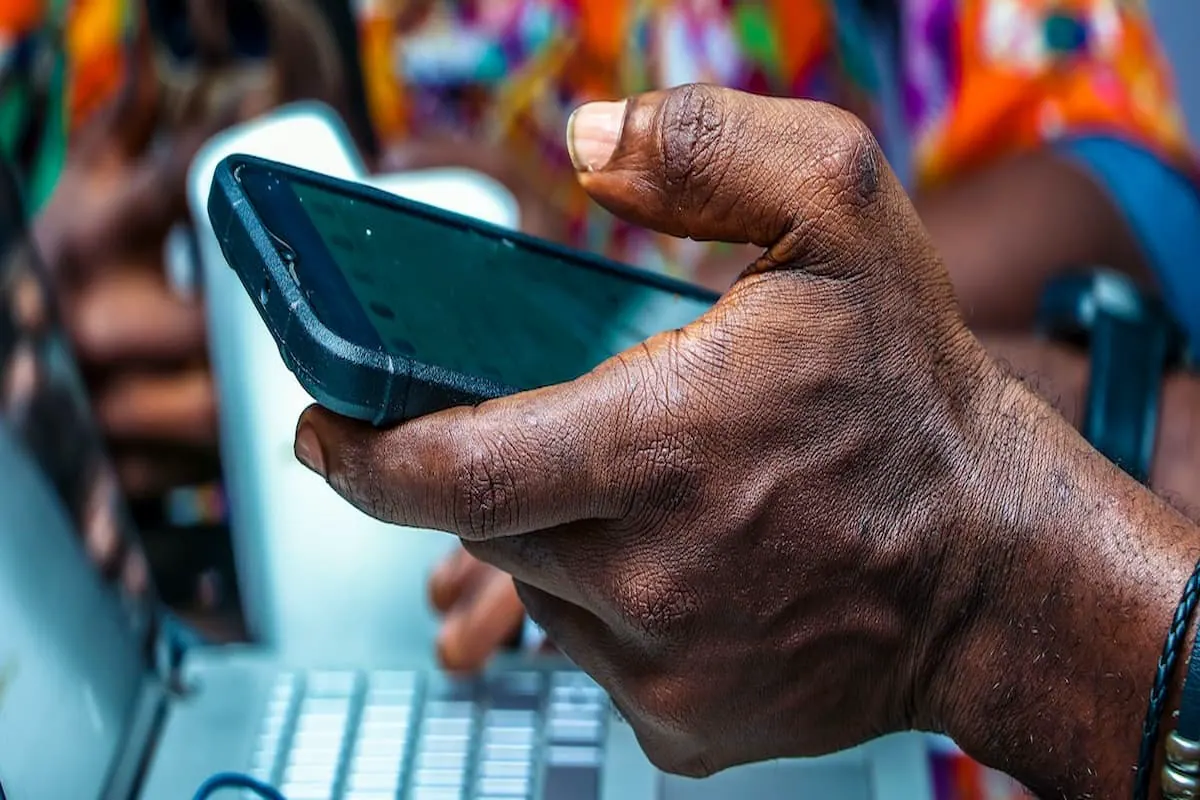
A recent report by the Global System for Mobile Communications Association (GSMA) has highlighted a concerning trend in Africa's internet usage. Despite steady growth in mobile connectivity, the majority of African internet users are confined to social media and entertainment, neglecting high-value-added services. The report, "The State of Mobile Internet Connectivity 2026," notes that 83% of African users connect to the internet daily, but their usage remains superficial.
The GSMA report reveals that between 90 and 96% of internet users dedicate their data plans to social media platforms, instant messaging services like WhatsApp, and video content. In contrast, the adoption of essential digital tools is marginal. For instance, less than 38% of internet users in Senegal, Nigeria, and Uganda utilize online public services. Similarly, activities like job searching, e-commerce, and accessing agricultural data attract less than 30% of users in countries such as Ghana and Ethiopia.
The digital divide is even more pronounced in rural areas and among women. In Ethiopia, while 29% of urban dwellers use the internet daily, only 4% of rural residents diversify their online activities. In Nigeria, the rate of diversified usage drops to 13% in rural areas, compared to 41% in cities. The GSMA emphasizes that bridging this gap no longer depends solely on network coverage or smartphone prices, but rather on enhancing digital skills.
The GSMA report stresses that without targeted training in areas like healthcare, education, and finance, the continent risks missing out on billions of dollars in potential GDP. The organization urges stakeholders to focus on developing digital literacy to unlock the full potential of the internet in Africa. This requires a concerted effort to provide Africans with the skills needed to leverage the internet for more than just social media and entertainment.
The issue is not unique to Africa, but the continent's economic development is particularly vulnerable to the consequences of passive internet use. As the GSMA report notes, Africa's economic growth is closely tied to its ability to harness the potential of the digital economy. By failing to do so, the continent may struggle to achieve its development goals.
To address this challenge, governments, private sector stakeholders, and civil society organizations must collaborate to promote digital skills training and education. This can involve initiatives like online courses, vocational training programs, and public awareness campaigns. By investing in digital literacy, Africa can unlock new opportunities for economic growth and development.
The GSMA report serves as a wake-up call for African policymakers and stakeholders to prioritize digital skills development. By doing so, they can help bridge the digital divide and ensure that the continent's internet users are equipped to harness the full potential of the digital economy. This, in turn, can drive economic growth, improve living standards, and enhance Africa's global competitiveness.
Key points
- The majority of African internet users are limited to social media and entertainment.
- The digital divide is more pronounced in rural areas and among women.
- Enhancing digital skills is crucial to unlocking the full potential of the internet in Africa.