A team of Egyptian archaeologists from the Supreme Council of Antiquities has made a significant discovery in the Bir Al-Chaghala archaeological site, located in the Dakhla Oasis of Egypt's New Valley governorate. The team unearthed a pyramid-shaped tomb built from mud bricks, dating back to the Roman era. The tomb was intended for a man and his wife, and its original architecture and rich inscriptions make it a remarkable find. The excavation revealed several important artifacts, including a stone stela with a Greek funerary elegy.
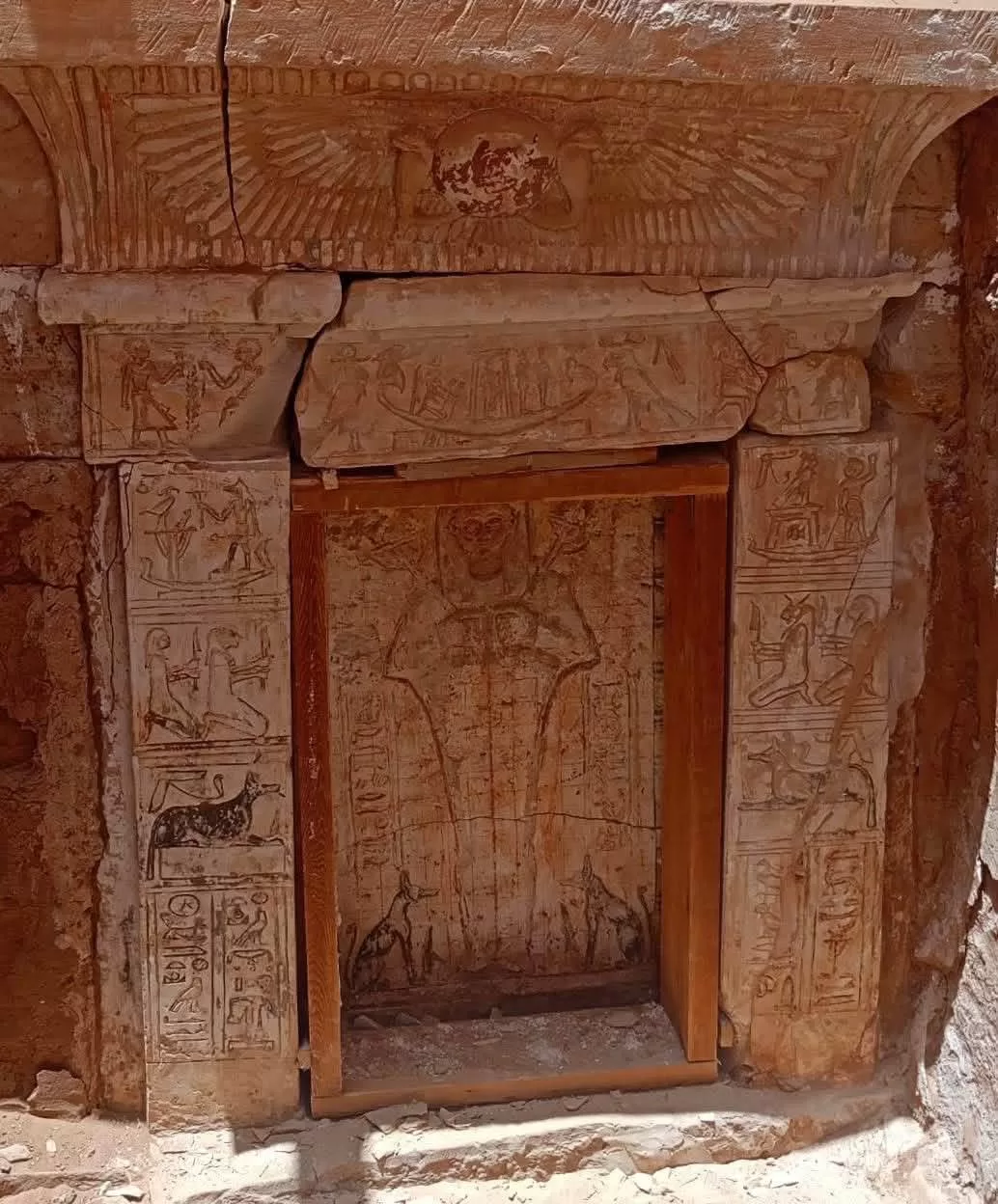
The tomb's architecture is notable for its unique design, featuring a 14-step staircase leading to the main entrance, constructed from sandstone in traditional Egyptian style. The entrance is adorned with reliefs and hieroglyphic inscriptions, including funerary formulas and recitations meant to protect the deceased. The stone entrance is one of the most remarkable elements discovered in the Bir Al-Chaghala necropolis. Above the entrance, a decorated Egyptian cornice features a winged solar disk and two cobras, followed by an architectural element representing a bundle of reeds.
The tomb's interior contains a variety of artifacts, including a stone offering table, a sandstone purification basin, and a collection of pottery. A bronze coin bearing a relief of Roman Emperor Constantine was also discovered. The Supreme Council of Antiquities' mission aims to shed light on the history of the Egyptian civilization and its diversity throughout the ages. The discovery highlights the richness and diversity of Egypt's archaeological heritage, particularly in the oasis regions.
The funerary elegy, inscribed on the stone stela, is written in ancient Greek. This rare find provides valuable insights into the cultural and religious practices of the time. According to Dr. Hicham Al-Leïthi, Secretary General of the Supreme Council of Antiquities, the discovery is significant due to its architectural elements, inscriptions, and funerary texts, which offer a glimpse into the lives of people in the Dakhla Oasis during the Roman era.
The tomb's entrance features a rare scene from the Book of Amdouat, an important ancient Egyptian funerary text. The scene represents the seventh hour of the book, which is a significant discovery, as it has not been found in other tombs in this necropolis. This finding provides new information about the funerary practices and beliefs of the ancient Egyptians.
Egyptian Minister of Tourism and Antiquities, Chérif Fathy, emphasized the importance of this discovery, highlighting the richness and diversity of Egypt's archaeological heritage. He noted that the ministry is committed to supporting Egyptian archaeological missions, which continue to uncover new discoveries that enrich our understanding of Egyptian history and civilization.
The discovery in the Dakhla Oasis is a significant addition to Egypt's archaeological record, providing new insights into the lives of people in the region during the Roman era. The Supreme Council of Antiquities will continue to study and preserve the tomb and its contents, ensuring the long-term conservation of Egypt's cultural heritage.
Key points
- The tomb's unique architecture and rich inscriptions make it a remarkable find.
- The discovery includes a rare scene from the Book of Amdouat and a Greek funerary elegy.
- The find highlights the richness and diversity of Egypt's archaeological heritage in the oasis regions.