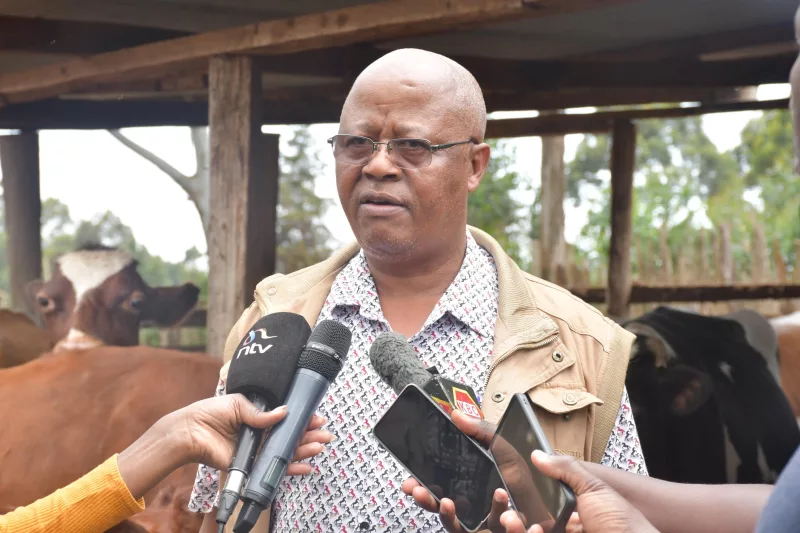
A severe maize shortage in Kenya's Trans Nzoia county is having a ripple effect on the country's dairy industry. The region's poor maize harvest is causing grain prices to rise, putting pressure on livestock farmers who rely on maize and other grains to feed their animals. Dairy farmer John Kimani is feeling the impact, with his 23 cows now producing between 400 and 460 litres of milk a day, down from about 700 litres previously.
The maize shortage is a significant challenge for dairy farmers like Kimani, who says feed has become the biggest hurdle in his 20 years of dairy farming. Farmers are traveling long distances to find fodder and other feed, adding to their production and transport costs. The shortage is also affecting feed manufacturers, who are struggling to secure raw materials. James Mwangi, chairperson of the Association of Kenya Feed Manufacturers (Akefema) Mt Kenya region, says the shortage is creating pressure across the livestock value chain.
The problem is not limited to maize, as Kenya relies heavily on imported feed ingredients, particularly protein sources. According to Akefema chairperson Joseph Karuri, more than 80 per cent of critical feed ingredients, including soybean, sunflower meal, and cottonseed meal, are imported. This reliance on imports makes the feed industry vulnerable to fluctuations in global prices and availability.
Kenya has a large structural feed deficit, with the livestock development department estimating that the country requires about 55 million tonnes of dry matter feed annually but produces only 40 per cent of this requirement. The government's National Feed Strategy aims to address the shortage and reduce the cost of livestock production. In July, the government announced plans for a Sh465 billion strategy aimed at improving feed availability, affordability, and quality.
Experts say that Kenya needs to reduce its dependence on a few sources of feed raw materials and expand production of alternative grains and protein crops. Mwangi suggests that the country needs to diversify its sources of animal-feed raw materials and develop another grain basket, including through irrigation. This would help to reduce the country's reliance on the Rift Valley as the main grain-producing zone, which leaves the feed industry vulnerable to drought and crop failure.
The current crisis comes at a time when Kenya's dairy sector is experiencing pressure on milk supplies. According to the Kenya National Bureau of Statistics, marketed milk increased by 11.6 per cent to 1.014 billion litres in 2025. However, milk deliveries to processors have fallen, with formal deliveries declining from 84.4 million litres in June 2026 to 81.3 million litres in July.
Dr Martin Murigi, director of the Kenya Agricultural and Livestock Research Organisation's Biotechnology Research Institute, says that the feed challenge is increasingly linked to changing weather patterns. He suggests that farmers need to invest in crops that can withstand water stress and mature faster, such as Kalro's drought-tolerant maize varieties. Murigi also notes that climate change is altering pest and disease pressures, making it essential to develop more resilient agricultural systems.
Key points
- Kenya's maize shortage is affecting dairy farmers and feed manufacturers, leading to increased costs and decreased milk production.
- The country has a large structural feed deficit, producing only 40 per cent of its annual requirement of 55 million tonnes of dry matter feed.
- Experts recommend that Kenya diversify its sources of animal-feed raw materials and expand production of alternative grains and protein crops to address the feed shortage.