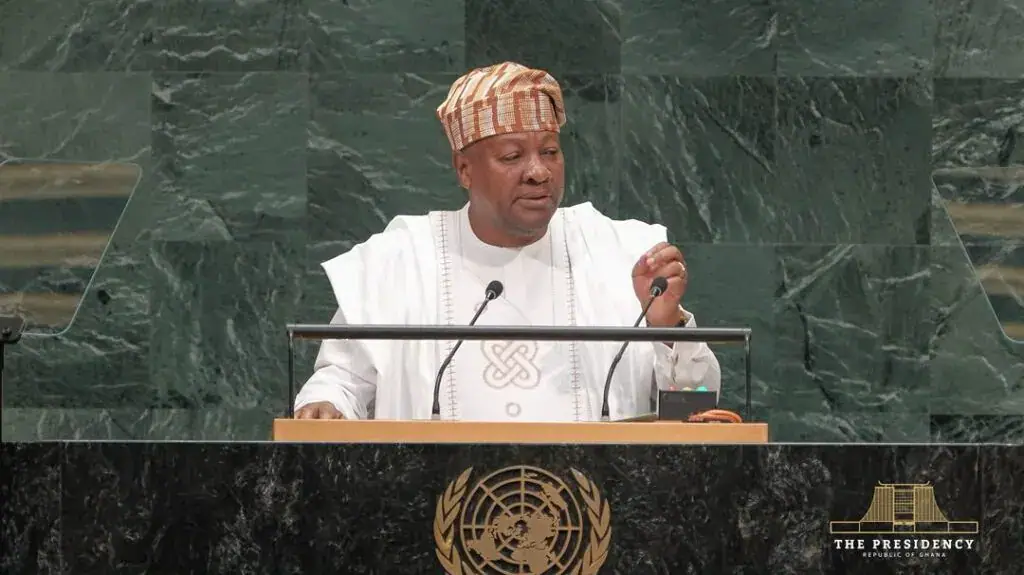
Ghana's President John Dramani Mahama has welcomed the UK government's new willingness to consider a formal apology for the transatlantic slave trade. Mahama described this development as a watershed moment in the global push for reparatory justice. He made this statement on Sunday, 1 November 2026, after UK Prime Minister Andy Burnham acknowledged the grave violations of human dignity linked to the slave trade.
Mahama, who serves as the African Union's Champion on Reparations and chairs the Global Advisory Panel on Reparatory Justice, called Burnham's position a bold and honest recognition of Britain's historical legacy of slavery and colonialism. This shift is particularly significant given that it follows a Ghana-led United Nations resolution declaring the transatlantic slave trade and the racialised enslavement of Africans a crime against humanity.
The UK had chosen to abstain from the vote on the UN resolution. Mahama pointed to Ghana's own history as grounds for its leading role in the reparations campaign, citing the slave castles and forts at Cape Coast, Elmina, and Christiansborg. These sites are central to Ghana's case, as millions of Africans passed through them before being shipped across the Atlantic into bondage.
Mahama acknowledged that no apology or acknowledgement could undo the suffering inflicted on those millions, but said such gestures would mark a break from decades of historical denial and open the door to genuine redress. He framed the UK's position as a move toward healing, reconciliation, and redress for people of African descent worldwide.
Mahama set out five issues he wants to anchor any structured dialogue between Britain, Ghana, other African Union states, and the Caribbean Community (CARICOM). These issues include a formal apology, coordinated action against systemic racism and Afrophobia, investment in education and healthcare, the return of stolen cultural heritage, and development partnerships to tackle structural poverty and inequality.
Mahama praised Burnham and UK Foreign Secretary Ed Miliband for their leadership in confronting the past. He argued that reckoning with historical injustice was a mark of statesmanship rather than weakness. The president said Ghana stood ready to work with the African Union, CARICOM, the United Kingdom, and other members of the international coalition pursuing reparatory justice.
The goal of this collective effort is lasting reconciliation and a future free of racism and discrimination. Mahama's statement reflects Ghana's commitment to working with international partners toward a shared goal of redress and healing. The UK's openness to apology is seen as a significant step toward achieving this goal.
Key points
- President Mahama welcomes UK's willingness to consider apology for transatlantic slave trade
- UK Prime Minister Andy Burnham acknowledges grave violations of human dignity linked to slave trade
- Mahama sets out five issues for structured dialogue between Britain, Ghana, and CARICOM