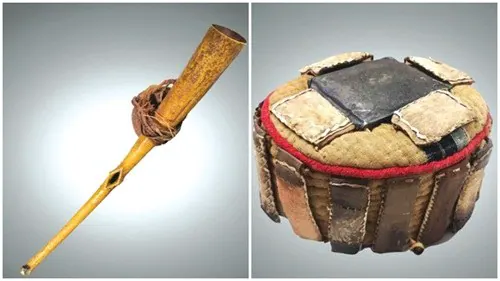
President John Dramani Mahama of Ghana has made a renewed call for Western nations and institutions to return African human remains and looted artefacts. He emphasized that these items, including an ivory trumpet fused with a human skull fragment in Los Angeles, are not collectibles and must be returned to their countries of origin. This demand is part of a broader push for reparations and restitution for historical wrongs.
The ivory trumpet, housed at the Fowler Museum at the University of California, Los Angeles (UCLA), features a fragment of a human skull attached to it. This object, produced before 1896, raises questions about how the remains of an African individual came to be incorporated into a museum-held artefact abroad. President Mahama's remarks also highlighted a Dagbon warrior's headgear looted by German colonial soldiers from the Adigbo battlefield.
The Dagbon Kingdom, located in Ghana's Northern Region, has a long history of resistance to European colonial incursions. The removal of the headgear is part of a broader legacy of conquest-era seizure of cultural property and human remains. President Mahama's comments align with years of pressure from the African Union and civil society groups on European governments and museums to repatriate items taken during colonial conquest.
Restitution campaigns across the continent have previously focused on well-known cases such as the Benin Bronzes and various royal regalia. However, President Mahama's remarks broaden the demand to include human remains specifically, an area that has drawn less public attention than artefacts but carries its own ethical weight. This push for restitution touches on questions of dignity and historical justice.
For many Ghanaian communities, particularly in the Dagbon area, the return of items such as the warrior's headgear would carry both symbolic and historical significance. It would restore objects tied to ancestral resistance against colonial forces. The return of these items is seen as a matter of historical justice, especially where human remains, not just cultural objects, were taken from African soil.
The Fowler Museum trumpet and other looted artefacts have been held in foreign institutions for over a century. While it is unclear whether the Fowler Museum or German authorities have responded to President Mahama's remarks, no negotiations or agreements have been announced. The demand for reparations and restitution now needs to move to what President Mahama described as "the next level" for the African continent.
Restitution refers to the return of specific looted objects or remains to their place or community of origin, while reparations is the broader demand for redress, sometimes financial, sometimes symbolic, for historical wrongs such as colonial exploitation and the transatlantic slave trade. Museums worldwide are increasingly under scrutiny for their collections of items acquired during the colonial era, often without the consent of the communities from which they were taken.
Key points
- President Mahama demands the return of African artefacts and human remains held in foreign museums.
- The return of looted items is seen as a matter of historical justice and dignity for African communities.
- The African Union and civil society groups have been pressuring European governments and museums to repatriate items taken during colonial conquest.