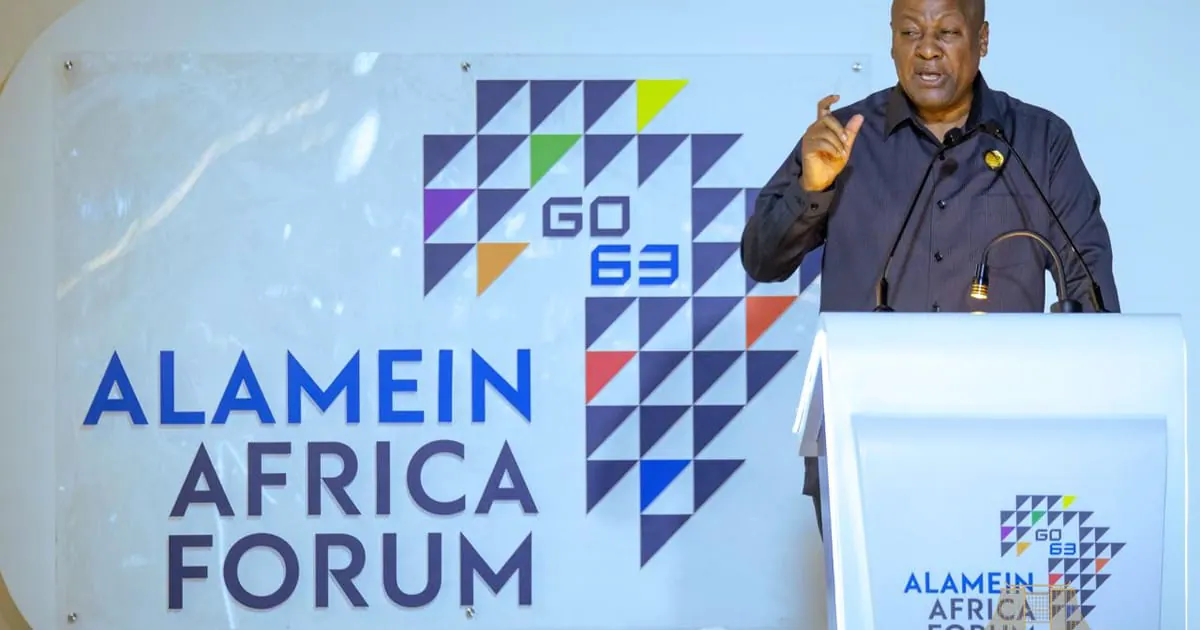
Former Ghanaian President John Mahama has issued a challenge to key stakeholders across Africa's economic landscape, demanding concrete mechanisms to transition the continent from health dependency to self-reliance. Speaking at the Alamein Africa Forum in Egypt, Mahama emphasized that health must be treated as an investable, high-growth economic sector, rather than a charitable cause or secondary budget expenditure. He posed pivotal questions to financiers, regulators, and industrialists to address systemic bottlenecks crippling local pharmaceutical production.
Mahama's call to action comes amid alarming macroeconomic and healthcare vulnerabilities in Africa. The continent imports over 70% of its pharmaceuticals and 99% of its vaccines, resulting in significant foreign exchange outflows. Furthermore, projections from the Organisation for Economic Co-operation and Development indicate a decline in traditional donor health assistance to Africa, ranging from 29 to 46% compared to 2024 levels. Mahama cited economic data to support his stance, highlighting the potential returns on investment in healthcare.
The former President pointed to the Copenhagen Consensus, which suggests that every dollar invested in basic maternal and newborn care yields $87 in economic and social returns. Additionally, data from the Lancet Commission demonstrates that reduced mortality rates accounted for nearly a quarter of income growth in developing nations during the early 2000s. Mahama's remarks aimed to reframe the shrinking aid landscape as a commercial opportunity.
To address regulatory fragmentation and market access hurdles, Mahama announced the introduction of HINGE, a digital platform developed collaboratively by the African Medicines Agency, Institut Pasteur, and AfroChampions. The platform aims to streamline regulation, clinical validation, and commercialization across borders into a unified process. This initiative seeks to facilitate the growth of Africa's pharmaceutical sector.
Mahama also highlighted successful continental models, such as Egypt's reduction of Hepatitis C prevalence from 10% to below 0.5% through local production, technology transfer, and domestic champions like Pharco. He praised Nigeria's African Medical Centre of Excellence in Abuja for curbing the $6 billion lost annually to outbound medical tourism. These examples demonstrate the potential for African countries to achieve health sovereignty through strategic investments and partnerships.
The Accra Reset Presidential Council, chaired by Mahama, is deploying dedicated Task Forces and a Reform Interlock Observatory to track continental capital flows and dismantle non-tariff barriers across regional value chains. This effort aims to promote economic integration and facilitate the growth of Africa's healthcare sector. By addressing these challenges, Mahama hopes to mobilize stakeholders and drive progress toward health self-reliance.
Mahama urged delegates to stop treating health as a line-item expense, emphasizing the need for a paradigm shift in how healthcare is approached on the continent. By leveraging innovative financing mechanisms, strategic partnerships, and regulatory reforms, Africa can reduce its dependence on imported pharmaceuticals and vaccines, ultimately achieving greater health sovereignty. The challenge issued by Mahama seeks to galvanize action among financiers, regulators, and industrialists to support this vision.
Key points
- Mahama demands bold answers from financiers, regulators, and industrialists to secure Africa's health sovereignty.
- The continent imports over 70% of its pharmaceuticals and 99% of its vaccines, resulting in significant foreign exchange outflows.
- Mahama introduced the HINGE digital platform to streamline regulation, clinical validation, and commercialization across borders.