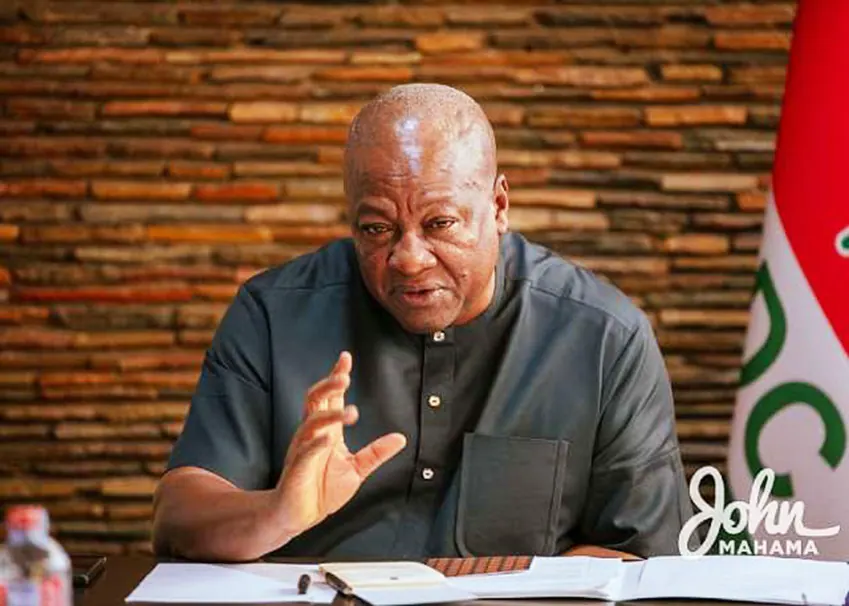
Ghanaian President John Dramani Mahama has expressed deep concern over the growing cocaine trafficking problem in the country, instructing that all lapses contributing to the use of Ghana's ports for narcotics trafficking be addressed. According to Government Communications Spokesperson Felix Kwakye Ofosu, President Mahama is "very, very serious" about the issue and has made it clear that Ghana must not become a transit point for narcotics. The President has directed a comprehensive examination of the circumstances surrounding recent cocaine cases.
The directive includes an investigation into the recent cocaine cases, with a report expected within two weeks. The report will contain information suitable for public disclosure, while portions involving intelligence and measures to strengthen security systems will be handled appropriately. Mr. Ofosu stated that the President's directive aims not only to establish what went wrong but also to introduce reforms to prevent Ghana's ports from being exploited for illicit drug trafficking.
The situation is worrying, particularly following reports linking Ghana to significant volumes of cocaine passing through international ports. The government does not want Ghana's name associated with the international narcotics trade and has engaged international partners to strengthen cooperation in the fight against drug trafficking. President Mahama also discussed the matter with international partners during his recent participation in the United Nations General Assembly.
Mr. Ofosu emphasized that the President's determination to deal with the problem extends to officials whose actions or omissions might have contributed to the breaches. An investigation is already underway, and any person found culpable will be held accountable, regardless of their position. Four Customs officials have been arrested in connection with a cocaine case, demonstrating that investigations are not limited to outsiders.
The government spokesperson pushed back against criticism from the opposition New Patriotic Party (NPP) over the cocaine cases, accusing them of engaging in "political theatre and masquerade" instead of contributing to efforts to address the problem. The government is particularly concerned about false claims that cocaine-manufacturing laboratories exist in Ghana, which have been repeatedly circulated by opposition figures.
The MV Benjamin case highlights the need for strengthened security and port-control systems, as external intelligence agencies had previously alerted Ghanaian authorities to a vessel carrying cocaine heading towards Ghana, but the shipment still found its way into the country. President Mahama is determined to clamp down on drug trafficking and will act when investigations establish wrongdoing.
The government will await the outcome of the investigations before taking further disciplinary action against officials whose conduct is found to have contributed to the cocaine cases. Reforms at the ports will address identified weaknesses in human resources, procedures, and equipment, and the government is determined to prevent a recurrence. The fight against narcotics must be pursued "no matter what it takes" and irrespective of whose interests might be affected.
Key points
- President Mahama has directed a comprehensive examination of recent cocaine cases and vowed to hold officials accountable.
- The government has engaged international partners to strengthen cooperation in the fight against drug trafficking.
- Reforms at the ports will address identified weaknesses in human resources, procedures, and equipment to prevent a recurrence of cocaine trafficking.