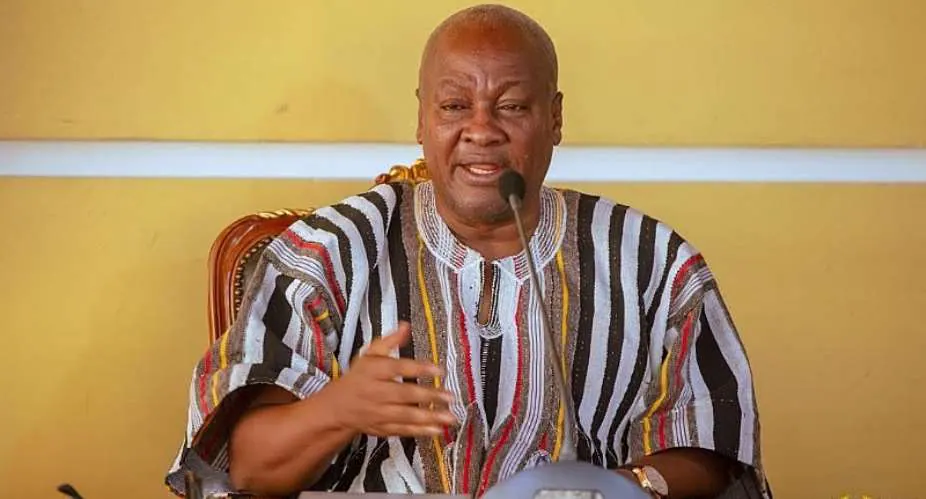
President John Dramani Mahama recently convened a town hall meeting with the Ghanaian community in New York City, where he emphasized the need for a national debate on regulating digital platforms like TikTok. The discussion centered on information integrity, algorithmic amplification, and the challenges of balancing free speech with the prevention of abusive content. This conversation reflects broader global discussions on digital governance, with the European Union and the United States also grappling with these issues.
President Mahama highlighted the significant changes in modern communication, noting that traditional journalism relies on established entities, whereas digital platforms enable anyone with a mobile phone to publish content instantly to massive audiences. He introduced the concept of "information integrity," stressing that this shift creates unique challenges for society. The President cited TikTok as an example, stating that its regulation is a concern not only in Ghana but also globally.
The President explained that the democratization of information, facilitated by digital platforms, has led to the rapid dissemination of unverified claims, which can spread quickly due to algorithmic amplification. He emphasized that this raises concerns about information integrity, even on platforms like TikTok. Legal and media experts note that algorithmic transparency remains a central hurdle for international regulators attempting to curb misinformation without stifling legitimate discourse.
President Mahama addressed the culture of online vitriol, stating that his push for regulatory debate is not driven by personal sensitivity. He drew on his political experience, including electoral defeat and intense public scrutiny, to illustrate his resilience against criticism. Using a vivid metaphor, he described his ability to withstand relentless criticism, saying, "As a leader, I don't mind being insulted. I've been insulted, I was vilified, I was voted out of office; so if you insult me, I don't mind."
The President's comments on online criticism come amid reports of citizens being arrested for insulting him. He expressed unease over these incidents, clarifying that they occurred without his direct knowledge. This has raised concerns about the balance between free expression and the regulation of online content. President Mahama's stance on this issue is seen as increasingly important as digital political discourse grows more polarized worldwide.
President Mahama's call for a national debate on regulating digital platforms has sparked a necessary conversation about the role of these platforms in Ghanaian society. The issue has significant implications for the country's democratic development, as it seeks to balance the benefits of digital communication with the need to protect citizens from misinformation and online harm. This conversation is expected to continue in the coming weeks and months.
Key stakeholders, including media experts, policymakers, and civil society organizations, are expected to participate in the national debate on regulating digital platforms. The outcome of this conversation will likely have far-reaching implications for Ghana's digital landscape and its approach to issues like algorithmic accountability, information integrity, and free expression.
Key points
- President Mahama emphasized the need for a national conversation on regulating digital platforms like TikTok.
- The President highlighted the challenges of balancing free speech with the prevention of abusive content on digital platforms.
- President Mahama's call for regulation is driven by concerns over information integrity and algorithmic accountability.