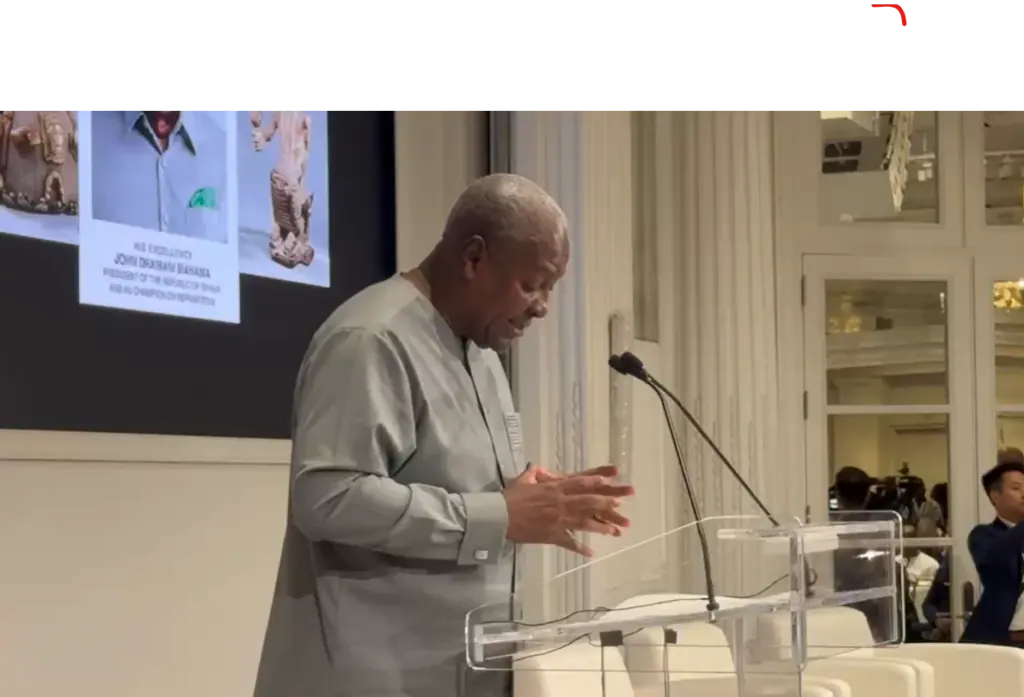
President John Dramani Mahama of Ghana has called for concrete measures to advance the global reparatory justice agenda. He made the call at a high-level side event on the next steps for reparatory justice held on the sidelines of the 81st United Nations General Assembly in New York. Mahama outlined three proposals to guide the transition from recognising historical injustices to implementing remedies.
Mahama's proposals focus on implementing the Accra Next Steps Commitments on Reparatory Justice. This framework aims to turn the United Nations' recognition of historical injustices linked to the trafficking and enslavement of Africans into practical action. He emphasised the need to move from acknowledgement to action, from commitments to implementation. The President identified the establishment of a permanent and institutionalised global system for restitution as a top priority.
The first proposal involves developing clear and standardised legal and diplomatic procedures to support provenance research. This would improve access to historical archives and address legal obstacles that hinder restitution. Mahama also called for the unconditional return of human remains to Africa as an immediate priority. He urged the United Nations and countries that hold African cultural property to take action in this regard.
Mahama's second proposal focuses on strengthening Africa's ability to receive, preserve and manage cultural artefacts returned to the continent. He rejected the argument that restitution should be postponed until African countries have sufficient facilities to preserve returned items. Instead, he argued that capacity constraints must not be used as a justification for continued possession.
The President noted that efforts are underway to develop the required infrastructure. Initiatives such as the African Union's Great African Museum and the AU-EU Museum Partnership are examples of this. Mahama's third proposal seeks to make cultural heritage a driver of economic and social development. He appealed to multilateral development banks, international financial institutions, foundations and private-sector organisations to support investments in Africa's cultural infrastructure.
Such investments should include regional archives, conservation laboratories, digitisation initiatives and professional training programmes. Mahama argued that properly preserved and presented cultural heritage could contribute significantly to education, national identity, tourism and the creative economy. This, he believes, can be achieved through the proposed framework.
The proposals come after the UN General Assembly adopted Resolution 80/250 on March 25. Ghana has described this development as an important step in efforts to advance the global reparatory justice agenda. Mahama's call for action is seen as a significant move towards achieving reparations for historical injustices.
Key points
- President Mahama calls for a global framework to drive reparations for historical injustices.
- Mahama outlines three proposals to guide the transition from recognising historical injustices to implementing remedies.
- The proposals aim to establish a permanent global system for restitution, strengthen Africa's ability to manage returned cultural artefacts, and make cultural heritage a driver of economic and social development.