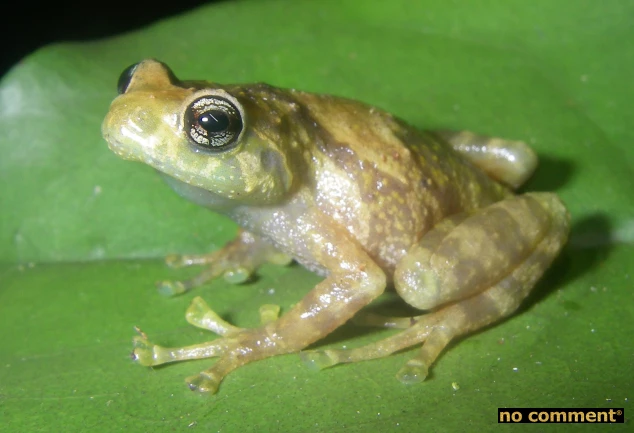
Madagascar, known for its rich biodiversity, is home to two newly discovered frog species. The species, Platypelis laetus and Rhombophryne ellae, were described by Malagasy and foreign researchers in the journal "Zoostematics and Evolution". Platypelis laetus, discovered in the SAVA region in 2012, is a small frog that can fit in a baptismal font. According to Dr. Andolalao Rakotoarison, herpetologist and originator of the discovery, these frogs are phytotelmic, living in water-filled bamboo holes.
The newly discovered Platypelis laetus measures between 24.3 and 25.6 mm, making it relatively small compared to other Platypelis species. Its body shape and coloration are characteristic of the species, with a greenish color on the throat, translucent and gray chest and anterior belly with distinct white spots. This species has been classified in the same group as Platypelis olgae from the Tsaratanana massif and two other unconfirmed species from the Sorata and Andravory massifs.
The name "laetus," meaning "happy" in Latin, was chosen by Dr. Rakotoarison to reflect the joy he felt while working on Madagascar's mini frogs. With the addition of Platypelis laetus, there are now 368 known frog species in Madagascar, accounting for 5% of the world's amphibian population. The discovery of new species highlights the importance of continued research and conservation efforts in Madagascar.
The second newly discovered species, Rhombophryne ellae, was found in the Ambre Mountain National Park in the far north of Madagascar. This "diamond frog" was described by German herpetologist Dr. Mark D. Sherz in the same journal. The park is known for its unique flora and fauna, including crater lakes and waterfalls. Despite being a relatively well-studied area, only two studies have been published on the park's reptiles and amphibians.
Rhombophryne ellae got its name due to the distinctive markings on its body. Dr. Sherz immediately recognized it as a new species upon observation, citing the orange flashes on its legs and large black spots on its hips as distinguishing features. Unfortunately, the species is already classified as threatened due to its limited range and micro-endemicity.
The discovery of Rhombophryne ellae was facilitated by a 2018 cyclone that forced the frog out of its habitat. Cyclones have played a significant role in the discovery of new frog species, as they often bring them out of their hiding places. The finding highlights the importance of continued exploration and research in Madagascar's unique ecosystems.
The discovery of these two new species underscores the importance of conservation efforts in Madagascar. With many frog species still awaiting description, continued research and protection of these unique ecosystems are crucial. The Malagasy and international scientific communities must work together to ensure the long-term survival of these and other endemic species.
Key points
- The discovery of Platypelis laetus and Rhombophryne ellae brings the total number of known frog species in Madagascar to 368.
- Both species are endemic to Madagascar, with Platypelis laetus found in the SAVA region and Rhombophryne ellae discovered in the Ambre Mountain National Park.
- The new species were described in the journal "Zoostematics and Evolution," highlighting the importance of continued research and publication in the field of herpetology.