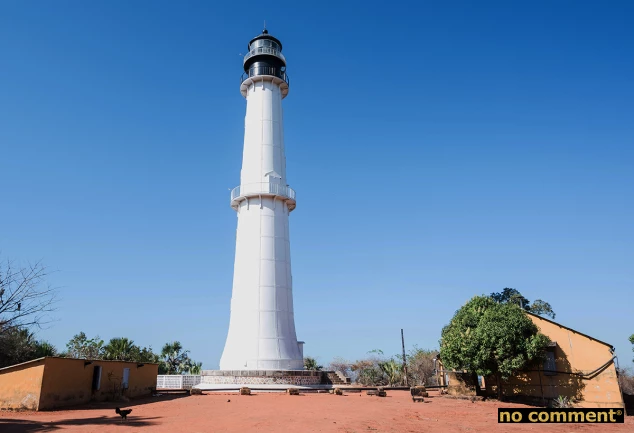
Located in the Boeny region of Madagascar, Katsepy is a peaceful village situated at the mouth of the Betsiboka River and the Mozambique Channel. The village is accessible by ferry, speedboat, or pirogue, and is home to a range of natural and cultural treasures. One of the village's most notable attractions is its historic lighthouse, also known as the "Eiffel Lighthouse," which was built in 1901 by French engineers. The lighthouse stands 119 meters above sea level and 36 meters above the ground, with a range of over 100 km.
The lighthouse, which is still operational today, was constructed using prefabricated materials and features a spiral staircase with 174 steps, similar to the Eiffel Tower. According to local legend, the lighthouse is said to be haunted by the spirit of a 3-year-old girl who fell to her death during its construction. The girl is believed to be the daughter of the engineer responsible for building the lighthouse, which was constructed without following local customs and rituals. The lighthouse is now maintained by Sylvain, a local guardian who has been taking care of it for many years.
Visitors to the lighthouse can climb to the top for breathtaking views of the surrounding bay and learn about its history and significance. The lighthouse played a crucial role in guiding ships into the port of Mahajanga, and its importance has been maintained over the years with the installation of modern lighting equipment. In the past, the lighthouse required 20 liters of kerosene to operate, but since 1993, it has been powered by solar panels. Sylvain is responsible for turning the light on and off every day, a task that has become much easier with the new system.
In addition to the lighthouse, Katsepy is also home to a range of unique flora and fauna. The nearby Antrema biocultural site is a nature reserve that is home to a variety of endemic species, including the crowned sifaka, a type of lemur that is considered sacred by the local Sakalava people. The reserve is also home to a range of other animals, including the fawn-colored lemur, microcebus, and a variety of bird species. The site is an important conservation area, with 153 species of plants, 76% of which are endemic to the region.
Another major attraction in Katsepy is the sacred baobab tree, known locally as "bouye" or "bozy." According to local legend, the tree has the power to grant wishes, and visitors come from all over to touch the tree and make a wish. The tree is said to have been discovered by a man from Toamasina who had a dream that led him to the tree, and it has been a place of pilgrimage ever since. Visitors are asked to remove their shoes and make a donation if their wish is granted.
Sylvain, the lighthouse guardian, has become a knowledgeable guide and host for visitors to Katsepy. He offers refreshments and traditional meals, and even provides accommodation for those who want to experience the village at night. The village's tranquil atmosphere and stunning natural beauty make it an ideal destination for those looking to escape the hustle and bustle of city life. With its rich history, unique culture, and breathtaking natural scenery, Katsepy is a must-visit destination for anyone traveling to Madagascar.
As the tourist season comes to a close, visitors to Katsepy are reminded of the importance of preserving the village's natural and cultural heritage. With its unique attractions and stunning natural beauty, Katsepy is a treasure trove of history and nature that is waiting to be discovered. Whether you're interested in history, culture, or nature, Katsepy has something to offer, and its tranquil atmosphere makes it the perfect destination for those looking to unwind and relax.
Key points
- The village of Katsepy is home to a historic Eiffel-style lighthouse and a sacred baobab tree, attracting visitors from around the world.
- The Antrema biocultural site is a nature reserve that is home to a variety of endemic species, including the crowned sifaka, a type of lemur that is considered sacred by the local Sakalava people.
- Visitors to Katsepy can experience the village's unique culture and natural beauty, with opportunities to climb the lighthouse, visit the sacred baobab tree, and explore the surrounding nature reserve.