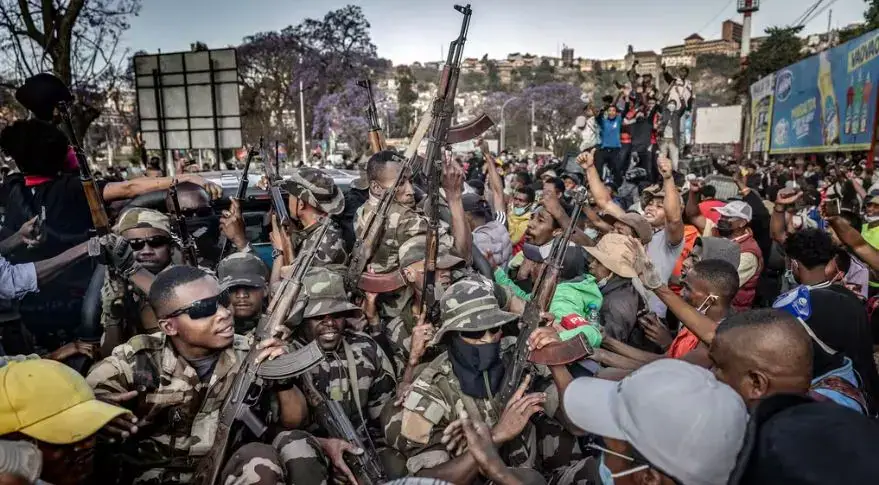
The Constitutional Court of Madagascar has validated the impeachment of President Andry Rajoelina, a move that had been voted on by the National Assembly earlier on October 14, 2025. The Assembly voted 130-1 to impeach the president, with the opposition-controlled body successfully overcoming the president's attempts to dissolve it. The court's decision paves the way for a military leadership to take over, with the country's military announcing it had taken control of the government.
The developments on October 14 marked a significant escalation in Madagascar's ongoing political and social crisis, which began on September 25, 2025. President Rajoelina had attempted to dissolve the National Assembly just before the impeachment vote, but the move was rejected by lawmakers. The military, which had been monitoring the situation closely, announced it was taking power and setting up a special commission to oversee the country's transition.
The military, through the Corps d'Armée des Personnels et des Services Administratifs et Techniques (CAPSAT), has announced that it will set up a special commission to run the country, with a new government to be formed in the coming days. Colonel Randrianirina Michaël, a senior military officer, has been tasked with exercising the functions of head of state. The military's move has raised questions about whether it constitutes a coup d'état or a legitimate transfer of power.
According to Madagascar's constitution, the president of the Senate should assume the role of head of state in the event of a president's resignation or impeachment. However, the military has taken control of the presidential palace in Antananarivo, with officers and soldiers delivering a speech announcing their takeover. The military claims it is taking responsibility for governing the country since the president's position is now vacant.
The Constitutional Court's decision to validate President Rajoelina's impeachment has significant implications for Madagascar's future. The country has been experiencing a deepening crisis, with widespread protests and opposition to President Rajoelina's rule. The court's move is seen as a major step towards resolving the crisis, but it also raises concerns about the military's increasing influence in politics.
The international community is closely watching developments in Madagascar, with many countries and organizations calling for calm and stability. The African Union and other regional bodies have been urged to take a close interest in the situation, given the country's history of political instability. The coming days will be crucial in determining Madagascar's future, with the military's intentions and the composition of the new government still unclear.
As the situation in Madagascar continues to unfold, one thing is clear: the country's future hangs in the balance. The Constitutional Court's validation of President Rajoelina's impeachment has set in motion a chain of events that will determine the course of Madagascar's history. With the military in control and a new government yet to be formed, the country's citizens and international observers alike are waiting with bated breath to see what happens next.
Key points
- The Constitutional Court of Madagascar validated the impeachment of President Andry Rajoelina on October 14, 2025.