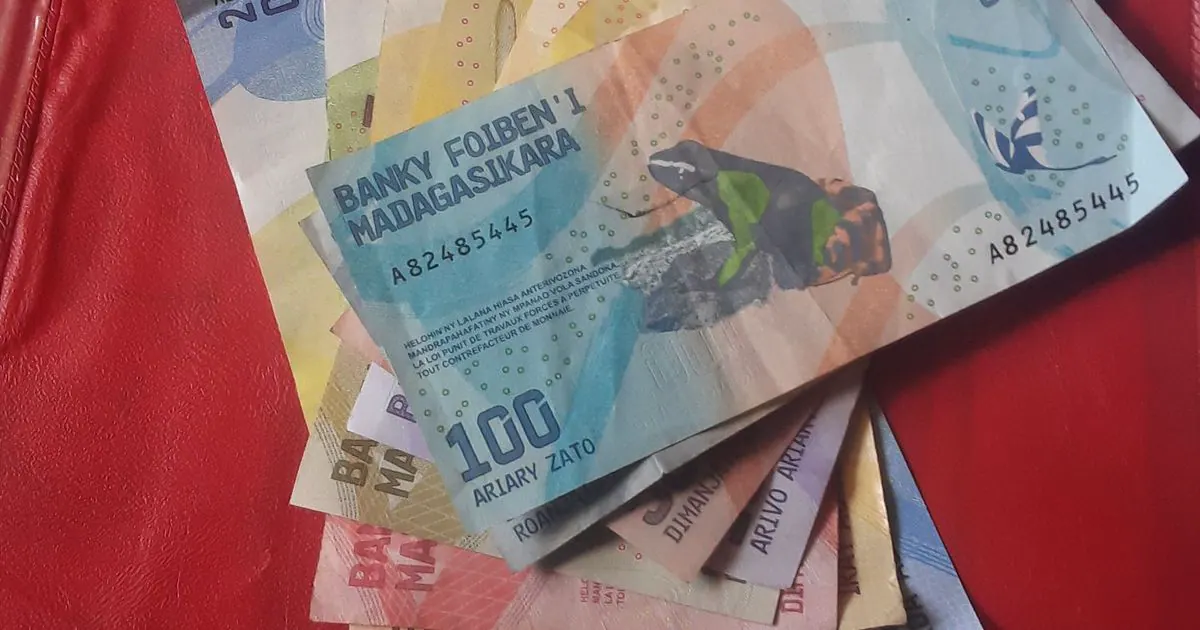
The Central Bank of Madagascar is consulting with the public on a potential currency reform, which includes the possibility of removing two zeros from the ariary. This change would mean that a 20,000 ariary bill would become a 200 ariary bill, and everyday prices would also be adjusted. The bank's goal is to simplify the use of money in daily transactions, not to correct the economy.
Currently, the 20,000 ariary bill dominates the country's currency circulation, accounting for 71.8% of the total value in 2025. The bank estimates that the value of these bills in circulation has increased by 8.6% in one year to 6,846 billion ariary. At the current exchange rate of approximately 4,303 ariary per dollar, the largest denomination is worth only about 4.65 dollars.
The central bank has proposed three scenarios for reform: removing two zeros, capping the largest denomination at 1,000 units, or maintaining the current system and adding larger denominations. The bank's governor, Aivo Andrianarivelo, emphasized that the consultation does not imply a decision has been made. If implemented, the reform would take approximately two years to execute.
If two zeros were removed from the ariary, all amounts would be divided by 100 on the same day. This means that salaries, accounts, debts, and savings would also be adjusted accordingly. The purchasing power of a salary would remain the same, but the number of zeros on price tags would change. For example, a kilogram of rice costing 3,000 ariary would increase to 30 ariary.
The central bank is concerned about the short lifespan of the 20,000 ariary bills, estimating that they last only about six months, compared to a decade for coins. The bank aims to promote the use of coins and reduce the reliance on high-denomination bills.
Madagascar has previously changed its currency, replacing the franc malgache with the ariary in 2003 at a rate of one ariary to five francs. Other countries, such as Ghana, have also removed zeros from their currencies. In 2007, Ghana withdrew four zeros, converting 10,000 old cedis to one new cedi.
The central bank advises the public not to take action yet, as no decision has been made. The public is warned about potential scams targeting those who might try to exchange their bills "before it's too late." Any official announcement will come directly from the Central Bank of Madagascar.
Key points
- The Central Bank of Madagascar is considering removing two zeros from the ariary to simplify daily transactions.
- The 20,000 ariary bill currently dominates the country's currency circulation, accounting for 71.8% of the total value.
- The proposed reform aims to simplify the use of money, not to correct the economy.