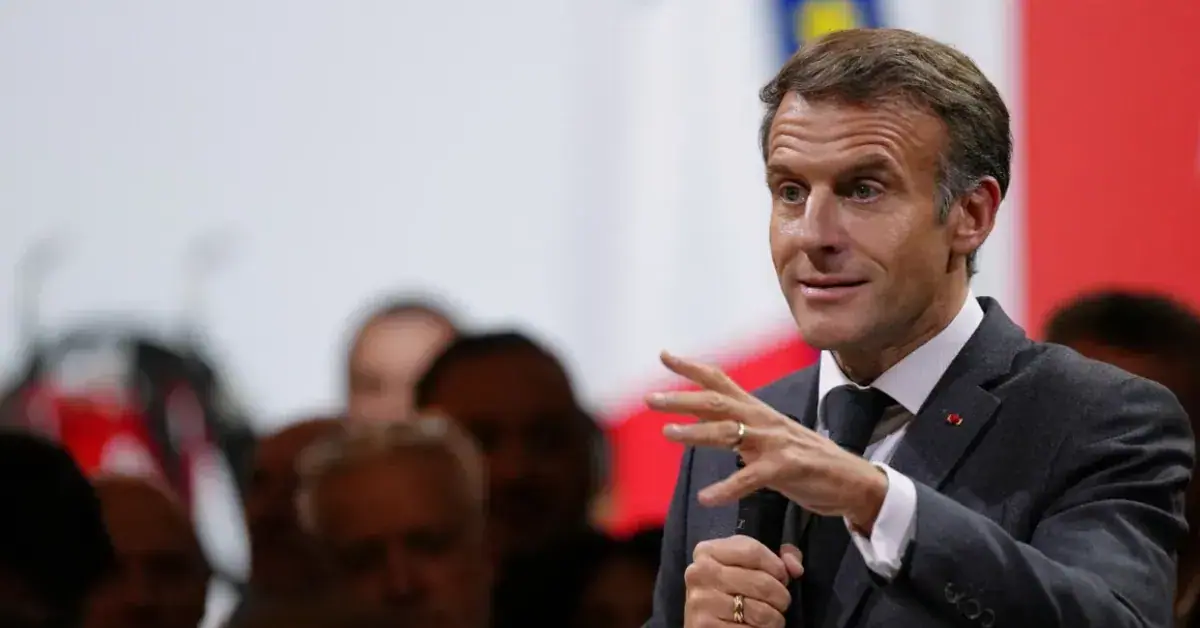
French President Emmanuel Macron has proposed the possibility of amending the constitution to establish a binding framework for controlling public finances and reducing the budget deficit over several years. This development comes less than six months before the presidential elections, with some of his political opponents supporting the idea. According to a report by the Financial Times, Macron's suggestion aims to address France's challenges in reducing its budget deficit, which is expected to be 5.4% of GDP this year.
France is currently facing difficulties in lowering its budget deficit, with the public debt standing at 119% of GDP. The country's parliamentary divide complicates the approval of budgets and financial reforms. Macron stated that discussing the introduction of a "golden rule" for public finances in the constitution "is not an illegitimate idea." He made these comments in response to a question about the possibility of convening a joint session of parliament in early 2027 to vote on the amendment.
The proposed "golden rule" aims to establish a constitutional framework that sets targets for spending, revenue, and deficit over several years. This approach is similar to Germany's "debt brake" mechanism, which regulates borrowing. Macron emphasized that the decision to pursue this path will depend on the government's ability to approve the budget in the National Assembly before the end of the year and on the continued stability of financial markets in early 2027.
Macron's comments come as his term in office is set to expire in the spring of next year, following criticism from his political opponents regarding the deterioration of public finances during his nearly decade-long tenure. The French president believes that introducing a binding fiscal rule in the constitution could help calm the markets. He described the proposal as "an idea worth exploring."
The idea of constitutional reform has garnered support from some of Macron's political opponents who are vying to succeed him next year. This development highlights the ongoing debate about fiscal responsibility and the need for effective measures to address France's financial challenges. Macron's proposal is seen as a potential way to ensure fiscal discipline and promote long-term financial stability.
France's financial woes have been a subject of concern for some time, with the country's budget deficit and public debt posing significant challenges. The government's ability to implement effective reforms and address these issues will be crucial in determining the country's economic trajectory. Macron's proposal for constitutional reform is a significant development in this context, as it seeks to establish a binding framework for fiscal responsibility.
The proposed constitutional amendment is expected to be a topic of discussion in the coming months, with Macron's opponents and supporters weighing in on the idea. The outcome of this debate will have significant implications for France's financial future and its ability to address the challenges posed by its budget deficit and public debt.
Key points
- Macron proposes constitutional reform to enforce fiscal discipline in France.