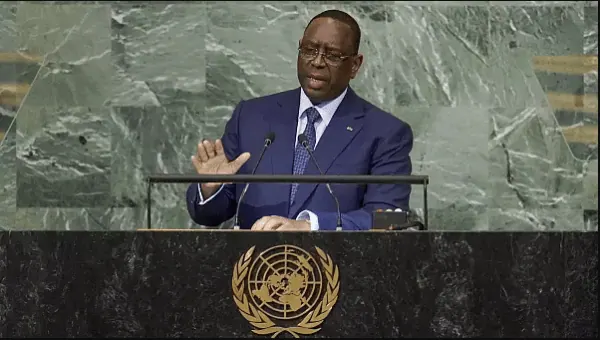
Senegal's former President Macky Sall has suffered a setback in his bid to become the next UN Secretary-General. According to reports from Les Échos, Sall received five votes in favor and nine against in the third indicative vote at the UN Security Council. This marks a decline from the previous two votes, where he secured six votes in favor and seven against. The results have raised concerns about Sall's chances of securing the top position.
The third indicative vote has seen Sall's support dwindle, with the candidate now trailing behind Rebeca Grynspan of Costa Rica and Carolyn Rodrigues-Birkett of Guyana. Grynspan secured nine votes in favor, five against, and one abstention, while Rodrigues-Birkett received eight votes in favor, six against, and one abstention. Sall's decline has allowed other candidates, including Olara Otunnu of Uganda and Rafael Grossi of Argentina, to gain ground.
Despite the setback, Sall's candidacy has received official support from the Senegalese government, announced in July. However, this support has not translated into increased votes, with Les Échos noting that Sall's candidacy was initially submitted to the UN by Burundi on March 2, 2026. The lack of significant improvement in votes has raised questions about the effectiveness of Senegal's support.
The UN Security Council's indicative votes are not binding, but they provide an indication of the candidates' chances of securing the top position. To be recommended for the position, a candidate must secure at least nine votes out of 15 and avoid a veto from any permanent member of the Security Council. The recommendation is then submitted to the UN General Assembly for final approval.
Sall's decline in votes has been attributed to increased opposition, with Les Échos noting that he faces more negative votes compared to other candidates with similar levels of support. Olara Otunnu, for instance, has seven negative votes and three abstentions, while Rafael Grossi has eight negative votes. This increased opposition may pose a significant challenge to Sall's bid.
The results of the third indicative vote have highlighted the intense competition for the UN Secretary-General position. With several candidates vying for the top spot, the competition is expected to intensify in the coming weeks. Sall's team will need to regroup and reassess their strategy to regain lost ground and improve their chances of securing the position.
The UN Secretary-General position is a critical role that requires strong leadership and diplomacy. The selection process involves a series of indicative votes at the Security Council, followed by a recommendation to the General Assembly. The final decision is expected to be made in the coming months, with the new Secretary-General set to take office in 2027.
Key points
- Macky Sall's UN Secretary-General bid faces setback with decline in votes
- Sall trails behind Rebeca Grynspan and Carolyn Rodrigues-Birkett in the indicative votes
- Increased opposition poses significant challenge to Sall's bid