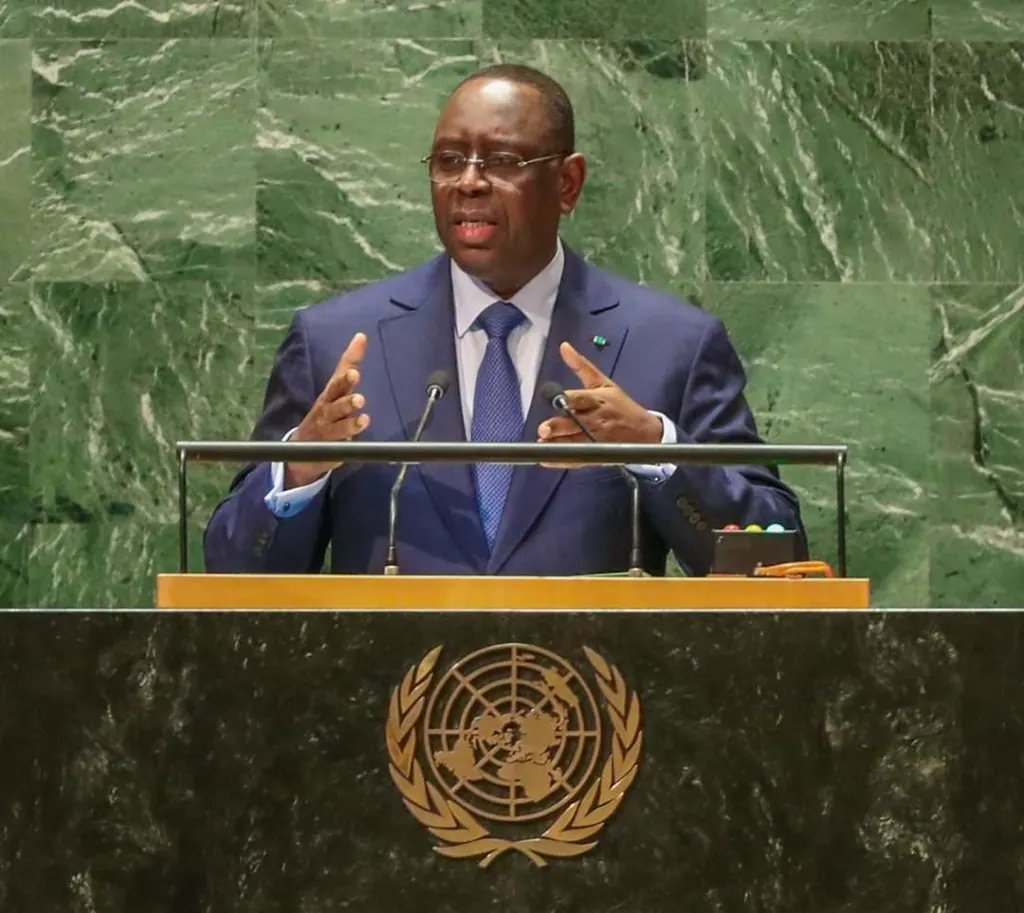
Former Senegalese President Macky Sall has suffered a new setback in his bid to succeed António Guterres as UN Secretary-General. In the third confidential ballot by the UN Security Council on September 18, 2026, Sall garnered only five votes of encouragement, compared to nine votes against. This result marks a decline from the previous two rounds, complicating his path to the top UN post.
Sall is among several candidates vying to replace Guterres, whose term expires on December 31, 2026. In the previous straw polls on July 30 and August 21, Sall had secured six votes of encouragement, seven against, and two without an opinion. However, in the latest round, he received five votes in favor, nine against, and one without an opinion. This downward trend may threaten his chances of becoming the next UN Secretary-General.
The third round of voting appears to have consolidated support around the leading candidates. Costa Rican Rebeca Grynspan emerged as the frontrunner with nine votes of encouragement, followed closely by Guyana's Carolyn Rodrigues-Birkett with eight votes. Meanwhile, Ugandan Olara Otunnu secured five votes in favor, similar to Sall, but with seven votes against, two fewer than the Senegalese candidate.
The withdrawal of former Chilean President Michelle Bachelet from the race has further narrowed the field of contenders. As the competition intensifies, each round of voting helps to separate the candidates. The straw poll is an internal mechanism allowing Security Council members to assess the candidatures and measure their level of support.
To be recommended by the Security Council to the UN General Assembly, a candidate must secure at least nine votes in favor and not face a veto from any of the five permanent members: China, the United States, France, the United Kingdom, and Russia. With only five votes of encouragement and nine against, Sall must reverse the trend in the upcoming rounds to remain in contention.
The confidential nature of the straw poll makes it difficult to gauge the exact level of support for each candidate. However, the results suggest that Sall faces significant challenges in his bid to become the next UN Secretary-General. As the selection process unfolds, the candidates will need to navigate the complex dynamics of the Security Council to emerge as the frontrunner.
The UN Security Council's voting process is designed to ensure that the next Secretary-General enjoys broad support from the international community. With the selection process nearing its conclusion, the candidates will need to demonstrate their ability to build consensus and address the complex challenges facing the UN. The outcome of the voting process will be closely watched by the international community.
Key points
- Macky Sall trails in UN Secretary-General succession race with five votes of encouragement.
- Rebeca Grynspan emerges as frontrunner with nine votes of encouragement.
- UN Security Council voting process requires candidate to secure at least nine votes in favor and avoid veto from permanent members.