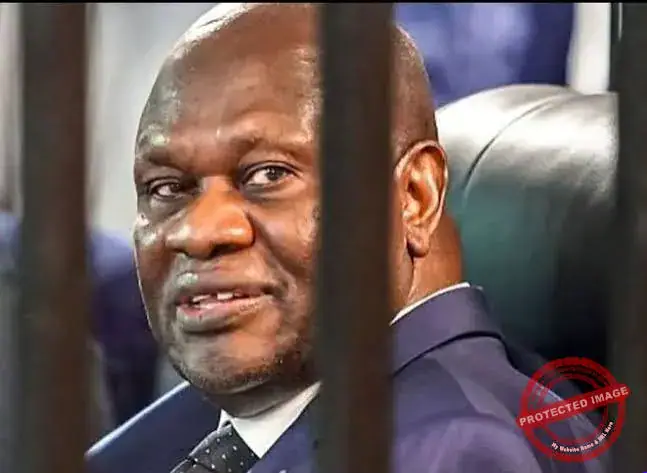
Former First Vice President and SPLM-IO leader Dr Riek Machar has denied allegations that he is the commander of the White Army, a group accused of causing instability in parts of South Sudan. During his testimony at the 126th session of the Special Court on the Incident of Nasir in Juba on Monday, November 2, 2026, Machar stated that he was not the commander of the White Army and neither was Regina Joseph Kaba, the party's acting chairperson.
Machar, who is the fifth accused in the trial involving eight SPLM-IO officials, was responding to claims by senior government officials that he was leading the White Army and that parallel administrations existed in parts of the country. He emphasized that the transitional government had appointed governors and county commissioners across the country under the power-sharing arrangements provided for in the Revitalized Agreement on the Resolution of the Conflict in South Sudan (R-ARCSS).
Machar disputed claims that parallel governments and two separate states existed, saying the parties to the peace agreement had established a unified national government. He explained that the security arrangements under the peace agreement provided for 17 training centres for the Necessary Unified Forces, comprising military, police, civil defence, wildlife and national security personnel.
The training centres were divided into nine military centres, six for police, civil defence and wildlife, and two for national security services. Machar further told the court that SPLA-IO forces had been confined to 25 cantonment areas and 32 assembly areas, while the South Sudan People's Defence Forces (SSPDF) remained in their barracks and deployment stations.
Machar addressed allegations that he had refused to relinquish his position as Commander-in-Chief of the SPLA-IO, saying the process of unifying the country's armed forces had not been completed. He said the country continued to have three separate military formations: the Unified Forces, the SSPDF and the SPLA-IO, adding that the unification process had stalled due to inadequate political and financial support for the Joint Defence Board.
Machar accused senior government officials of failing to provide resources for the unification process while advocating the use of force to bring the forces together. He also denied allegations that he and local youth had held survivors of the March 2025 Nasir incident hostage, saying his personal intervention had helped bring the survivors to Juba.
The defence team raised concerns over restrictions on family visits to the accused and what it described as suspicious searches conducted at their detention facility. The court adjourned the proceedings until Friday, November 6, 2026, when Machar is expected to continue giving his defence testimony.
Key points
- Machar denies leading the White Army and rejects allegations of parallel governments in South Sudan.
- The trial of Machar and eight other SPLM-IO officials continues, with the defence team raising concerns over detention conditions.
- Machar testifies that the unification of the country's armed forces has stalled due to inadequate political and financial support.