In the years leading up to Guinea's independence on October 2, 1958, a significant battle was being fought by women, often behind the scenes. M'Balia Camara and Hadja Mafory Bangoura were two such women who made notable contributions to the nationalist movement. Born in Posséah, M'Balia Camara became a militant in the Rassemblement démocratique africain (RDA) and participated in organizing women in Tondon in 1955. Her activism would ultimately lead to her tragic death.
M'Balia Camara's death was a result of injuries sustained during a confrontation with colonial authorities on February 9, 1955. A pregnant Camara was struck with a sabre by David Sylla, the chief of the canton, during a tax collection operation that turned violent. She gave birth to a stillborn child two days later and died on February 18, 1955. Her funeral was attended by thousands, and she became a symbol of the sacrifices made by women in the fight against colonialism.
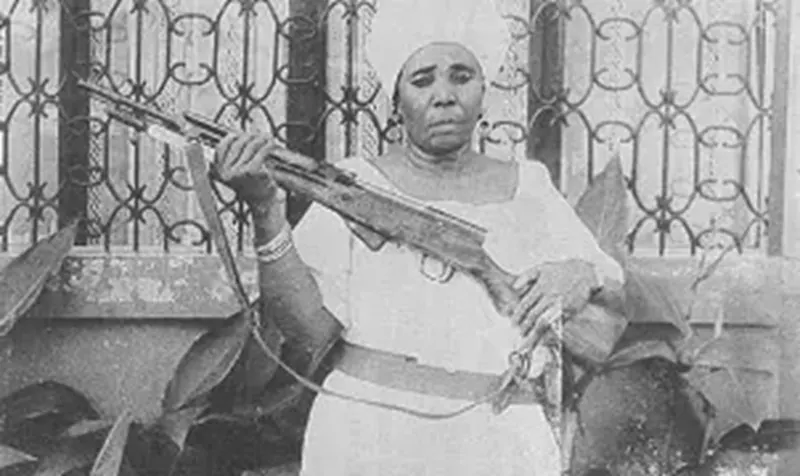
Hadja Mafory Bangoura, born around 1910 in Wonkifon, also played a crucial role in the nationalist movement. She worked as a seamstress in Conakry and became involved in mobilizing women to support the RDA. In 1953, during a major strike, Bangoura helped organize women and was eventually charged with mobilizing them around the movement. She became president of the RDA women's committee and encouraged women to participate in political campaigns and provide material support to the movement.
Like many nationalist activists, Bangoura faced repression and was imprisoned in 1955 for her political activities. However, her release was secured through the mobilization of women around her arrest. Her trajectory, like that of many Guinean activists, involved participating in the struggle and facing colonial authorities. Both Camara and Bangoura demonstrated that women were not absent from the fight for independence, but were actively involved in committees, rallies, and mobilizations.
The stories of M'Balia Camara and Hadja Mafory Bangoura highlight the often-overlooked contributions of women to Guinea's independence movement. While Camara's sacrifice has become an important part of national memory, Bangoura's continued activism after independence and rise to state responsibilities represent a different path. Their experiences illustrate that women's participation went beyond traditional support roles, with many taking on active and leadership roles in the movement.
The legacies of M'Balia Camara and Hadja Mafory Bangoura continue to be felt in Guinea today. Camara is commemorated in public spaces, and Bangoura's name is honored through an educational institution in Madina, Conakry. Their stories serve as a testament to the involvement of thousands of Guinean women in the struggle for independence, many of whom remain anonymous.
The stories of these two women serve as a reminder of the significant role women played in Guinea's fight for independence. Their contributions, along with those of countless others, helped shape the country's history and pave the way for future generations. As Guinea continues to reflect on its past, the experiences of M'Balia Camara and Hadja Mafory Bangoura offer valuable insights into the complexities of the independence movement.
Key points
- M'Balia Camara and Hadja Mafory Bangoura were two Guinean women who made significant contributions to the country's struggle for independence from colonial rule.
- M'Balia Camara's sacrifice has become an important part of national memory, while Hadja Mafory Bangoura's continued activism after independence and rise to state responsibilities represent a different path.
- The legacies of M'Balia Camara and Hadja Mafory Bangoura continue to be felt in Guinea today, serving as a testament to the involvement of thousands of Guinean women in the struggle for independence.