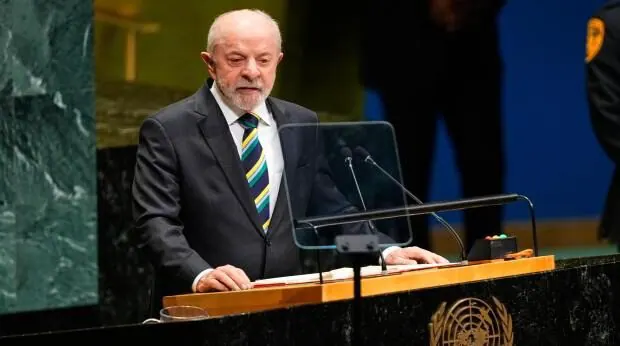
Brazilian President Luiz Inácio Lula da Silva has publicly praised Ghana's President John Dramani Mahama for his role in pushing reparative justice onto the global agenda. Speaking at the 81st United Nations General Assembly in New York, Lula commended Mahama for spearheading a resolution that recognises the transatlantic trade in enslaved Africans as the gravest crime against humanity. This move is seen as a significant step towards acknowledging historical injustices and promoting reparative justice.
The UN resolution, adopted on 25 March 2026, was led by President Mahama, the African Union, and CARICOM, a regional bloc representing Caribbean nations. The resolution passed with 123 votes in favour, 3 against, and 52 abstentions. The vote highlights the divisive nature of the reparations question among wealthy nations that benefited from the slave trade, despite overwhelming support across the wider UN membership. This development demonstrates the global momentum behind the reparations push.
Lula's endorsement of Mahama's efforts comes as part of a broader push to translate the March resolution into concrete measures. Mahama recently appeared at the UN alongside Barbados Prime Minister Mia Mottley and Liberian President Joseph Boakai, calling for moving reparations from words to action. This collective effort aims to transform the resolution into tangible steps towards reparative justice. Ghana's engagement at the UN has also included a new air services agreement with Trinidad and Tobago and the announcement of a new gateway for global philanthropic partnerships.
For Ghana, having a major Latin American leader like Lula publicly amplify Mahama's reparations agenda adds significant diplomatic weight to the cause. Brazil, home to one of the world's largest populations of African descent, gives Lula's endorsement particular symbolic resonance for the transatlantic reparative justice movement. Ghana has championed this cause alongside African Union and CARICOM partners, and Lula's support underscores the growing international backing for reparative justice.
The UN resolution has sparked a renewed focus on reparative justice, with many countries and leaders weighing in on the issue. The resolution's adoption marked a significant milestone in the global conversation on historical injustices and reparations. As the international community continues to grapple with the complexities of reparative justice, Ghana's leadership on the issue is gaining recognition.
Lula's address at the UN General Assembly also touched on other pressing global crises, including the war in Gaza, the conflict between Russia and Ukraine, and tensions in the Strait of Hormuz. He emphasised the importance of diplomacy and multilateralism in addressing these challenges. Lula's speech highlighted the interconnected nature of global issues and the need for collective action to address them.
The next steps in the reparations push are unclear, with no specified timeline for translating the resolution into concrete measures. However, the growing international momentum behind the cause suggests that the conversation is likely to continue. As the global community continues to debate and discuss reparative justice, Ghana's leadership and Lula's endorsement are likely to remain significant factors in shaping the conversation.
Key points
- Brazilian President Lula da Silva praises Ghana's President Mahama for leading UN resolution on slavery reparations
- UN resolution recognises transatlantic trade in enslaved Africans as gravest crime against humanity
- Ghana's leadership on reparative justice gains international recognition with Lula's endorsement