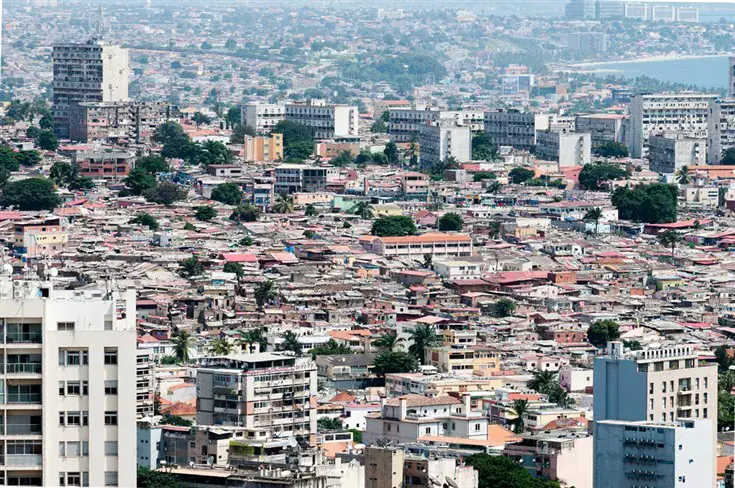
According to a report by the World Bank, Luanda is expected to have 20.3 million inhabitants by 2050, representing a 78% increase from its current population of 11.4 million. This growth will make Luanda the most populous city in sub-Saharan Africa, surpassing Lagos, which is currently the largest city in the region. The World Bank's report, titled "The Sub-Saharan African Urban Awakening," highlights the significant implications of this growth for the region's economy and urban development.
The World Bank report notes that despite losing its title as the largest city in sub-Saharan Africa, Lagos will still experience significant growth, with a 25% increase in population by 2050, reaching 16.2 million inhabitants. The report also identifies other cities that are expected to be among the most populous in Africa by 2050, including Kinshasa, Dar es Salaam, and Addis Ababa, all of which will have over 10 million inhabitants. These cities will face significant challenges in providing services and opportunities for their growing populations.
The report highlights the rapid urbanization of sub-Saharan Africa, with the number of people living in urban areas increasing by 742.4 million since 1975, from 170.2 million to 912.6 million. The World Bank projects that this growth will continue, with an additional 748 million people expected to move to urban areas by 2050, bringing the total number of urban inhabitants to 1.7 billion. This growth presents both opportunities and challenges for the region.
The World Bank emphasizes the need for governments to take decisive action to address the challenges of urbanization. The report notes that the region will need to create 15 million new jobs over the next few decades to keep pace with the growth of its young workforce. To achieve this, governments will need to prioritize investments in areas that will have the greatest impact on employment and private investment.
The World Bank recommends that governments focus on orienting public investment to stimulate private investment and job creation. This includes planning ahead to guide urban growth and differentiating approaches for smaller cities. The report also highlights the importance of private capital in driving African development, noting that governments will need to make strategic choices about where to invest limited resources.
The World Bank report also notes that Bamako, Mali, and Mogadishu, Somalia, are expected to enter the list of the 15 most populous cities in sub-Saharan Africa by 2050, with populations of 7.6 million and 7.2 million, respectively. These cities will face significant challenges in providing services and opportunities for their growing populations.
In conclusion, the World Bank report highlights the significant challenges and opportunities presented by rapid urbanization in sub-Saharan Africa. The report emphasizes the need for governments to take decisive action to address the challenges of urbanization and to prioritize investments in areas that will have the greatest impact on employment and private investment. By doing so, governments can help to ensure that the region's growing cities are able to provide opportunities for their inhabitants and drive economic growth.
Key points
- Luanda is projected to have 20.3 million inhabitants by 2050, making it the most populous city in sub-Saharan Africa.
- The region will need to create 15 million new jobs over the next few decades to keep pace with the growth of its young workforce.
- The World Bank recommends that governments focus on orienting public investment to stimulate private investment and job creation.