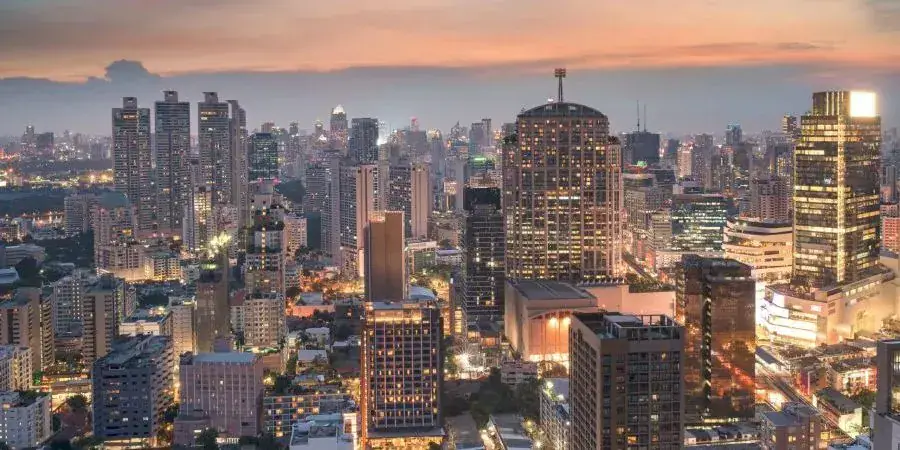
According to the World Bank's 2026 urbanisation report, Luanda is set to overtake Lagos as sub-Saharan Africa's largest city by 2050. The report projects Luanda's population to reach 20.3 million residents by 2026, against 16.2 million in Lagos. Currently, Luanda has 11.4 million residents, while Lagos has 12.8 million. The World Bank's projections indicate a significant shift in the population dynamics of these two major African cities.
The World Bank's report, Sub-Saharan Africa's Urban Awakening: Catalysing Economic Growth and Job Creation, provides a comprehensive analysis of urbanisation trends in sub-Saharan Africa. The report notes that Luanda's population is expected to grow by 78% between 2025 and 2050, while Lagos is projected to grow by just over 25% during the same period. This divergence in growth rates reflects Angola's younger demographic structure and higher fertility rates.
The population growth in Luanda and Lagos has significant implications for investors. The World Bank's report highlights that sustained demand for housing, transport, and utilities will drive growth across the region. The report also notes that urban scale supports larger consumer markets and helps firms reach workers and suppliers more efficiently. However, the World Bank cautions that many urban jobs in the region remain informal and low-paid, and productivity gains require deliberate policy choices.
The World Bank's projections also highlight the need for infrastructure investment in Luanda and Lagos. The report notes that housing demand will lead the way, followed by transport networks, power systems, water supply, and waste services. Each sector offers a project pipeline stretching decades. The report also highlights the importance of land governance, utility reliability, and transport access for investors.
Angola's broader economic trajectory adds weight to the case for investment in Luanda. The country's GDP growth reached 5.3% as public debt fell to 51.2% of GDP, signalling improving fiscal headroom for infrastructure investment. The government's 2027 budget targets 5.5% economic growth, which, if sustained, would accelerate infrastructure spending across Luanda's expanding metropolitan area.
Lagos remains a large market despite its slower projected growth rate. The city's population is expected to reach 16.2 million by 2050, driven by growth in informal and low-paid jobs. However, investors must assess land governance, utility reliability, and transport access before committing capital. The World Bank's report provides a consistent basis for comparison across cities and markets, helping investors make informed decisions.
The key metric to track through 2030 is whether formal employment will increase in Luanda and Lagos. The World Bank's report highlights the need for deliberate policy choices to drive productivity gains and formal employment. If formal employment increases, it could lead to sustained economic growth and investment opportunities in the region.
Key points
- Luanda's population is projected to surpass Lagos' by 2050, driven by Angola's younger demographic and higher fertility rates.
- The World Bank's report highlights the need for infrastructure investment in Luanda and Lagos, driven by sustained demand for housing, transport, and utilities.
- Angola's GDP growth and improving fiscal headroom signal opportunities for infrastructure investment in Luanda's expanding metropolitan area.