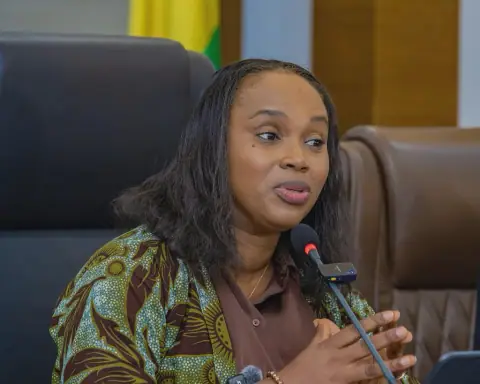
Louise Mushikiwabo, Secretary-General of the International Organization of La Francophonie (OIF), has expressed concerns over the recent developments at the 20th Francophonie summit held in Phnom Penh, Cambodia. In an interview with French newspaper Paris Match, Mushikiwabo stated that she was disappointed with the outcome of the summit, particularly with regards to the election of a new Secretary-General. The summit ended with Mushikiwabo's mandate being extended by one year in an unusual move.
Mushikiwabo attributed the impasse to the actions of French President Emmanuel Macron, who she claimed was instrumental in blocking the election process. She emphasized that the issues were not with the country of France, but with Macron's actions as the host of the summit. Mushikiwabo suggested that if diplomatic discussions had started earlier, member states might have reached a consensus on the election of a new Secretary-General.
Mushikiwabo also expressed concerns over the Francophonie's ability to overcome colonial-era dynamics. She stated that she had previously believed that the organization had moved beyond the "Françafrique" mentality, which refers to France's continued influence over its former colonies in Africa. However, recent events have led her to question this assumption. Mushikiwabo emphasized that African countries should be free to make their own decisions without external influence.
The OIF chief also criticized the notion that African countries need to reach a consensus before electing a Secretary-General. She argued that this approach undermines the principles of international cooperation and gives undue influence to individual countries. Mushikiwabo emphasized that the election process should be based on merit and the interests of the organization as a whole.
Mushikiwabo's concerns are not limited to the Francophonie's internal dynamics. She also highlighted the challenges facing the organization in terms of its relevance and influence in the modern world. The OIF has faced criticism for its perceived closeness to France and its limited ability to address the needs of its member states. Mushikiwabo emphasized the need for the organization to adapt to changing global circumstances and to prioritize the interests of its member states.
In the aftermath of the Phnom Penh summit, Mushikiwabo plans to engage in discussions with member states to determine the future direction of the OIF. She emphasized the need for the organization to prioritize its core objectives, including promoting cultural and linguistic diversity, supporting economic development, and fostering international cooperation. Mushikiwabo also called for increased investment in digital technologies, including artificial intelligence, to ensure that the OIF remains relevant in the 21st century.
The controversy surrounding the Francophonie summit has highlighted the challenges facing the organization as it seeks to redefine its role in the modern world. Mushikiwabo's comments reflect a broader debate about the future of the OIF and its ability to balance the interests of its member states with the need for effective international cooperation. As the organization looks to the future, it will need to address these challenges and demonstrate its relevance to the needs of its member states.
Key points
- OIF chief Louise Mushikiwabo expresses concerns over recent developments at the Francophonie summit.
- Mushikiwabo questions the organization's ability to move beyond colonial-era dynamics.
- The OIF faces challenges in terms of its relevance and influence in the modern world.