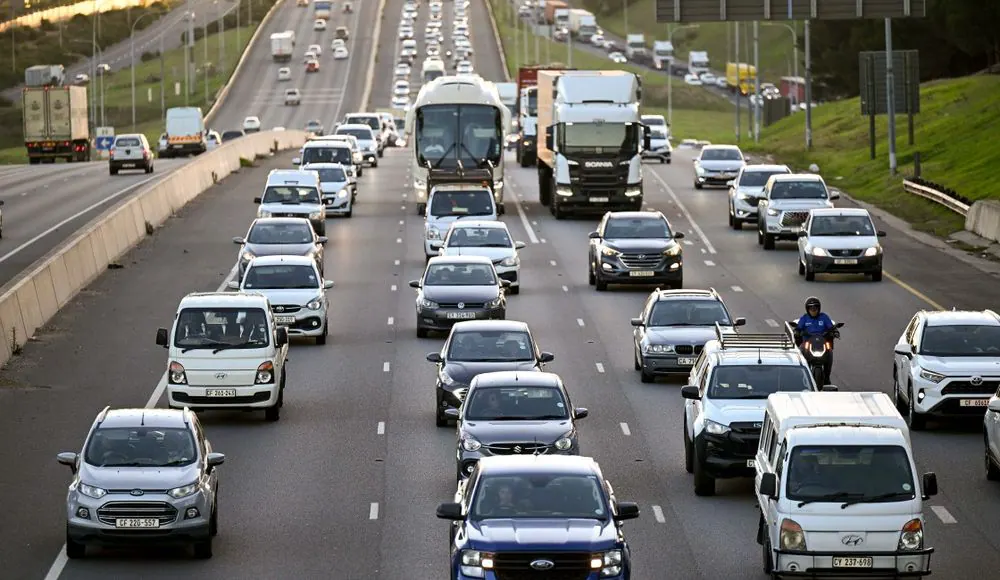
A recent report by housing advocacy group Ndifuna Ukwazi found that Cape Town's poorest commuters spend about 35% of their income on transport, compared to 10% among the highest earners. This disparity is rooted in the city's housing crisis, which has led to a situation where many low-income workers are forced to live in areas far from their jobs. The report, titled Public Land for People, Not for Parking, highlights the need for more affordable housing options in areas closer to employment opportunities.
The city's spatial planning legacy, which dates back to the apartheid era, has contributed significantly to the current situation. During this period, well-located land was reserved for white people, while Black, Coloured, and Indian residents were pushed to the periphery. Post-1994 subsidized housing initiatives often prioritized the number of homes built over their location, leading to a mismatch between where people live and where they work. As a result, many workers are forced to endure long commutes, which can be both time-consuming and expensive.
For many households, moving closer to work is not a realistic option due to the high cost of housing in well-located areas. The Western Cape's average rent is R9 730, while a one-bedroom flat near Parliament costs between R12 000 and R18 000 a month. With about 76% of Cape Town residents earning below R22 000 a month, and only 34% of formal homes priced within that range, many workers are left with no choice but to spend a significant portion of their income on transport.
The long commutes have a ripple effect on households and the wider economy. Professor Stephan Krygsman from Stellenbosch University's Department of Logistics notes that spatial inequality affects both households and the economy. He argues that better-designed cities can reduce transport costs, while poorly designed and unequal cities often suffer a development deficit. Long commutes can also lead to a mismatch between workers' skills and the jobs they take, as some people may accept work closer to home rather than pay the cost of traveling to jobs better suited to their qualifications.
The impact of long commutes on workers and their families is significant. Spending two to three hours a day commuting leaves workers with less time for childcare, shopping, and other household responsibilities. For workers like Thembisa Yalezo, who travels from Philippi East to the city center, leaving home at 4 am is a daily reality. She has spent nine years commuting to work, often due to safety concerns in her area. Similarly, Octavia Grill from Manenberg has expressed fears about traveling after a recent taxi accident.
Ndifuna Ukwazi's Public Land for People, Not for Parking campaign proposes redeveloping four state-owned sites in central Cape Town to provide more affordable housing options. The sites could accommodate 969 social-housing apartments, 969 market-related apartments, and transitional housing for 732 people. According to Buhle Booi, the head of political organizing and campaigns at Ndifuna Ukwazi, at least 359 277 people are on the City of Cape Town's housing waiting list, with the city projecting an annual shortfall of between 22 970 and 27 980 formal homes.
The City of Cape Town is pursuing affordable housing through land releases, transport-oriented development, and infrastructure investment. Mayco member for Human Settlements Carl Pophaim notes that land parcels capable of yielding more than 14 000 affordable units are in the city's active pipeline or project-packaging stage. A further 7 000-unit yield is estimated across land already awarded to developers. The City has released land valued at R1.7 billion for affordable housing over the past two years, enabling more than R960 million in discounted land release, bulk infrastructure investment, and incentives.
Key points
- Low-income workers in Cape Town spend over a third of their income on transport due to the city's housing crisis.
- The city's spatial planning legacy has contributed significantly to the current situation.
- The City of Cape Town is pursuing affordable housing through land releases, transport-oriented development, and infrastructure investment.