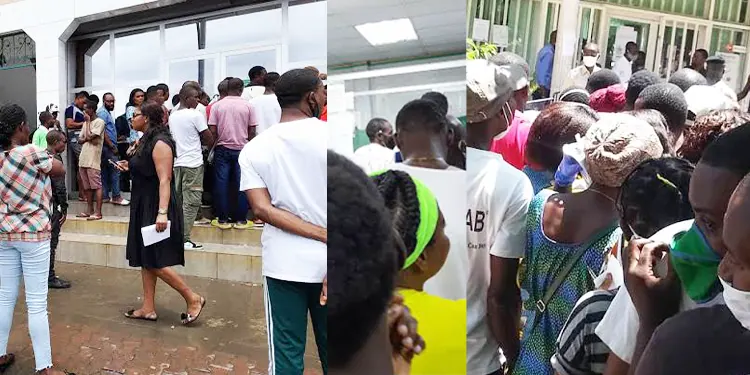
In Equatorial Guinea, a familiar scene unfolds at banks on days when salaries are paid, with long lines of people waiting to conduct transactions. This recurring reality has sparked a debate about the necessity of physical bank visits for various financial operations that could potentially be handled via mobile phones. The issue is not about questioning the existence of bank branches or the work of bank employees, but rather about the inefficiencies that arise when simple tasks turn into hours-long waits.
Some banks operating in Equatorial Guinea have made significant strides in digitalization by developing mobile applications and electronic banking services that allow customers to perform certain transactions without visiting a branch. This progress is noteworthy, but it also raises questions about why long lines persist if digital tools are available. The reasons could be multifaceted, including limited functionality, user-friendliness, or accessibility issues, as well as problems with connectivity, trust, costs, or digital literacy.
The presence of a mobile application does not necessarily equate to the digitalization of a service. True transformation occurs when citizens can manage most of their financial needs remotely, without having to physically visit a bank. This includes being able to check account movements, make transfers, pay bills, manage expenses, and perform other routine transactions from the convenience of their mobile phones.
According to a local perspective, one of the primary objectives should be to make bank visits an option, not an obligation. If a person receives their salary and can manage almost all related tasks through their phone, such as paying bills, making transfers, or checking account balances, then visiting a bank would be less necessary. This shift would save citizens time, reduce pressure on bank branches, and allow bank employees to focus on transactions that require personalized attention.
The push for greater digitalization in the financial sector is part of a broader trend towards adapting to a society where mobile phones play an increasingly central role in daily life. It is noteworthy that people can instantly communicate with others across vast distances, make purchases, or access various services, yet still be required to physically visit banks for many basic transactions.
Some banks in Equatorial Guinea have already begun to address these issues by investing in digital infrastructure. However, the continued presence of long lines at bank branches suggests that more work needs to be done to achieve seamless digital financial services. This may involve further investment in technology, improving digital literacy among the population, or addressing issues related to internet connectivity and mobile phone accessibility.
Ultimately, the goal of digitalizing financial services in Equatorial Guinea is to enhance the efficiency and convenience of banking for citizens. By leveraging mobile technology, banks can help reduce wait times, increase customer satisfaction, and streamline operations. As the country continues to navigate the challenges of digital transformation, it is clear that a concerted effort from both the public and private sectors will be necessary to create a more efficient and modern financial system.
Key points
- Long lines at banks in Equatorial Guinea have sparked a debate on the need for greater digitalization of financial services.
- Some banks have developed mobile applications, but long lines persist, suggesting that digital tools are not yet meeting citizens' needs.
- The goal of digitalization should be to make bank visits an option, not an obligation, by allowing citizens to manage most financial tasks remotely.