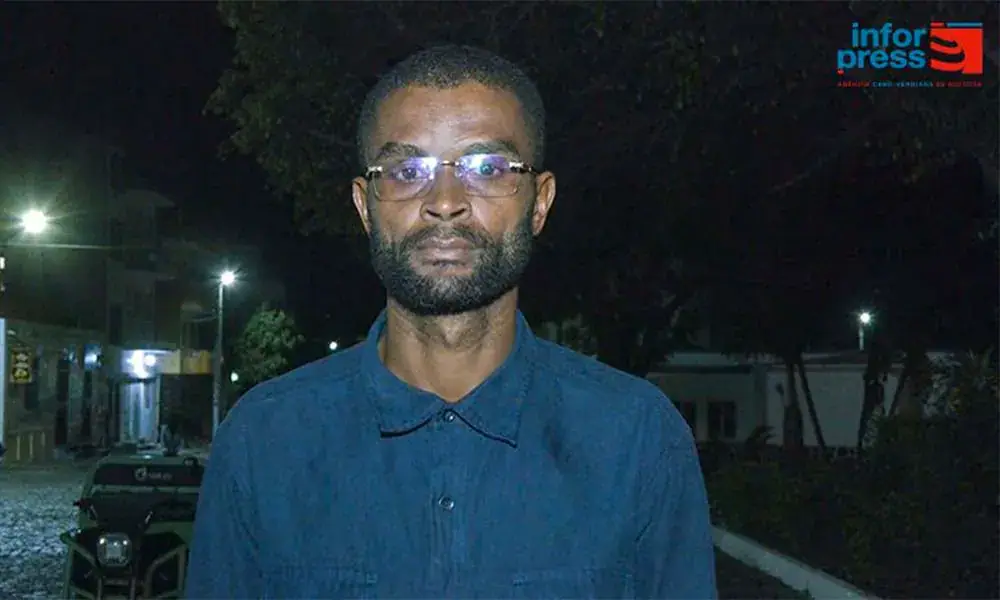
Loisito Tavares Sousa, a 40-year-old candidate from the Tarrafal region of Santiago, has declared himself the winner of the presidential election in Cabo Verde, despite receiving only 0.9% of the total votes cast. In a statement to the press on election night, Tavares expressed his gratitude to the citizens who supported his campaign and vowed to continue contributing to the development of Cabo Verde. He also congratulated the winning candidate, José Maria Neves.
Tavares attributed the low voter turnout and his own poor performance to a lack of trust in the electoral system and the country's political parties. He cited issues with the voter registration process, which he described as "disorganized and outdated," as a major obstacle to citizens exercising their right to vote. Tavares also noted that the dominance of the two main parties, PAICV and MpD, made it difficult for independent candidates like himself to gain traction.
The presidential election, which took place on November 15, had 419,448 registered voters, with 343,065 in Cabo Verde and 76,383 abroad. A total of 1,302 polling stations were set up, with 1,059 in the country and 243 abroad. The election was monitored by over 200 international observers from various organizations, including the Community of Portuguese Language Countries and the African Union.
According to the provisional results, José Maria Neves won the election with 63.8% of the votes, followed by Joana Rosa with 31.6%. Tavares received 1,076 votes, or 0.9% of the total. He acknowledged that his campaign was hampered by limitations and persecution but insisted that this was not the end of his political career.
Tavares' campaign focused on promoting political renewal and valorizing local communities. He aimed to provide an alternative to the traditional parties and give a voice to civil society. His message emphasized the importance of local realities and citizen participation in shaping the country's future.
The election was Cabo Verde's latest step in its democratic journey since gaining independence from Portugal in 1975. The country has had five presidents so far, with José Maria Neves set to begin his second term after winning the 2021 election with 51.75% of the votes. According to the Constitution, the President of the Republic is elected by universal suffrage and must be a Cabo Verdean citizen of origin, at least 35 years old, and have resided permanently in the country for the past three years.
Despite his low vote share, Tavares expressed his commitment to continuing to serve the nation and contribute to its development. He emphasized that his participation in the election was just one stage in his ongoing commitment to Cabo Verde. The country looks forward to seeing how Tavares and other candidates will continue to engage with the electorate and shape the country's future.
Key points
- Loisito Tavares Sousa received 0.9% of the votes in the November 15 presidential election in Cabo Verde.
- Tavares attributed his poor performance to a lack of trust in the electoral system and issues with voter registration.
- The election was monitored by over 200 international observers from various organizations.