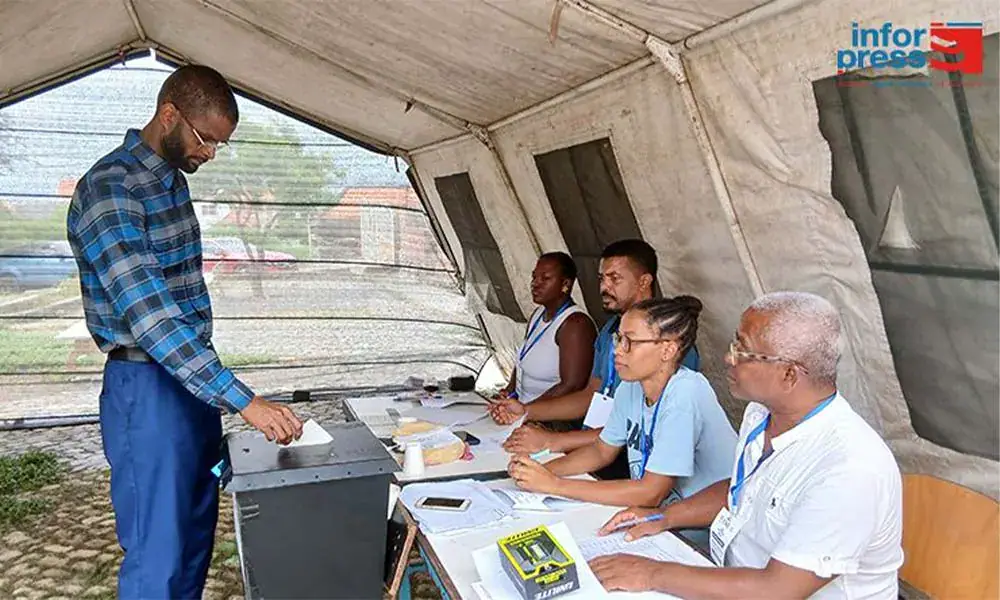
Loisito de Sousa, a candidate in the 2026 Cabo Verde presidential election, voted on November 15 in the Monte Iria neighborhood of Tarrafal de Santiago. He expressed a sense of fulfillment, gratitude, and pride in participating in the electoral process, which he believes enriches Cabo Verde's democracy. Sousa emphasized that democracy is only viable when the people participate, and his candidacy represents a popular expression of the will to build a "Cabo Verde for Cabo-verdianos".
Sousa appealed to citizens to participate in the presidential election, stressing that abstention does not allow for expressing discontent or demanding improvements for the country. He encouraged citizens to use their vote as a powerful tool to shape the nation's future. For Sousa, voting represents more than just an electoral choice; it is a commitment to the country and future generations, as well as a way to preserve and value national heritage.
The candidate will await the results at his residence, emphasizing that it is now up to citizens to exercise their right to vote and choose the President of the Republic. Sousa, 40, is a native of Tarrafal, Santiago Island, and holds a degree in History. His candidacy focuses on political renewal and giving voice to civil society sectors, valuing the role of local communities in shaping the country's future.
The presidential election features six candidates, including Sousa, who is the youngest candidate in the race. Over 200 international observers are monitoring the election, representing organizations such as the Economic Community of West African States (ECOWAS), the African Union (AU), and the Community of Portuguese Language Countries (CPLP). A total of 419,448 voters are registered, with 343,065 in the national territory and 76,383 abroad.
The electoral process involves 1,302 voting stations, with 1,059 in the national territory and 243 in the diaspora. Voting takes place between 8:00 AM and 6:00 PM. If no candidate obtains more than half of the valid votes, a second round will be held on November 29. Cabo Verde has had five presidents since gaining independence from Portugal in 1975, with the most recent election seeing José Maria Neves win with 51.75% of the votes.
According to the Cabo Verdean Constitution, the President of the Republic is elected by universal and direct suffrage by registered citizens in the national territory and abroad. To be eligible, a candidate must be a "Cabo-verdian of origin, without another nationality", at least 35 years old, and have permanent residence in the national territory for the three years preceding the candidacy.
The election outcome will determine the next President of Cabo Verde, with implications for the country's future. The new president will face challenges in addressing the nation's needs and aspirations, as expressed by citizens during the electoral campaign. The democratic process in Cabo Verde continues to evolve, with citizens exercising their right to choose their leaders.
Key points
- Loisito de Sousa emphasizes the importance of citizen participation in the electoral process.
- The presidential election features six candidates, with Sousa being the youngest.
- Over 200 international observers are monitoring the election.