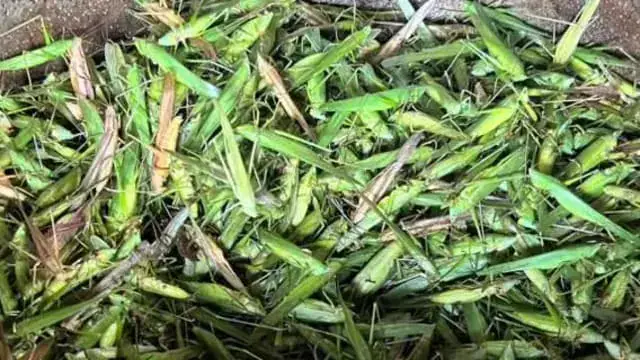
In the Democratic Republic of the Congo, specifically in Mambasa-Centre, Ituri province, locusts have become a crucial source of food and income for thousands of residents impacted by the violence attributed to the Allied Democratic Forces (ADF). The locusts, a seasonal commodity, offer an accessible food source that requires no financial expenditure, which is particularly beneficial for households struggling economically due to the region's insecurity.
Locust gathering has become a widespread activity in Mambasa, with children, students, and adults venturing out to collect the insects, sometimes even interrupting their sleep to do so at night. This activity not only provides a food source but has also become an income-generating venture for many families. Women, in particular, are organizing to collect and resell locusts in local markets, creating a supplementary income to cover essential household expenses.
The sale of locusts has proven to be a beneficial economic opportunity for numerous families in Mambasa. According to several women vendors interviewed on site, this seasonal activity significantly improves their daily lives and enables them to meet certain family obligations. The income from locust sales allows them to cope with the financial difficulties exacerbated by the insecurity in the region.
Beyond its economic benefits, locust collection and trade also foster community interaction among residents of different Mambasa localities. The exchanges surrounding this activity strengthen relationships between communities and contribute to the local socio-economic life. In a region that has been plagued by insecurity for several years, this seasonal activity emerges as a means of subsistence and a moment of solidarity and sharing for many families.
The importance of locusts as a food and income source cannot be overstated for the people of Mambasa. Given the challenges posed by ADF violence, the locusts offer a vital lifeline. The activity has become an essential part of the community's coping mechanism, providing both sustenance and a way to earn a living in a region where economic opportunities are scarce.
Radio Okapi reports that the locust season has brought a semblance of normalcy to the lives of those affected by the violence. While the situation remains challenging, the availability of locusts as a food and income source has provided a much-needed respite. Efforts to manage and sustain this resource are crucial to ensuring its continued benefit to the community.
As the locust season progresses, the residents of Mambasa are hopeful that this natural resource will continue to support them. The community's ability to adapt and find sustenance in the face of adversity is a testament to their resilience. With the locusts providing a critical source of food and income, thousands of inhabitants are better equipped to face the challenges posed by the ongoing insecurity in the region.
Key points
- Locusts serve as a crucial food and income source for thousands in DR Congo's Ituri province, affected by ADF violence.
- The locust trade fosters community interaction and provides a supplementary income for families.
- This seasonal activity is a vital coping mechanism, offering sustenance and a means to earn a living amidst economic scarcity and insecurity.