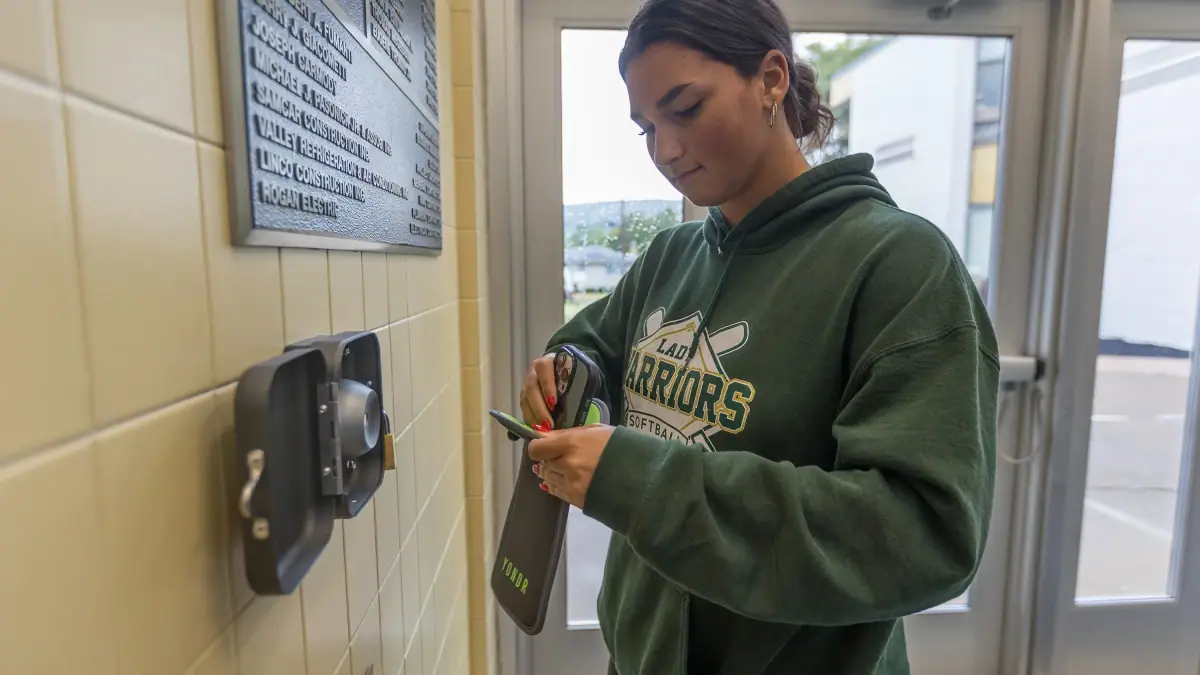
A recent study released by Harvard University's Center for Education Policy Research, Dartmouth College, and NWEA, a K-12 testing and research organization, found that putting students' phones in locked pouches during the school day may help restore some of the historic losses in K-12 students' reading and math achievement. The study analyzed a nationwide sample of more than 3 million elementary-, middle- and high-school students over the past five school years.
According to the study, strict cellphone bans seem to plug about half of the leak in learning, which translates to 1-2 weeks of learning a year. The researchers found that the gains in test scores did not fade out after the first year of implementation and instead continued year after year, at least up to three years after adoption. The study's co-authors, Tom Kane of Harvard University and Douglas Staiger of Dartmouth College, say that this small but statistically significant improvement could add up over time.
However, another study released in April found that lockable pouches made by the for-profit company Yondr had "close to zero" impact on student test scores. Brian Jacob, a co-author of that April study and a professor of education policy at the University of Michigan, says that while the new study is encouraging, it is essential to wait and see if the benefits persist and accumulate over time.
The two studies differ in key ways, with the April study pooling school-level mean test scores at several thousand Yondr-adopting schools, while the recent study used student-level scores at 844 schools that use both Yondr pouches and tests administered by NWEA. The recent study had more fine-grain, student-level data, but the April study examined a much larger sample of schools.
The researchers note that around 2013, U.S. students started losing 2-3 weeks of learning each year, which has put U.S. 8th graders almost a year behind. The mass adoption of cell phones by children and teens is believed to have contributed to the decline in test scores. In 2011, fewer than a quarter of teen students had access to smartphones, but by 2018, 95% did.
Tom Kane argues that even if the benefit is small, the pouches still make financial sense for schools, costing roughly $25 per student, which is less than having to pay teachers for an extra week or two of instruction. Kane plans to study students' smartphone and social media use outside of school to further understand the impact of cell phones on test scores.
The study's findings have sparked a mix of reactions, with some researchers expressing cautious optimism and others calling for continued study on the topic. Stanford University's Tom Dee considers the results "largely disappointing" and insists that more research is needed to understand the impact of cellphone bans on student test scores.
Key points
- Locking up students' cell phones during school hours may help improve their test scores in math and reading.
- The study found that strict cellphone bans seem to plug about half of the leak in learning, which translates to 1-2 weeks of learning a year.
- The researchers analyzed a nationwide sample of more than 3 million elementary-, middle- and high-school students over the past five school years.