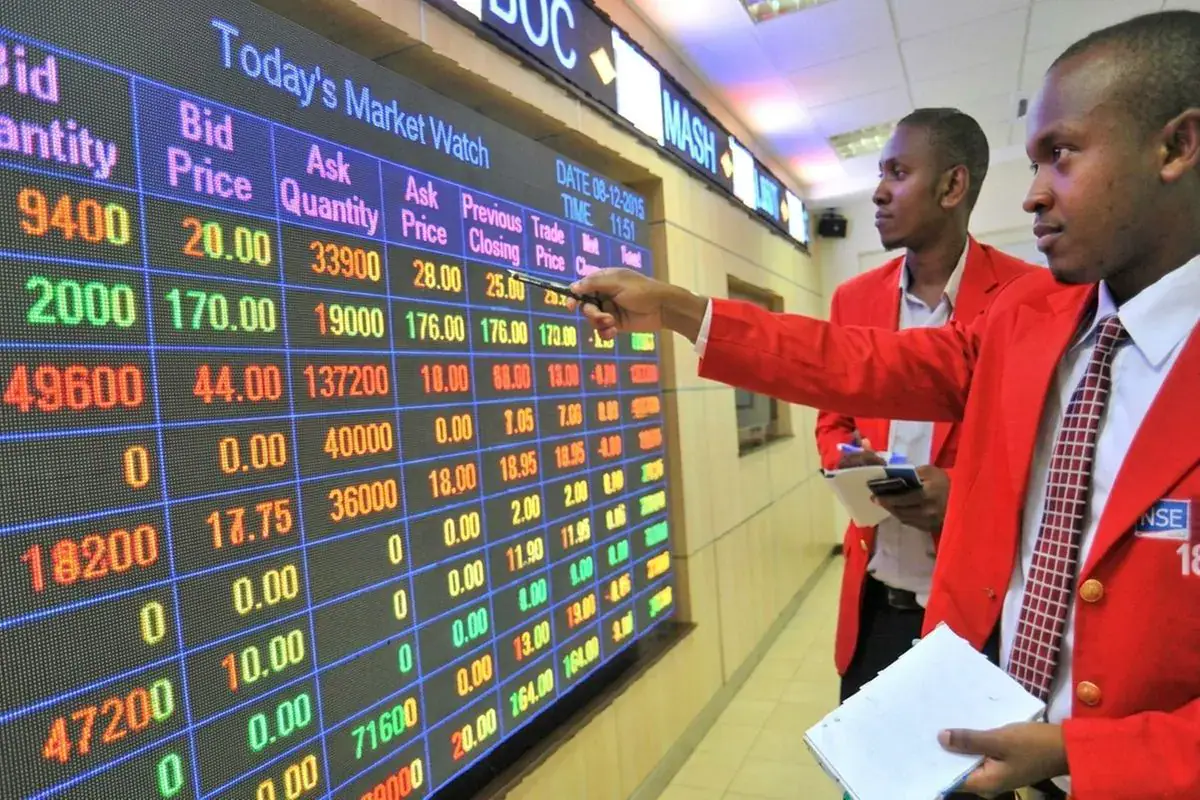
Tanzania's domestic investors are playing a crucial role in stabilizing the Dar es Salaam Stock Exchange (DSE) amid global financial market turbulence. According to the DSE's latest market report, local buyers accounted for 91.82% of share purchases during the last quarter, while foreign investors made up the remaining 8.18%. This significant shift towards domestic investment has raised questions about the reliability of international capital. The growing participation of local investors provides a buffer against external market shocks, analysts say.
The DSE's market report for the week ending November 20, 2026, shows that domestic investors purchased shares worth Sh16.11 billion, while foreigners sold shares valued at Sh98.12 billion, resulting in a net selling of approximately Sh82 billion during the reporting period. Despite sustained foreign selling, local investors have been able to sustain the market. Manager of Advisory and Capital Markets at Vertex International Securities Ltd, Mr Ashfaq Ashraf Ahmed, said local investors could sustain the DSE's growth, but cautioned that the market remained too thin to absorb sudden, large-scale foreign withdrawals without significant price movements.
The domestic investor base is expanding, with approximately 740,000 investor accounts recorded at the end of 2025. People aged between 21 and 30 accounted for about 40% of new accounts, indicating a growing participation among younger investors. This growing participation could provide a stronger foundation for the market, although sustaining that growth would require greater involvement from institutional investors. The country's pension industry, with assets estimated at approximately Sh24 trillion, is seen as a potential source of long-term domestic capital.
Financial analyst Mr Christopher Makombe expressed confidence in domestic investors' ability to sustain the market, citing third-quarter 2026 figures showing that local investors accounted for approximately 93.78% of share purchases. He said this growing capacity of local investors to absorb foreign selling and provide stability to the market was a positive sign. However, he cautioned against underestimating the contribution of international investors, saying foreign capital brings additional liquidity, expertise, and international market exposure.
Despite the growing domestic investor base, liquidity remains a concern for the market. Mr Ahmed identified liquidity as the market's biggest vulnerability, particularly because trading activity and market capitalization remain concentrated in a few listed companies. NMB and CRDB accounted for approximately 77% of equity turnover in October, while NMB, CRDB, and KCB together represented about 60% of the market's total value. This concentration means that large transactions involving a few major counters can have a disproportionate effect on overall market performance.
The DSE index rose approximately 15% in the third quarter, but declined by 4.9% in October, illustrating the market's sensitivity to changes in trading activity. To sustain confidence, Mr Ahmed called for greater participation by pension funds, insurance companies, and fund managers, alongside measures to improve trading mechanisms and broaden investment opportunities beyond a few dominant counters. He also urged regulators and market operators to improve trading rules and introduce mechanisms such as market-making to accommodate large transactions without causing excessive price movements.
Global market turbulence adds pressure on the DSE, as international investors reassess their exposure to global financial markets. The record-breaking initial public offering of United States technology company Anthropic, which raised $81.3 billion in its November 19 listing, demonstrated the enormous appetite for businesses positioned to benefit from AI. However, the enthusiasm surrounding the listing was accompanied by a broad sell-off in other technology stocks, highlighting the challenges faced by the DSE in attracting foreign investment.
Key points
- Domestic investors account for over 90% of share purchases on the DSE.
- The growing participation of local investors provides a buffer against external market shocks.
- Liquidity remains a concern for the market due to concentration in a few listed companies.