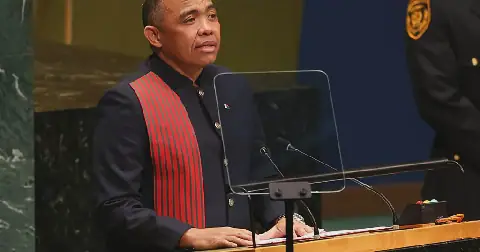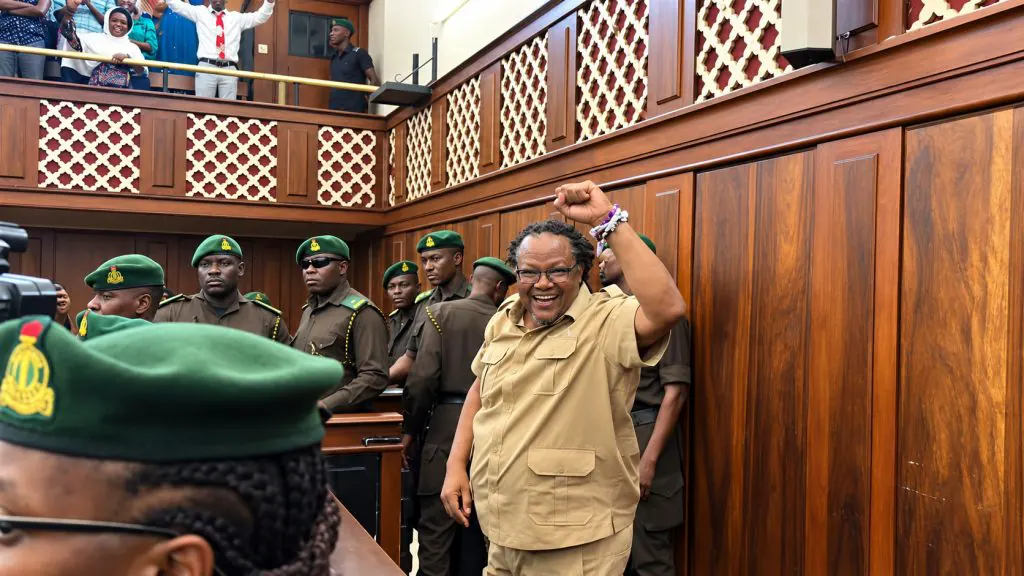
Tundu Lissu, chairman of the Chama cha Demokrasia na Maendeleo (CHADEMA), appeared before the High Court in Tanzania on September 25, 2026, to present his final submissions in a treason case against him. Lissu argued that the concept of "verbal treason" or "uhaini wa maneno" has never been part of Tanzania's laws. He claimed that the prosecution is attempting to introduce an interpretation that is not supported by the country's legal history.
Lissu provided a historical context for the treason law in Tanzania, stating that it was introduced during the colonial era under British rule in the 1920s. He noted that the law was applied in territories under British administration, including Tanganyika, Kenya, and Uganda. However, Lissu pointed out that only Uganda had a provision specifically addressing treason through words, whereas Tanzania and Kenya did not have such a provision.
The CHADEMA chairman referenced previous court decisions to support his argument. He cited the case of Khatib Ghandi and Others v. Republic, in which the then-Chief Justice Francis Nyalali stated that mere words cannot be considered an overt act or deed in a treason case. Lissu used this precedent to challenge the prosecution's interpretation that his alleged words could be considered a "deed" meeting the requirements of the treason law.
Lissu argued that the prosecution's attempt to link his words to treason is an effort to introduce a new concept into Tanzanian law that was deliberately left out by the British colonial authorities who introduced the law. He maintained that the law has always required an overt act, rather than just words, to constitute treason. This argument is part of Lissu's final submissions in the case.
The case is ongoing, with the court yet to make a decision on Lissu's submissions. The prosecution has not yet responded to Lissu's arguments. The case has garnered significant attention in Tanzania, with many following the developments closely.
Lissu's defense team has been emphasizing that the prosecution's case relies heavily on interpretation and that the law should be applied as it has been historically understood in Tanzania. They argue that expanding the definition of treason to include verbal acts would be a significant departure from established legal precedent.
The court's decision in this case is expected to have implications for the interpretation of treason laws in Tanzania. The arguments presented by Lissu's defense team have raised important questions about the limits of free speech and the definition of treason in the country.
Key points
- CHADEMA chairman Tundu Lissu argues that "verbal treason" has never been part of Tanzania's laws.
- Lissu cites historical context and previous court decisions to support his argument.
- The court's decision is expected to have implications for the interpretation of treason laws in Tanzania.