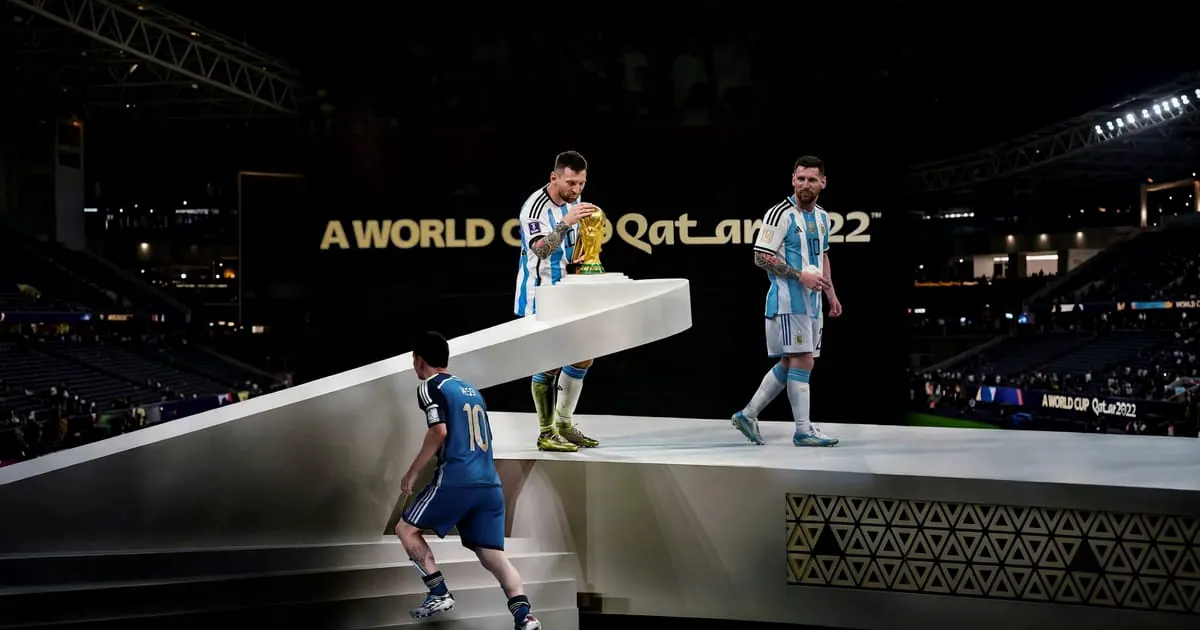
Lionel Messi's relationship with Argentina was complicated, a love story between a country desperate for success and a player expected to deliver it. His brilliance at club level, particularly with Barcelona, created enormous expectations every time he wore the famous blue and white shirt. Messi's Argentina journey began in 2005 with a nightmare, as he was sent off in his senior international debut against Hungary. The young forward left the field in tears, symbolizing what was to come: a career with Argentina filled with extraordinary talent but also extraordinary pressure.
Messi's early years with Argentina were marked by heartbreak and disappointment. In 2007, Argentina reached the Copa América final but lost 3-0 to Brazil. The 2010 World Cup ended in a devastating 4-0 defeat to Germany in the quarter-finals, followed by intense criticism. Messi had become accustomed to winning at club level, but his Argentina career was judged by what he could not achieve. The 2011 Copa América brought more frustration, as Argentina were eliminated in the quarter-finals by Uruguay.
In 2014, Messi came closest to fulfilling his international dream, leading Argentina to the World Cup final against Germany at the Maracanã. However, Mario Götze's extra-time goal gave Germany a 1-0 victory, leaving Messi with another runners-up medal. The defeat was particularly painful due to comparisons with Diego Maradona, who won the World Cup with Argentina in 1986. Messi was left to ponder what could have been.
The years that followed were marked by more heartbreak and disappointment. At the 2015 Copa América in Chile, Messi and his teammates lost to the hosts on penalties. In 2016, Argentina again reached the final against Chile, but Messi's spot-kick went over the crossbar, and Chile won the shootout. For Messi, it was devastating, and he announced his retirement from international football.
However, Argentina could not let Messi go that easily, and he returned to international football determined to continue the fight. At the 2018 World Cup in Russia, Argentina's campaign ended in the round of 16 against France, and the World Cup dream remained out of reach. A year later, Argentina reached the Copa América semi-finals but were eliminated by Brazil.
The arrival of Lionel Scaloni as Argentina coach in 2021 brought a new atmosphere around the national team, and Messi was no longer expected to do everything alone. A younger generation began to grow around him, and in 2021, Argentina won the Copa América final against Brazil 1-0, with Ángel Di María scoring the decisive goal. Messi finally lifted a major international trophy with his country, and the images of him crying after the final whistle were tears of relief.
Messi's journey to football immortality with Argentina continued with the 2022 World Cup in Qatar. Despite losing their opening match against Saudi Arabia, Scaloni's side recovered, and Messi inspired Argentina through the tournament. The 2022 World Cup marked a new chapter in Messi's career, as he chased his dream of becoming a world champion with Argentina.
Key points
- * Lionel Messi's relationship with Argentina was complicated and marked by high expectations. * Messi experienced years of heartbreak and disappointment with Argentina, including multiple final defeats. * The arrival of Lionel Scaloni as coach and a new generation of players brought a turning point in Messi's career, leading to Argentina's Copa América and World Cup successes.