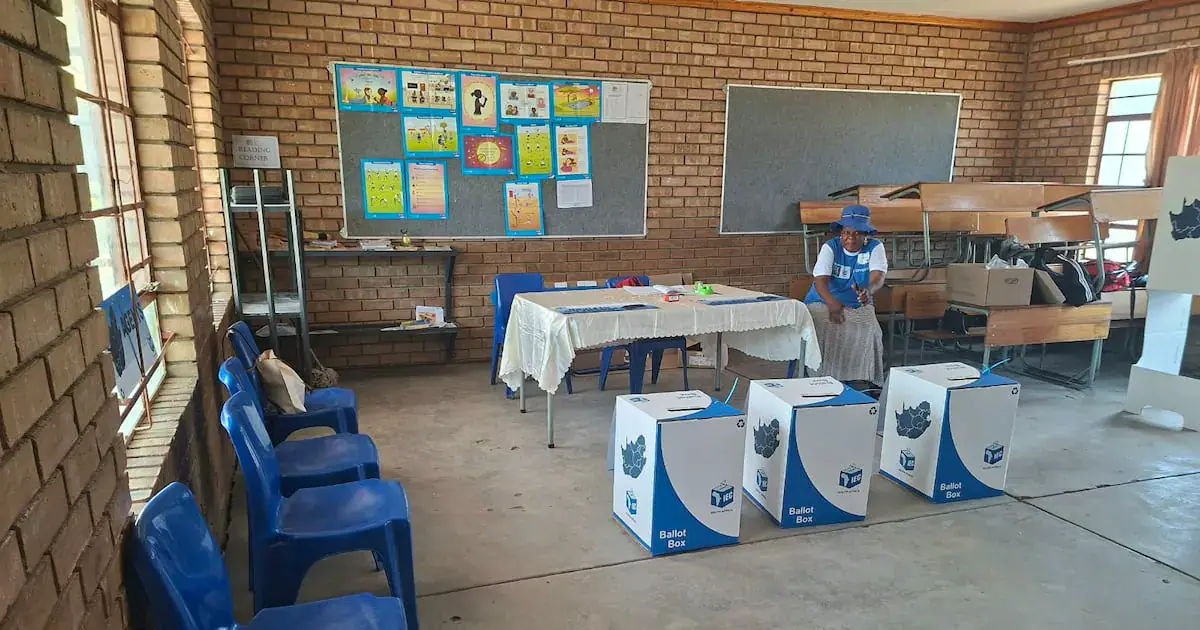
On Wednesday, millions of South Africans cast their votes at various polling stations, but residents of Ga-Chokoe outside Mokopane in Limpopo stayed away, protesting a demarcation issue. A community meeting had decided that no one would vote, resulting in empty roads and a deserted Mahlora Primary School, which was designated as a voting station. Only police and IEC officials were present.
The boycott affects several communities, including Nkidikitlana, Ga Musi, Monare, and Ga-Chokoe Sterkwater. Residents claim they were not consulted or informed about the decision to move them from ward 3 to ward 6. They believe the new ward will not address their concerns, and the candidates will not prioritize their needs. One resident, who wished to remain anonymous, blamed the demarcation board and municipal council for the situation.
Longstanding service delivery challenges plague the rural community. Residents struggle with basic services, including a lack of Apollo lights, leaving the area in darkness at night. The community relies on a single water-pumping machine, and additional infrastructure is needed to improve access to water. Road infrastructure is also a significant challenge, with long stretches of gravel roads making movement difficult for residents.
Many residents live in homes without electricity, while others have been waiting for proper housing for over 30 years. They want their concerns prioritized by municipal leaders. Joyce Sekalo, a resident, highlighted the community's problems, including water scarcity, poor roads, and inadequate street lighting. The community sometimes has to share water sources with livestock.
Despite the boycott, some residents decided to exercise their democratic right. Nare Chokoe walked to the voting station to cast her vote, saying she understood the community's concerns but prioritized her role as a South African resident. She believed that boycotting the elections would not resolve their problems.
The dispute highlights the complexities of municipal demarcation and the importance of community engagement. The affected communities are seeking a resolution to their concerns, and it remains to be seen how the authorities will respond. The IEC and municipal council will need to address the residents' concerns to prevent similar boycotts in the future.
The boycott in Ga-Chokoe is a notable exception to the nationwide voting trend. As the results are tabulated, attention will focus on the impact of this boycott on the overall election outcome. The incident underscores the need for effective communication and community engagement in the electoral process.
Key points
- Residents of Ga-Chokoe boycotted the municipal elections due to a dispute over ward demarcation and concerns about candidate representation.
- The community faces longstanding service delivery challenges, including inadequate water supply, poor road infrastructure, and a lack of electricity.
- Despite the boycott, some residents exercised their democratic right, casting their votes and highlighting the complexities of the issue.